THE STORYTELLING NEEDLE

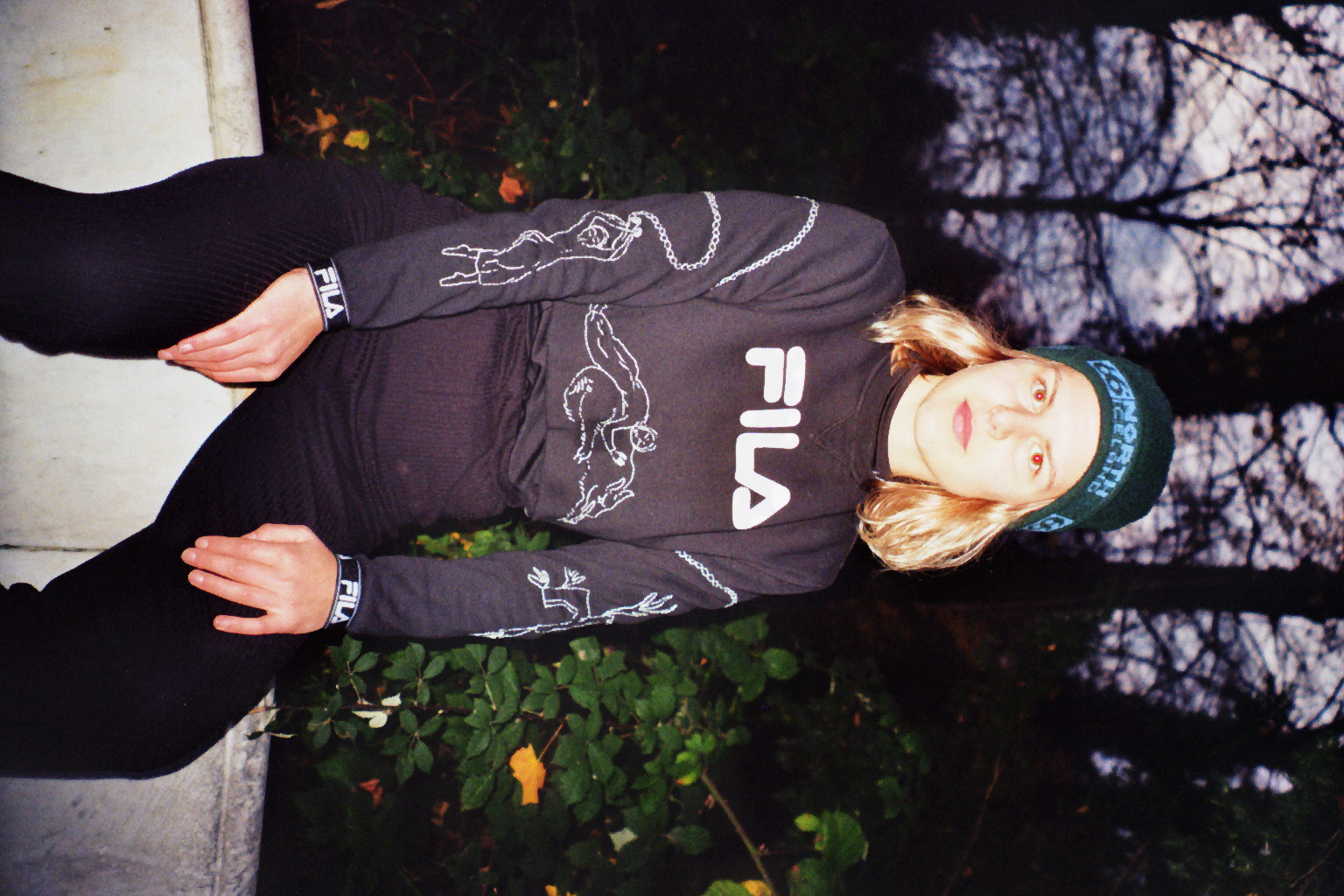
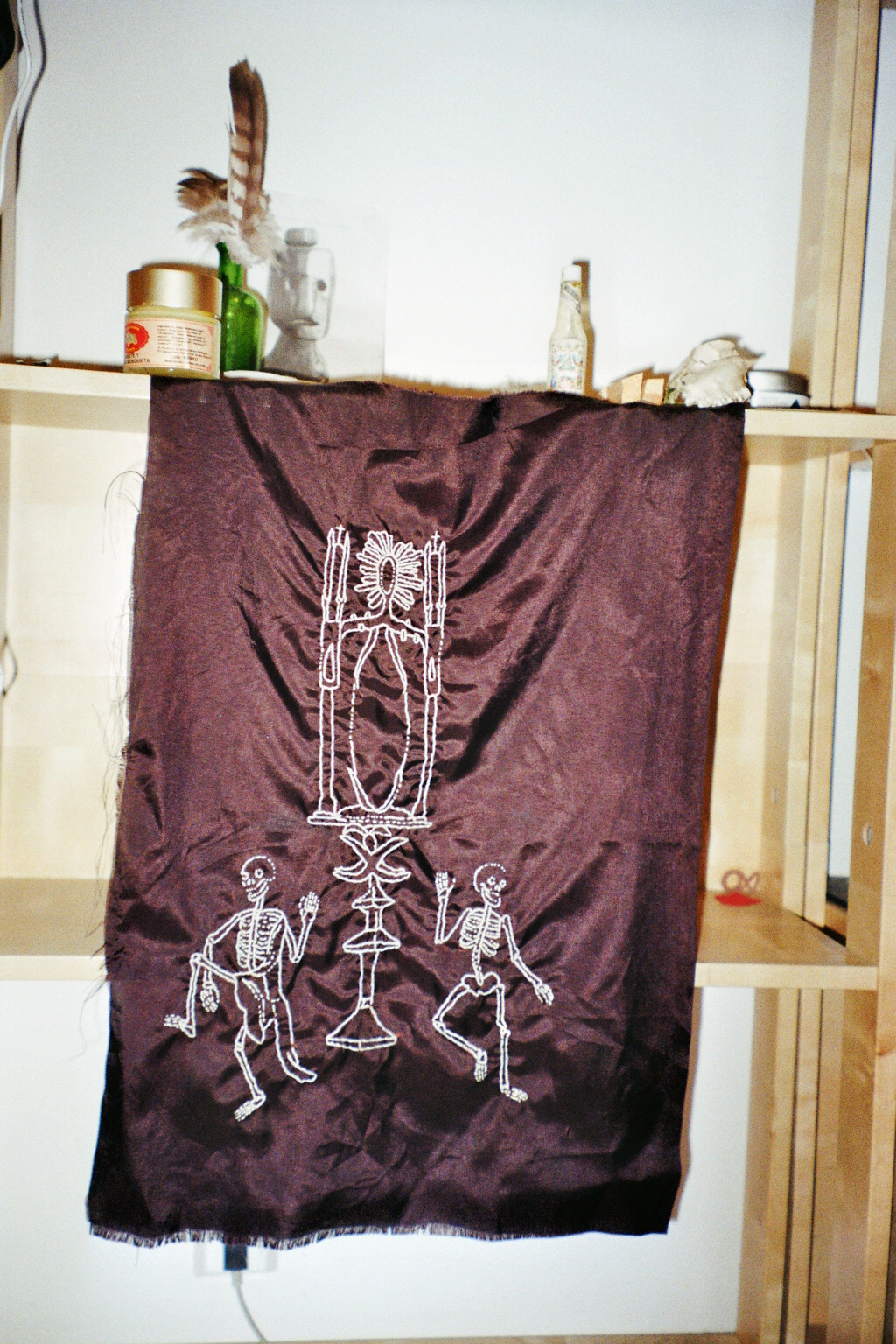
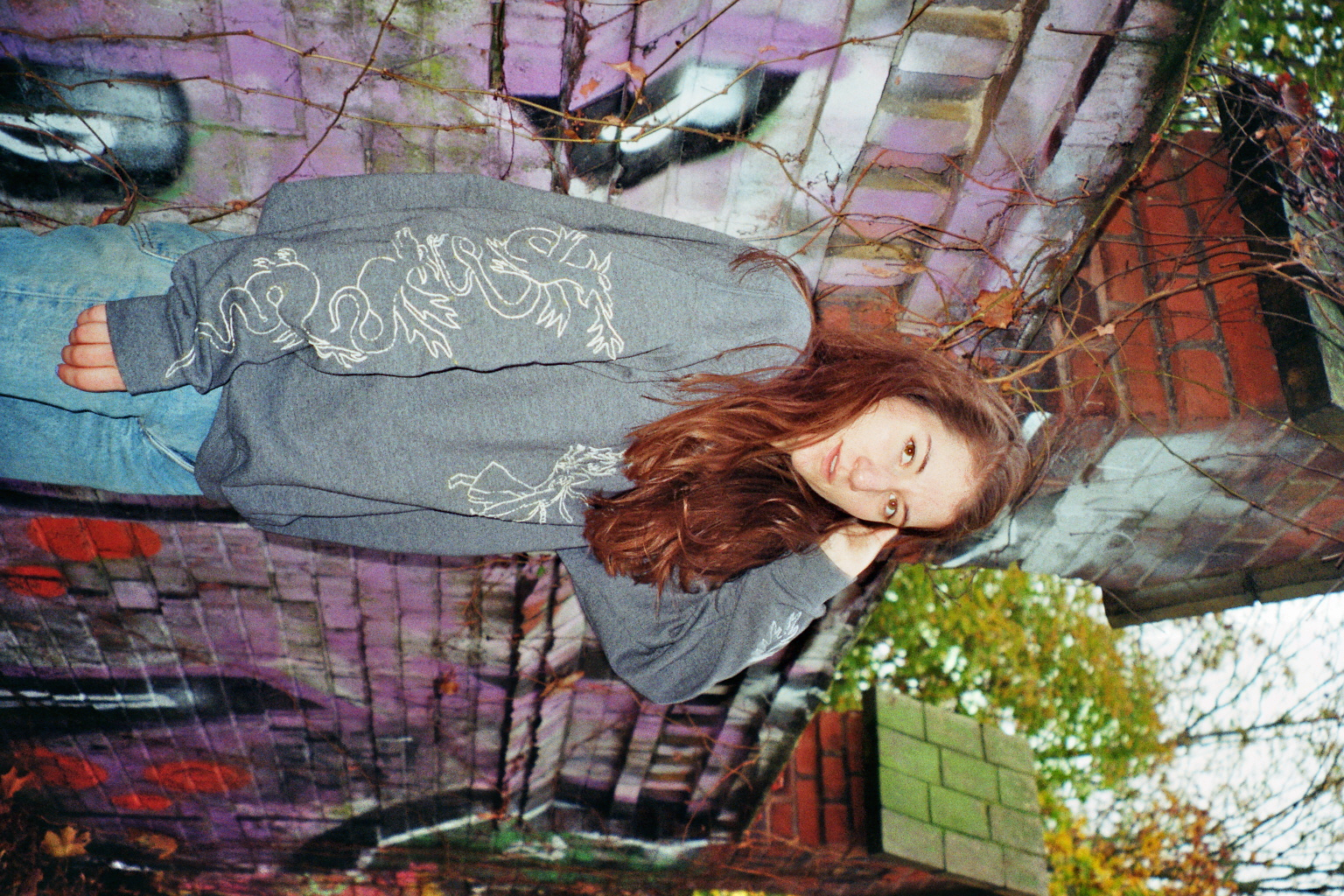
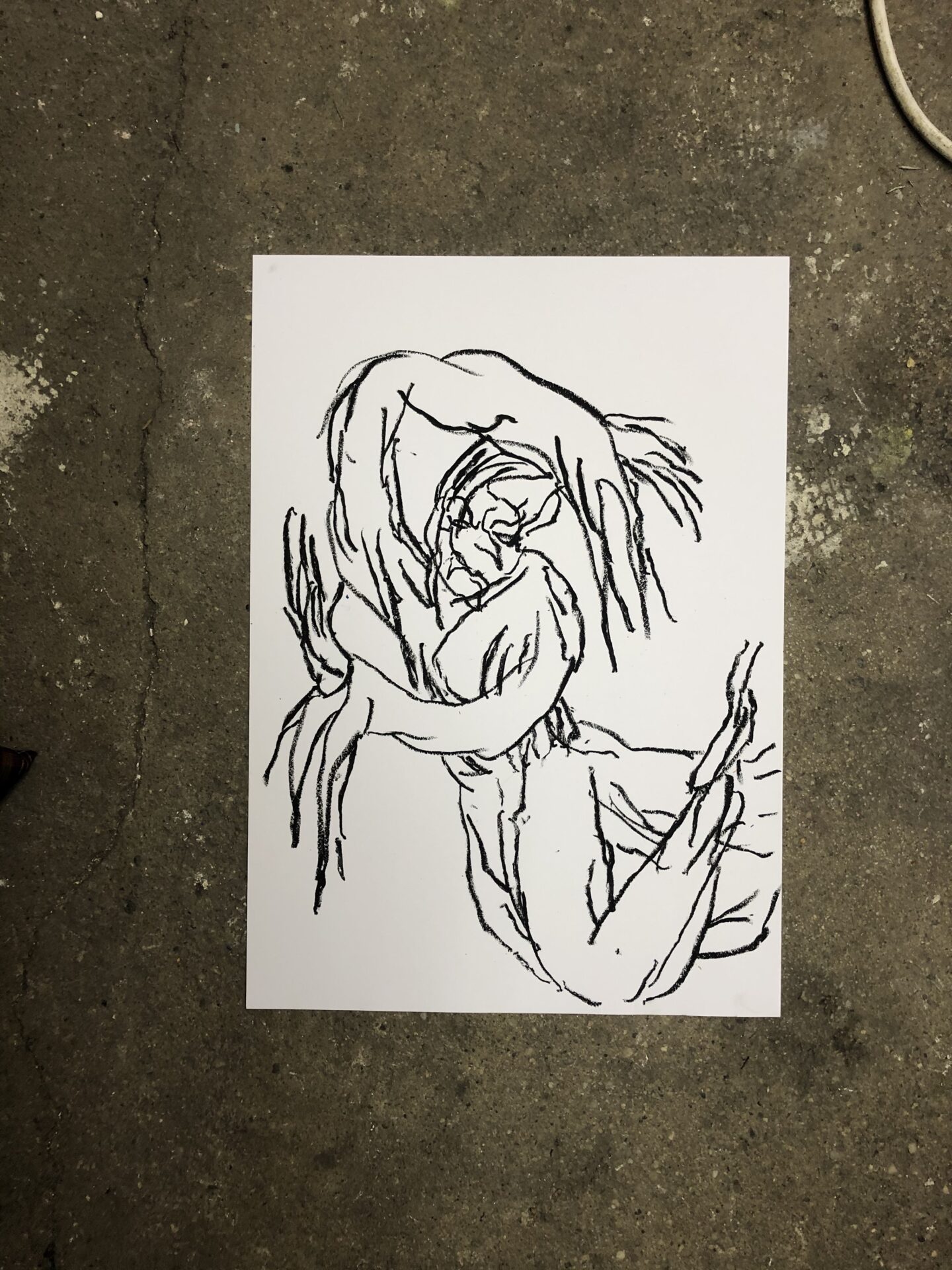
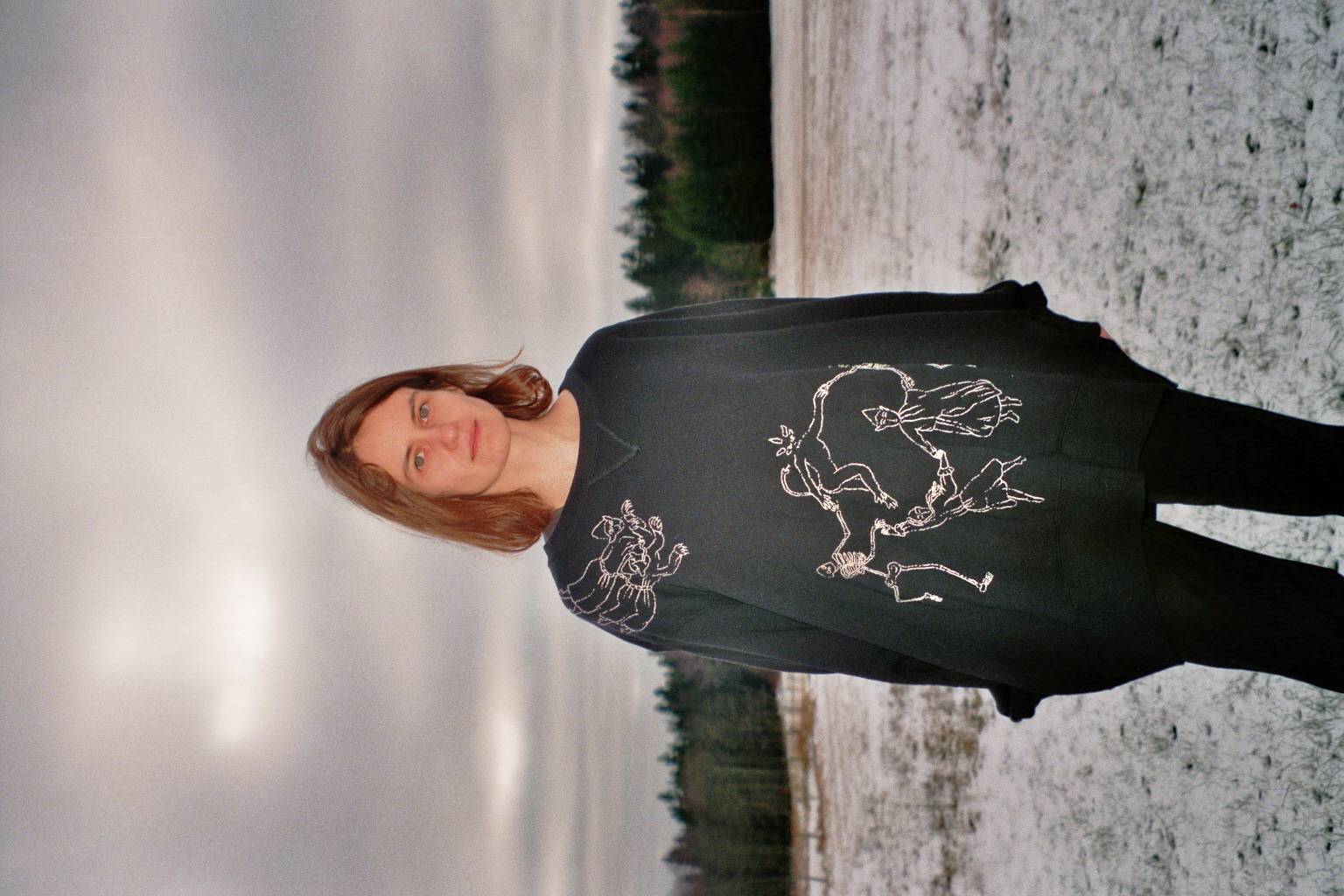
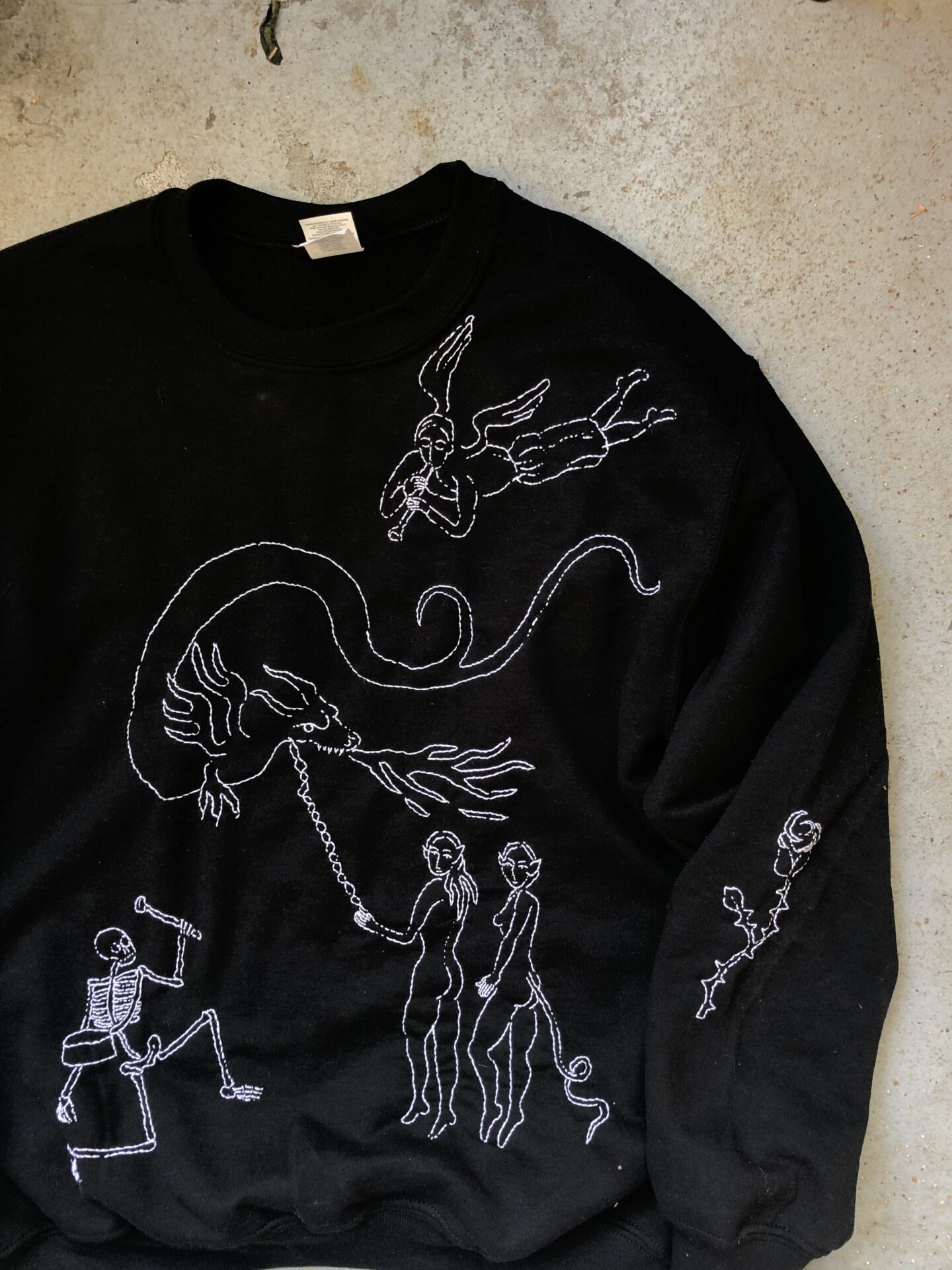
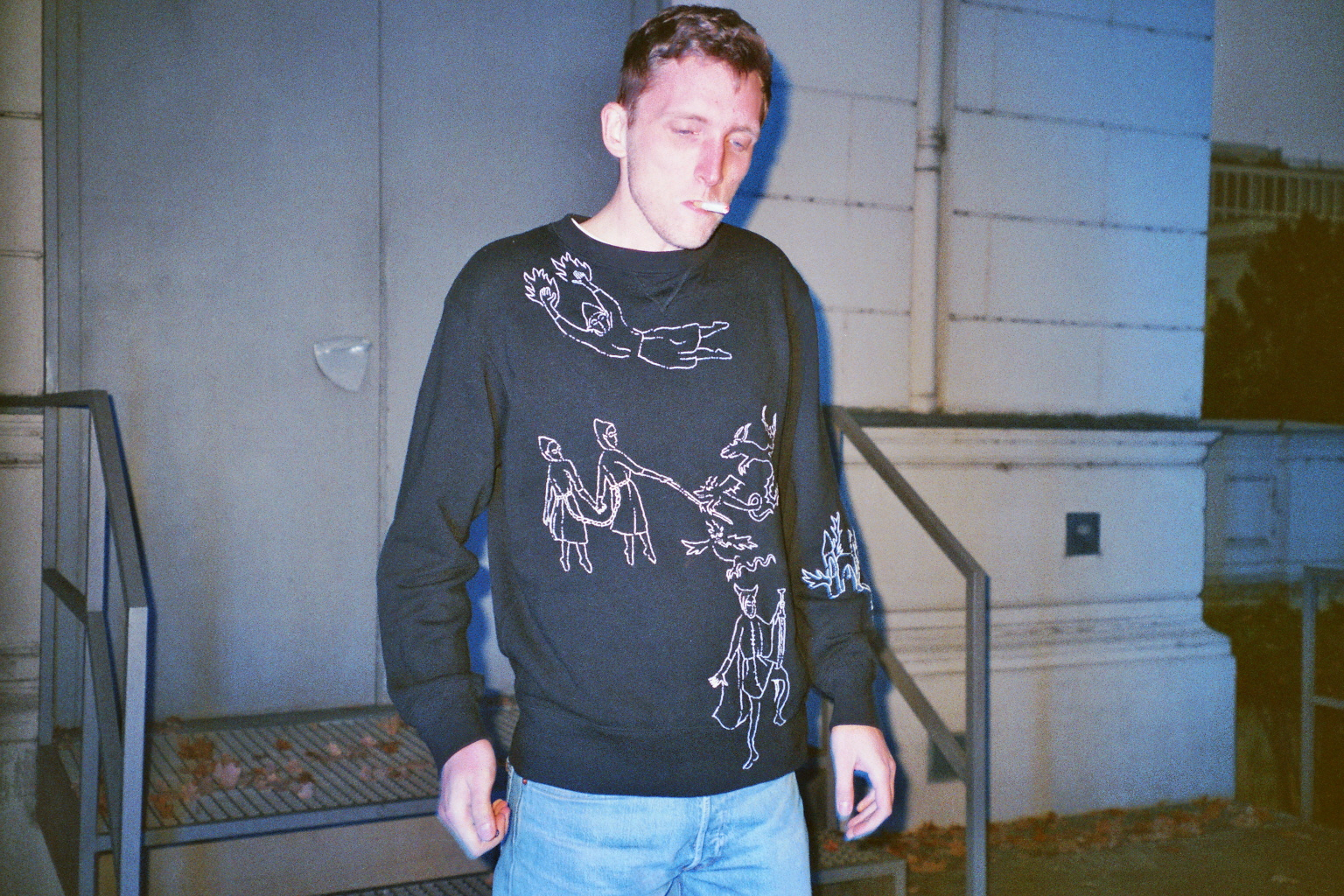
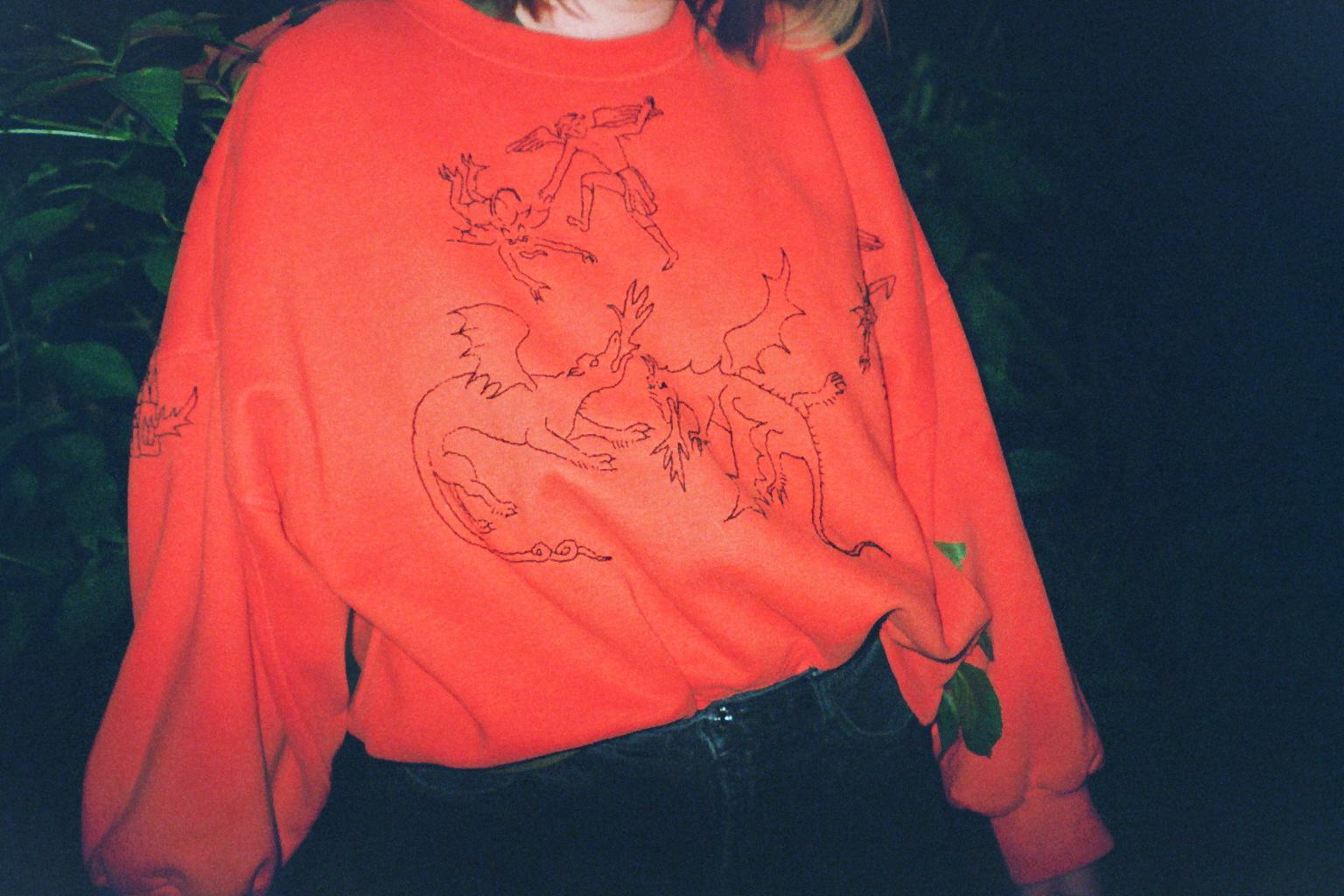
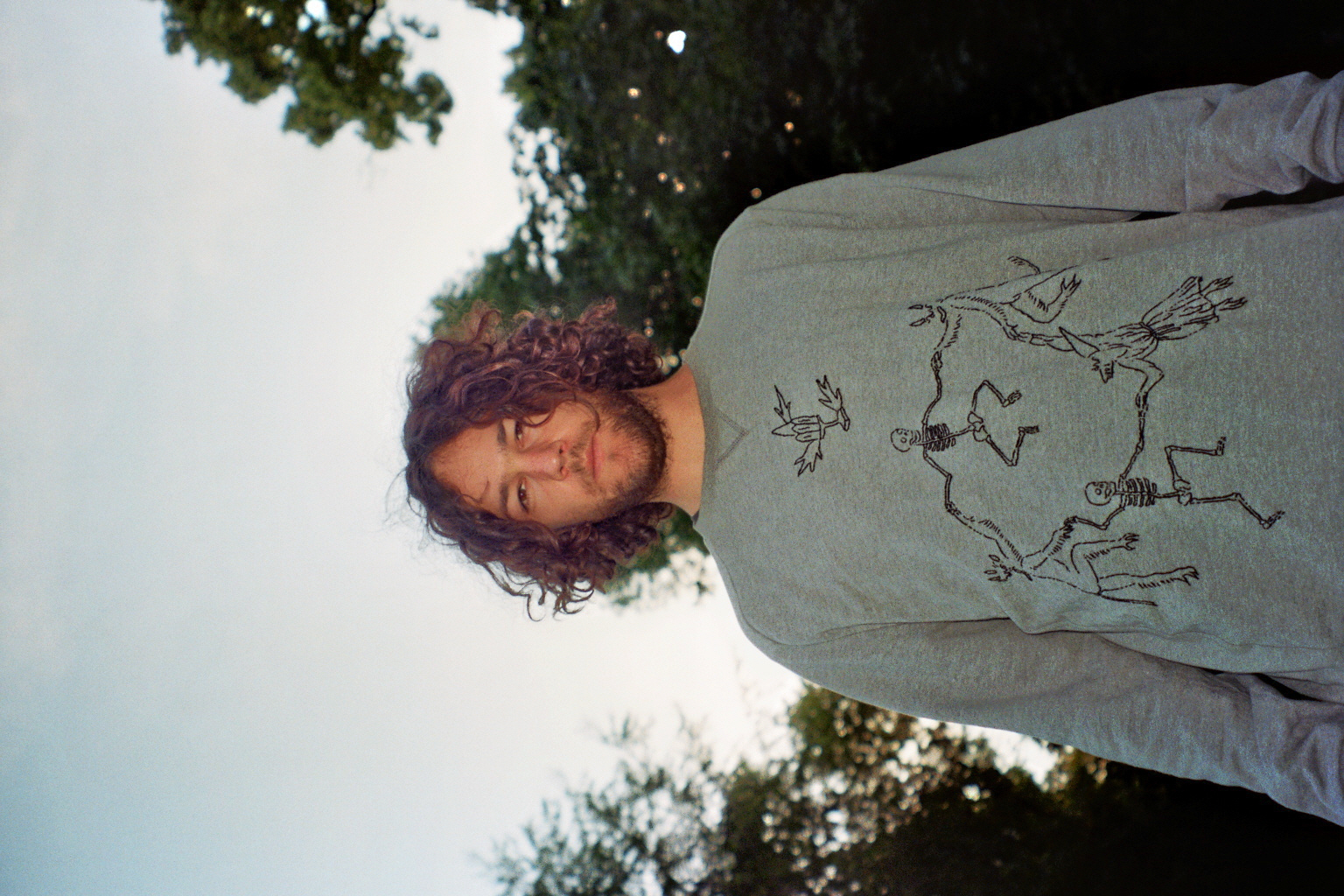
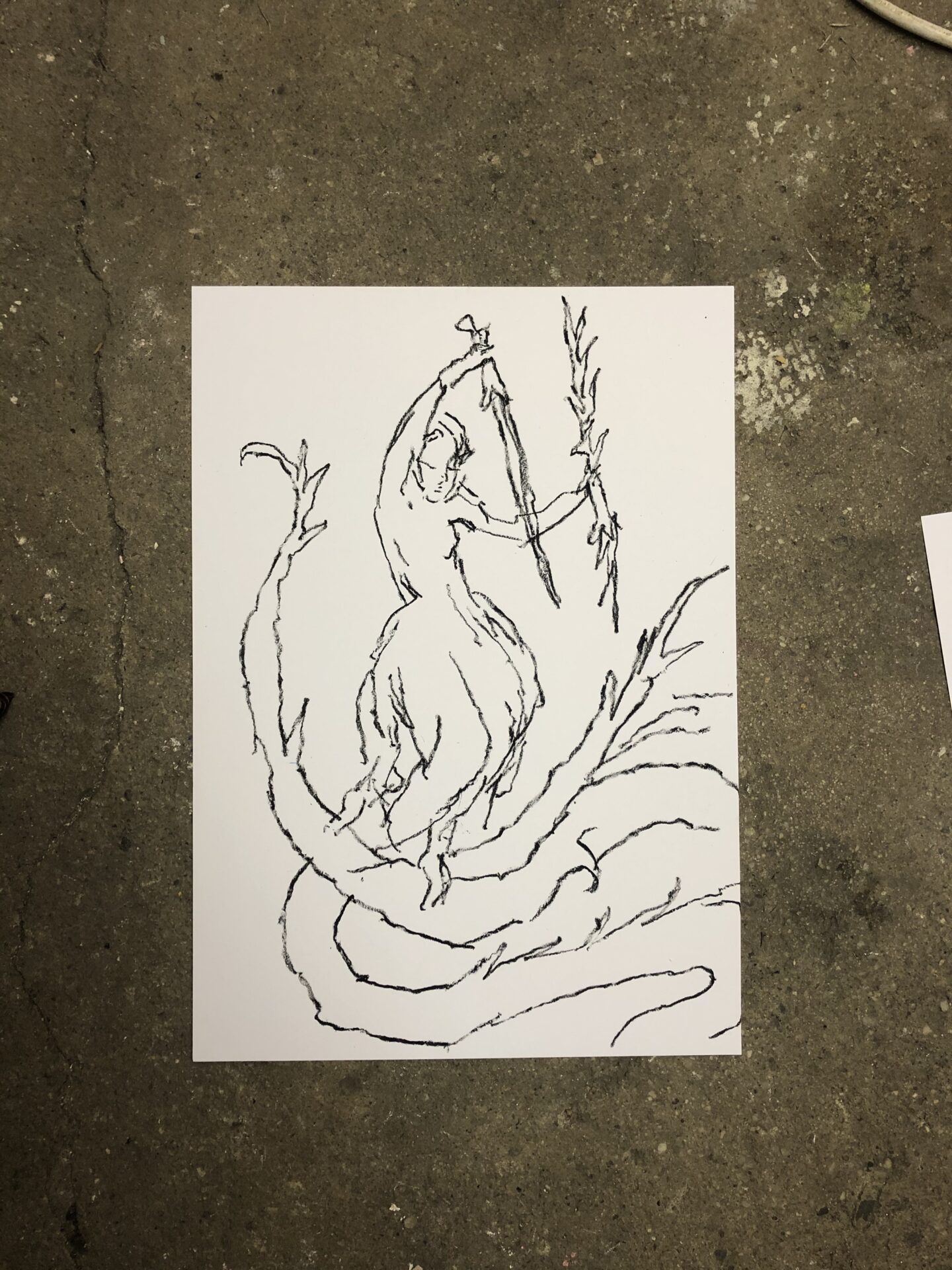
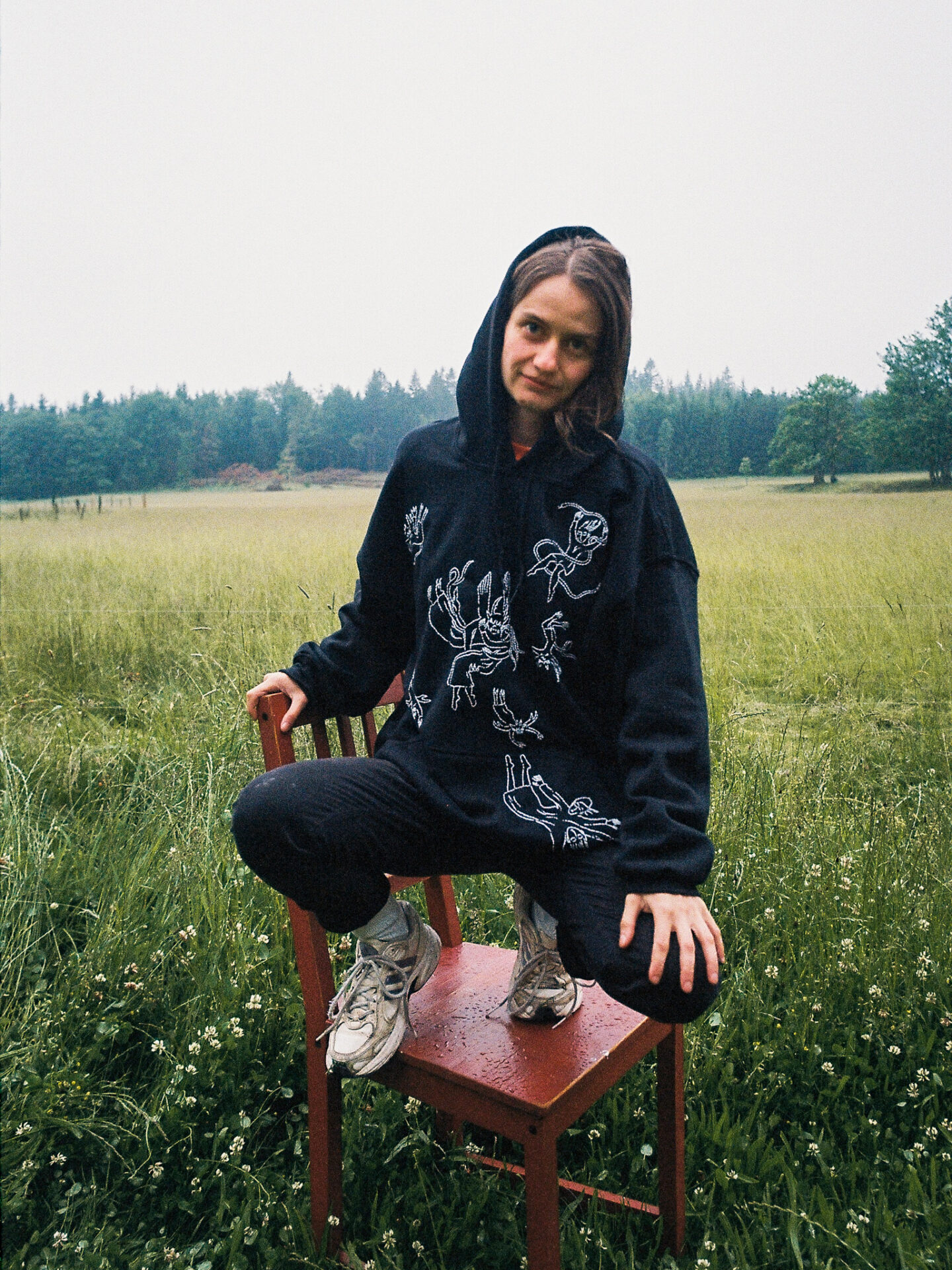
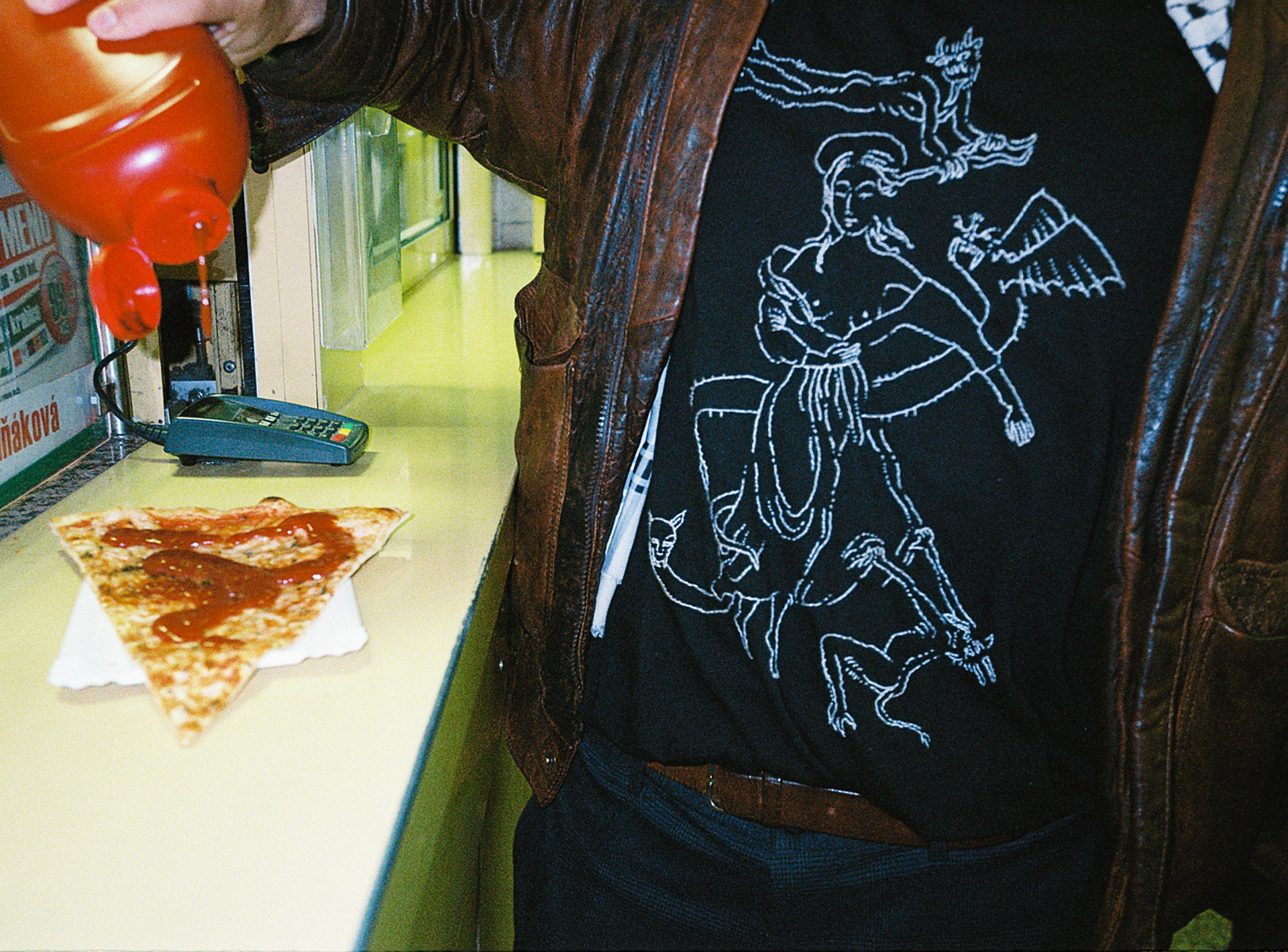
Via linear hand embroidery, Czech artist Tereza Melková unleashes swarms of dancing skeletons and devils, dragons, girls turning into trees, and mythical creatures onto second-hand sweaters and hoodies.
fff

Your embroideries incorporate a medieval aesthetic. Why do the “Dark Ages” call to you? Where lies their attraction?

I think it’s a trend that influences me and speaks to me at the same time – in inclination to the spooky, fairytale-like, and ancient, I see a search for a counterweight to the world’s complexity and the era we’re living in. It’s a form of an escape that can perhaps even be useful in broadening the capacity for imaginative thinking and searching for alternative stories. I’m also interested in handicraft and breaking free from the overall speed and quantities of things the present-day society produces. 

TM_16
TM_02

Where do you find inspiration? Do you have any favourite contemporary artists? 

I like to draw on the history of visual arts but also contemporary events; I like fashion and the aesthetic connected to the music scene. I’m interested in the motives to which artists keep constantly coming back, such as metamorphoses of humans into animals or plants, and their interpretation and relevance for the present. Recently, I got myself a big book from the Aby Warburg exhibition featuring huge numbers of artwork reproductions throughout history, I will be flipping through it a lot. Out of the living artists I favour, I will mention a few Czech names who I like to follow as of late, and who are somehow attached to the medieval aesthetic or have a great way of working with textiles: Šimon Sýkora, Štěpán Brož, Lucie Lučanská, Ana Ruth, Martin Lacko, Kristina Fingerlandová, Marie Tučková.

TM_11
05
TM_18_krystofmelka

Is medieval mysticism something close to you?

Honestly, I can claim to have a deeper insight into it. Some time ago, I took quite the interest in Teresa of Ávila, also as a woman who looked for a way of existing outside of social norms. 

Which themes do you like to portray?

Lately girls whose arms and legs are turning into roots and branches, then jesters, little devils and skeletons who dance and look like they have a blast at a party but there’s something a little ominous about them. Overall, I enjoy when motifs that evoke the Middle Ages or its romantic comebacks gain a new, present-day context, a connotation.

TM_10_krystofmelka
TM_10

How did you come across embroidery as the expression medium for your illustrations? 

I was searching for a new hobby, a skill I could learn; something by which I could relax without looking at a screen, something to listen to a spoken word by, keep my hands busy and plunge into for extended periods of focused time. Through it, I also process my relationship with the speed and manner of fashion production in relation to the clothes we wear.

TM_01
TM_19

Does the medieval aesthetic also permeate into your architectural works?

I’m certainly interested in medieval architecture and its revivals but I wouldn’t say it’s a direct influence. Although maybe in the way I work as I’m close to understanding and creating architecture via drawing.

TM_04
04
TM_06_krystofmelka

BIO / Tereza Melková lives and works in Berlin and Prague, and studied architecture at the A2 Studio at Prague’s UMPRUM with internships at the sculpture studio and visual and critical studies at SVA New York. Lately, she’s been working with hand embroidery on second-hand clothing. On pre-owned hoodies with logos of large fashion companies, she embroiders new stories swarming with little demons, burning houses and dragons. Through the motifs where humans blend with animals and women sometimes turn into trees, their wearers get to bring a little bit of dreaming and mystery into their daily lives. hand embroidery that takes a long time and can’t be reproduced in a serial fashion is also a small commentary on the absurd speed and negative environmental impact of contemporary fast fashion production.

CREDITS

Fashion / Tereza Melková @_teru.m

Interview / Kateřina Hynková @khynko

Did you like it?
Share it with your friends

You may also like

Ema Prosová's work doesn't announce itself loudly. Her drawings and paintings on silk operate in a register that's contemplative, layered, almost whispered: figures emerging from lychee fruits, hospital rooms floating in eerie space, architectural fragments mingling with natural forms. The work comes from years spent moving between cultures and techniques, learning lacquer painting in Vietnam, silk painting in Indonesia, living in Tokyo, and now finishing her degree at the Academy of Fine Arts in Prague.
Polish choreographer Iza Szostak’s circus is a philosophical system, a choreography of risk, precarity, and collective survival mirroring the contemporary condition. Discover today how her new performance Trapeze, premiering at Studio Hrdinů in Prague, turns the trapeze bar into a narrator, and the clown into an energy valve for a world on the brink of collapse.
“It is a story about a long night, about everything that disappears during the day and only comes out after dusk.” Polish fashion designer Pat Guzik breathes new life into her garments by collaborating with visual artists, such as Aleksandra Waliszewska and Zbiok Czajkowski, whose dreamy and tongue-in-cheek works adorn the skirts, sweatshirts, jackets, and other ready-to-wear pieces by the designer.
French painter and illustrator Sébastien Pastor navigates between naïve figuration and abstract expressionism, building visual worlds where bold color palettes pulse with rhythm and absurdity. Discover how his colorblindness became a creative signature and how he leaves room for the enigmatic in his works.