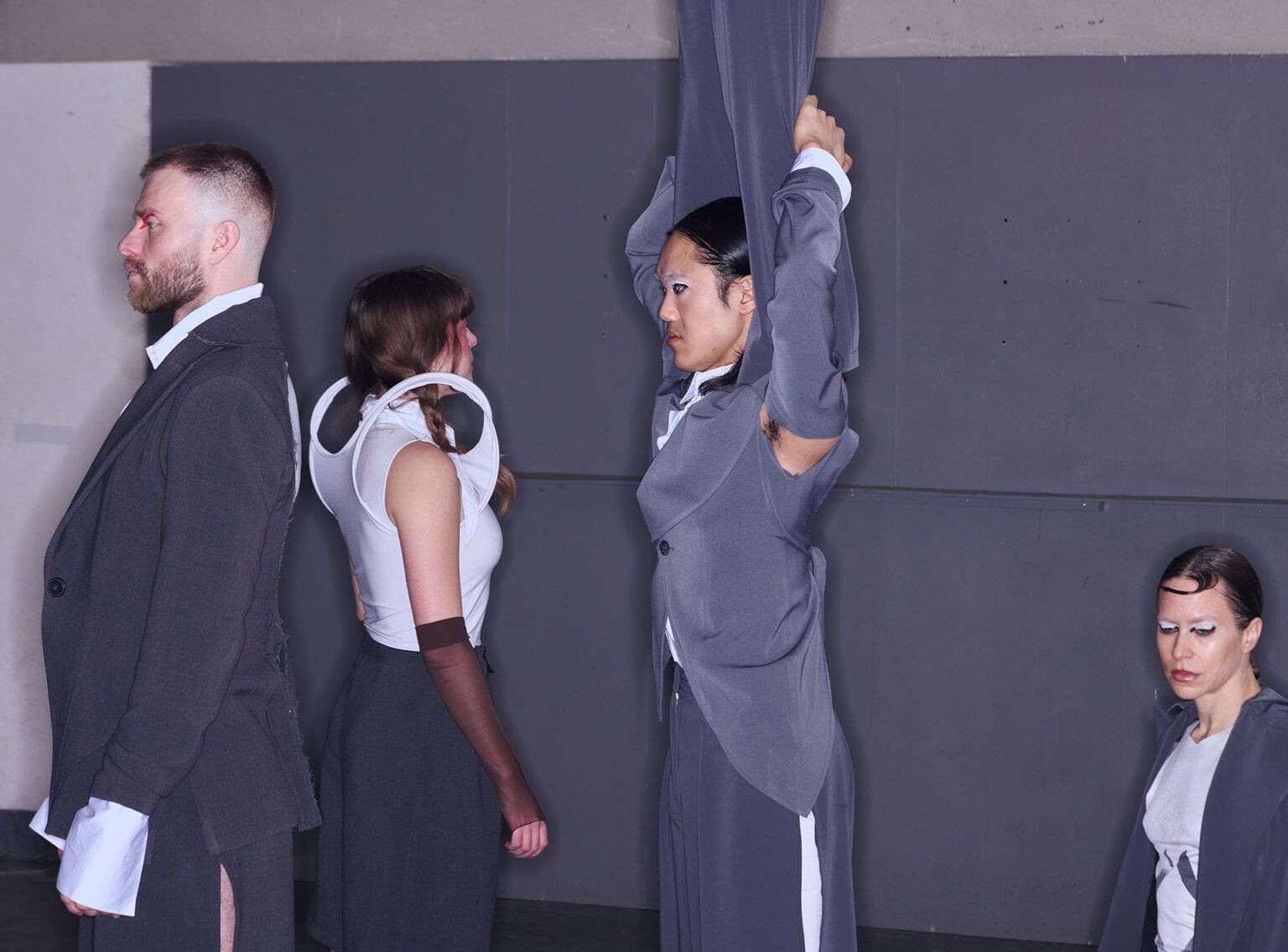
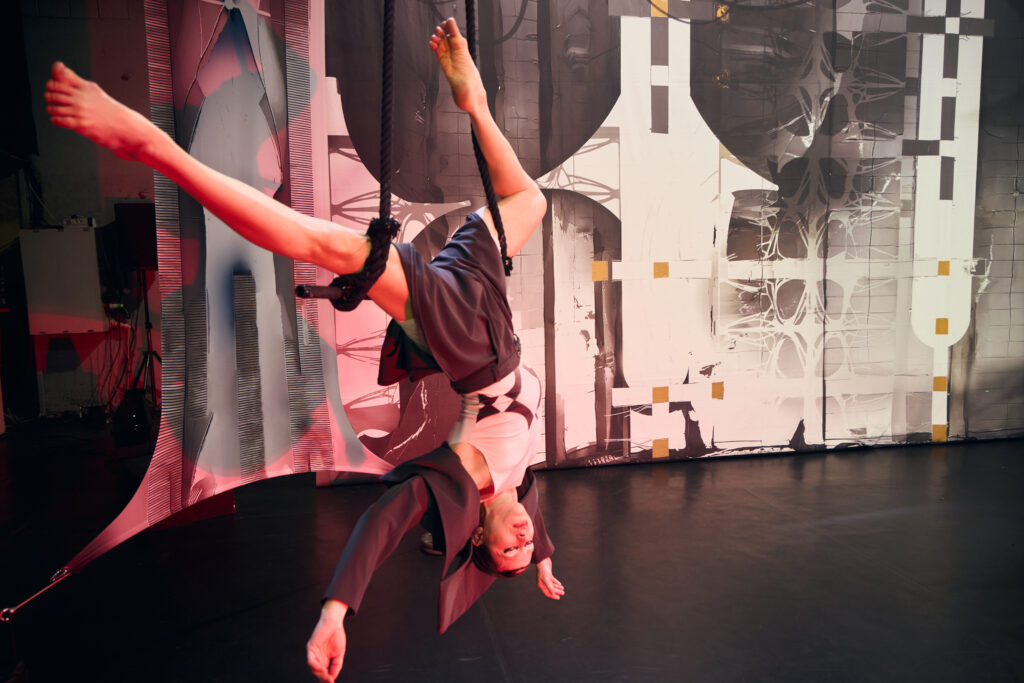
Trapeze (Trapéza) is not a circus show. It is a dance performance that finds its logic in the circus – its permanent instability, its normalized risk, its bodies balancing between skill and fragility. Choreographed by Iza Szostak and performed by Edita Antalová, Adam Mašura, Eva Mora, Karolína Růžičková, and Taro Troupe, the piece premieres on February 28, 2026 at Studio Hrdinů in Prague, where fear, danger, and risk hang in the air, ever-present and never fully named.
The production brings together an international creative team: scenography and costumes are designed by Paula Gogola and Maty Grznár, with music by Jakub Słomkowski and lighting design by Václav Hruška. In the interview below, Szostak and Gogola speak about the circus as a conceptual model, the clown as a survival strategy, and the trapeze itself as a voiceless witness finally given the chance to speak.
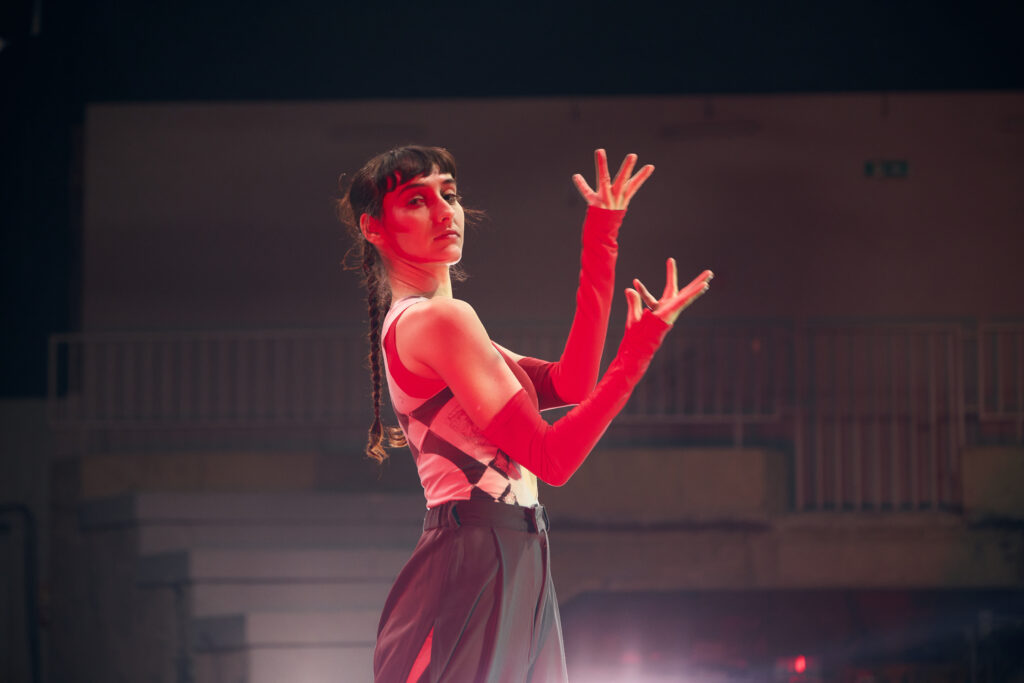
The circus is usually understood as entertainment, as spectacle. But you’re using it as a conceptual model. What made you turn to circus as a way of thinking about the contemporary condition?
Iza: I turned to the circus precisely because I’m not interested in it as entertainment or spectacle. What fascinates me is the logic of the circus – the way it operates as a system. When you look closely, it’s a surprisingly accurate model of how contemporary life is organized. Constant tension, the normalization of risk and danger, the pressure to perform flawlessly, the exposure of the body, the closeness of failure, and the need to keep going despite all of that – these are not just circus conditions, they are everyday human conditions today.
Circus artists work within permanent instability. Risk is not an exception, it’s the baseline. Trust – often literal trust in another person’s body – is essential. There’s nomadism, precarity, and a strong sense of community built out of necessity rather than comfort. Clowning, too, is important to me: not as humor, but as a strategy for survival, a way of exposing fragility and absurdity while continuing to function. All of this mirrors how we live now – how we work, move, and relate to one another under constant pressure.
And yes, this is also very much about the condition of artists today. Artists operate in a system that demands flexibility, mobility, perfection, and resilience, often without security. In Trapeze, the circus becomes a way to think through that reality choreographically – not by recreating circus acts, but by translating its structures into movement, relationships, and compositional rules. The circus gives me a language to talk about vulnerability, risk, and collective responsibility as defining features of our contemporary condition.
You mention violence being normalized in the circus structure. Can you unpack that – what kind of violence are we talking about?
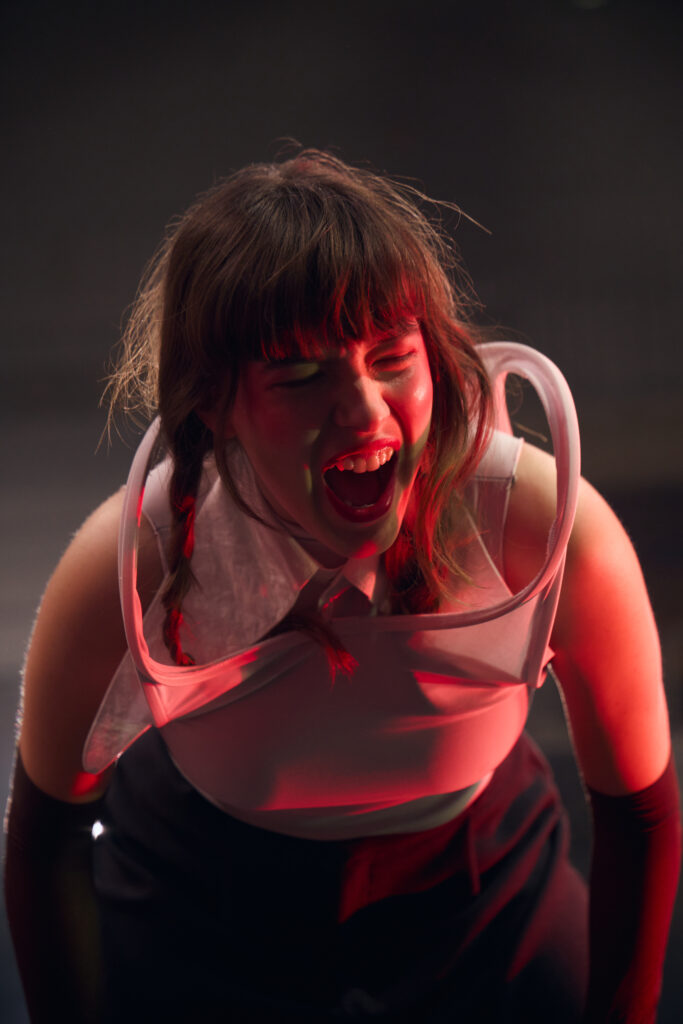
Iza: The violence and nihilism represented by perhaps not so much the world of the circus as the world of the joker – so simply the times we live in: times of constant tension and danger, where violence is normalized.
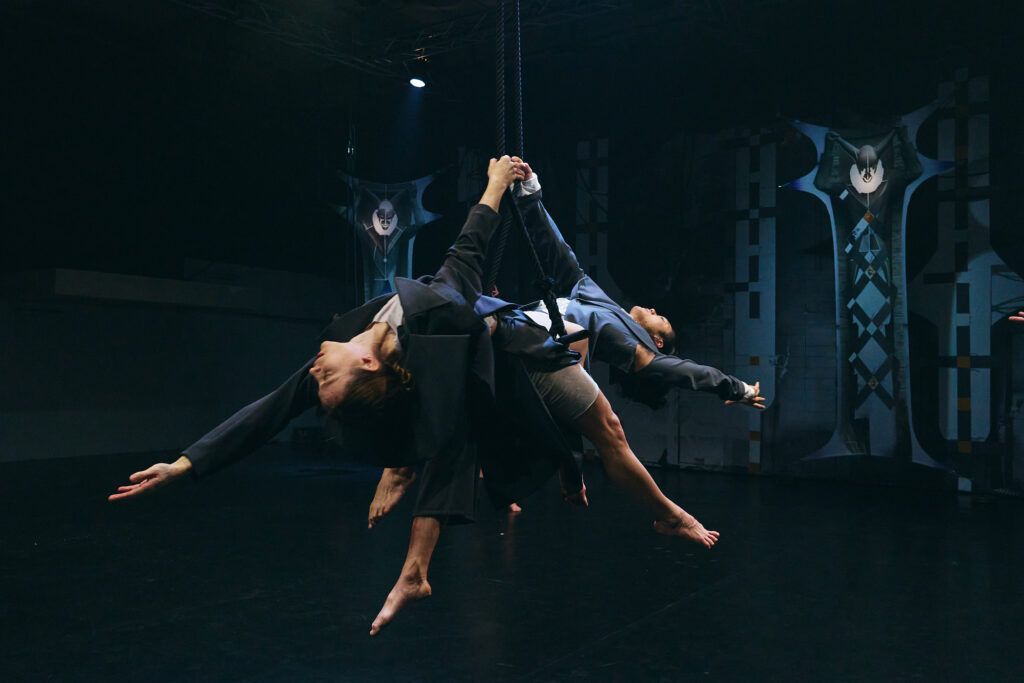
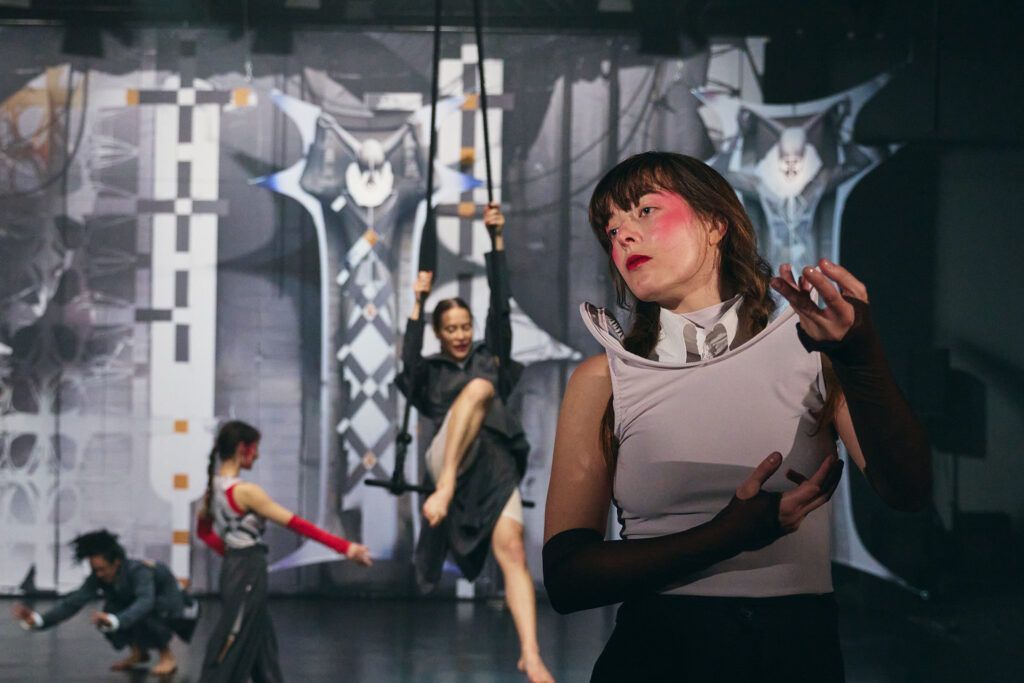
The clown appears as a central figure in the work, but you’re framing it in a very specific way – not as comic relief but as an energy valve. What does that mean?
Iza: For me, the clown is not comic relief but an energy valve. It absorbs fear, tension, and failure and transforms them into movement through exaggeration and repetition. Like Sisyphus, the clown keeps going, carrying shame and incompetence so the system can continue to function. It is a figure of systemically permitted violence – we are allowed to laugh at its fall, its humiliation, and to look away.
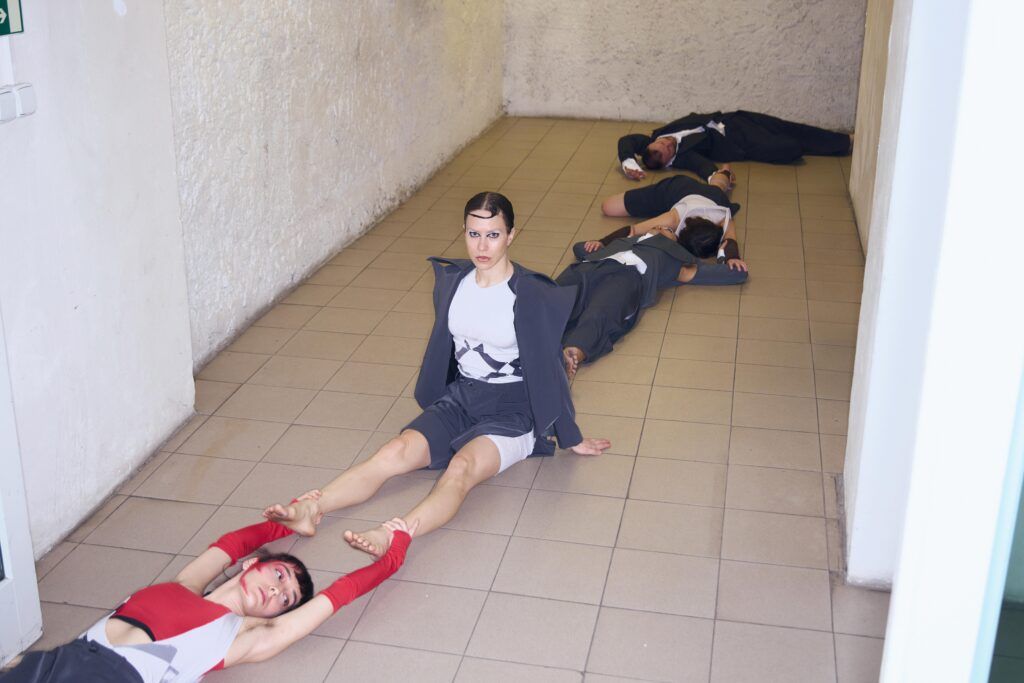
In Trapeze, the clown is not a single character but a circulating energy. Performers shift between being closer to the clown and closer to the Joker. The clown still belongs to the system and exposes its cracks from within; the Joker breaks away and turns that exposure into violence. There is no central figure, because the piece speaks about a world in which we are constantly surrounded by Jokers, and where the line between coping and collapse is increasingly thin.
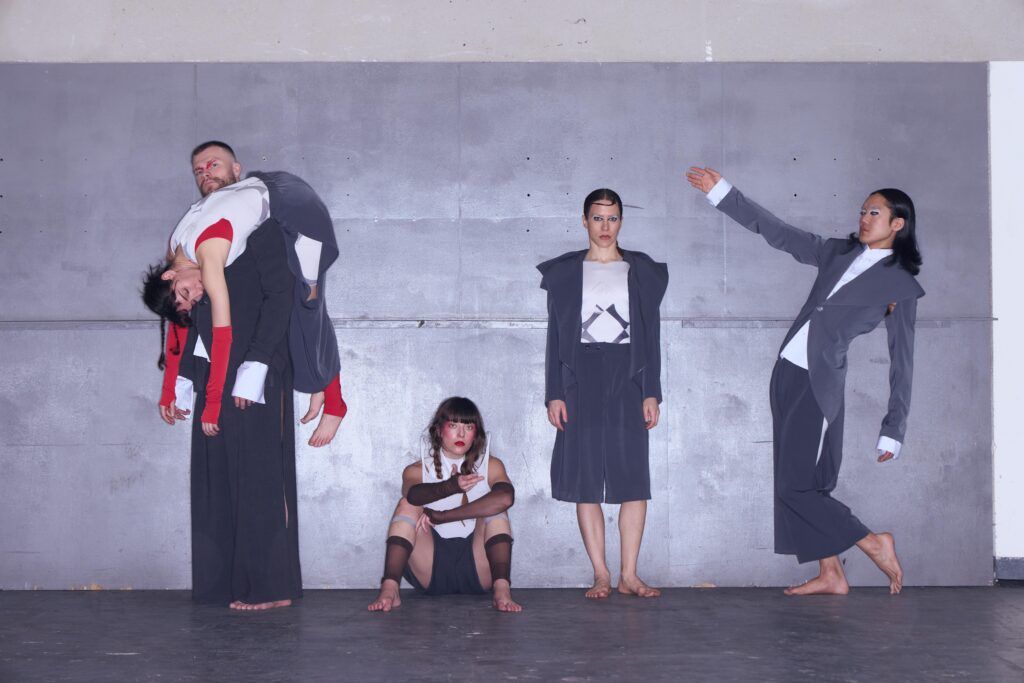
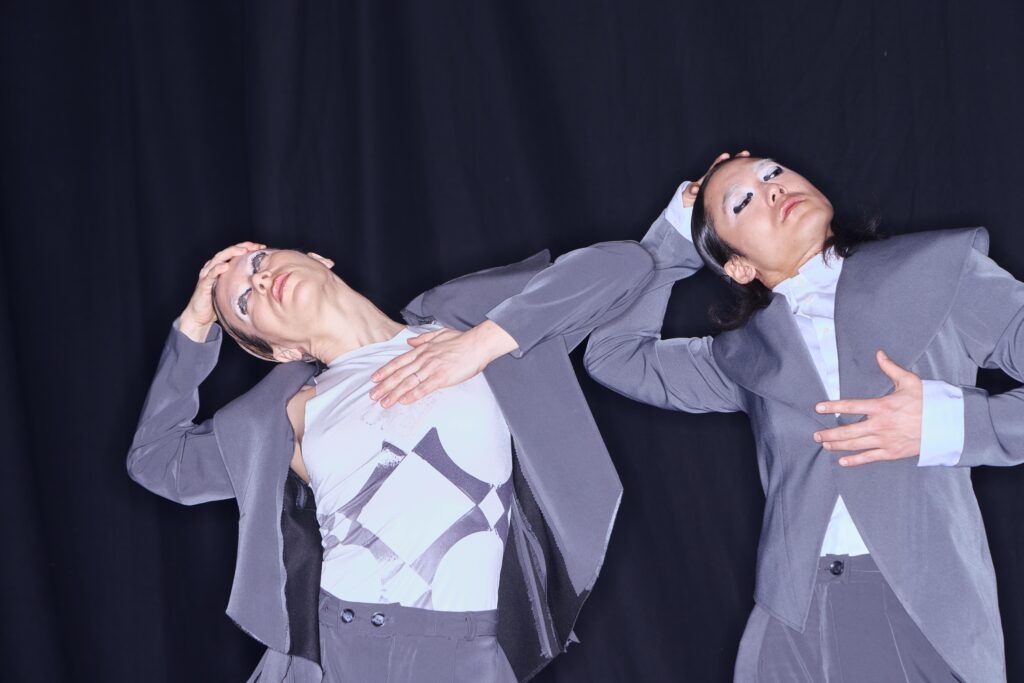
There’s this tension in the work between the circus as this supposedly free, nomadic, marginal practice and the reality of it as a site of discipline and economic violence. How do you navigate that contradiction?
Iza: I don’t try to resolve or smooth over that contradiction – I work from inside it, through subversion. I’m interested in the point where the myth of freedom collides with the lived reality of discipline, economic pressure, and violence embedded in mobility. Circus nomadism was not a free choice but a survival strategy, and today it often functions as a nostalgic aesthetic or a brand.
My thinking here was strongly inspired by Bauke Lievens’ open letter written as part of Between Being and Imagining, which critically unpacks this myth of circus freedom and shows how it is rooted in capitalist competition rather than emancipation.
In Trapeze, we respond to this by creating a monologue made of many voices – voices of nomads, artists, free spirits, but also of workers caught inside a system. This polyphony doesn’t belong to a single character; it becomes the voice of the trapeze itself, a figure that exists among us. Rather than making work about the circus as a separate world, we use its logic to speak about contemporary conditions of life and labor. The subversion lies in exposing the mechanisms behind the myth of freedom and restoring its political, rather than romantic, potential.
The trapeze itself is described as a narrator in the work – speaking from the perspective of an object. How does that function?
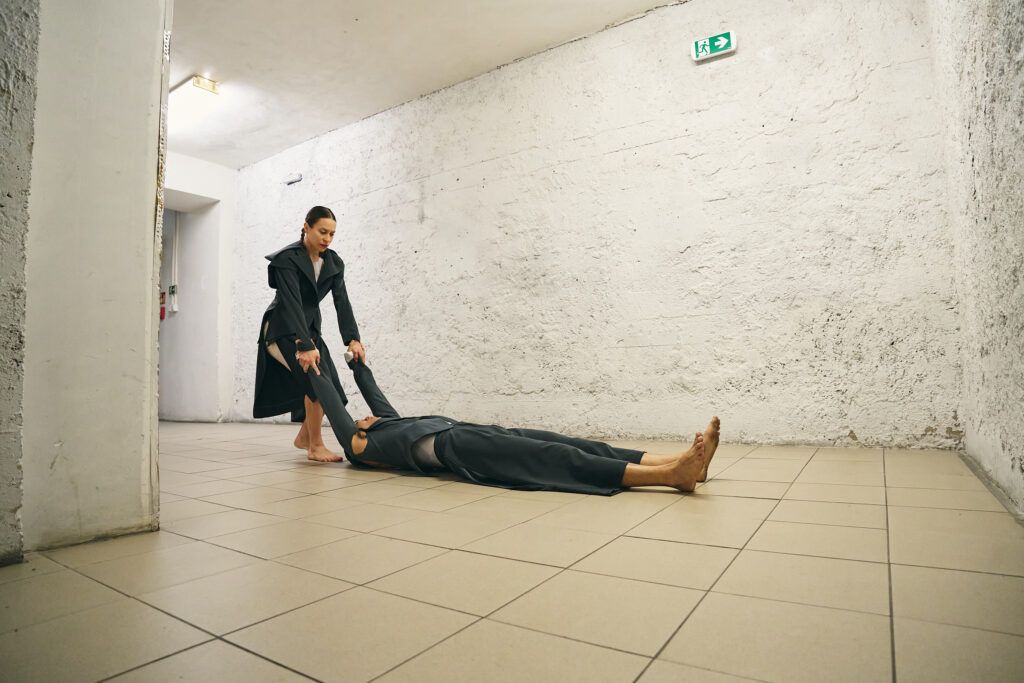
Iza: The trapeze functions as a non-human narrator. It speaks from the perspective of an object – something central to the action but historically voiceless. Its story has always been told by performers, by technique, by spectacle, but never by the trapeze itself. In the piece, performers become its medium: you can’t execute the figures without the trapeze, but the trapeze also cannot “perform” without the body. Their agency is mutual, unstable, and exposed to risk.
I’m interested in how the trapeze disciplines the body rather than liberates it. It trains, controls, and subjects the body to precision – historically tied to imperial ideas of space, domination over nature, and fantasies of limitless expansion. Giving it a voice allows these histories to speak from inside the object itself.
This also comes from my broader practice of granting agency to non-living matter. In my earlier work, Balet Koparyczny – shown a decade ago at the Norma Festival in Ostrava – I anthropomorphized excavators and gave them life. More recently, I gave voice to a sofa telling stories of the 1990s in Poland and crime in Skaj is the Limit. The trapeze continues this approach: it is not just a tool or a symbol, but an active narrator that carries memory, tension, and history through its movement.
As you approach the premiere at Studio Hrdinů, what do you hope stays with people after they leave?
Iza: I hope the performance leaves audiences with a sharpened awareness of the world we inhabit. The chaos and dangers that surround us cannot be softened or abstracted. I feel compelled to confront them directly, to reflect the realities we live in rather than escape from them. There is a certain absurdity in seeking distraction, as if going to the circus could shield us – except, perhaps, to amuse children.
What I want to linger about after the show is the recognition that we live among nihilists and those in power who actively harm the world, and that this is not abstract, but immediate and tangible. The performance does not comfort; it clarifies, making visible the tensions, risks, and moral urgencies that shape our lives.
At the same time, I hope the piece leaves a sense that our only way forward is through collective engagement – through acting together, remaining open, embracing mutual responsibility, and showing care and attentiveness to one another. The work is a reminder that in a world rife with chaos and danger, resilience, insight, and even hope are not solitary achievements but emerge through connection, dialogue, and shared vigilance.
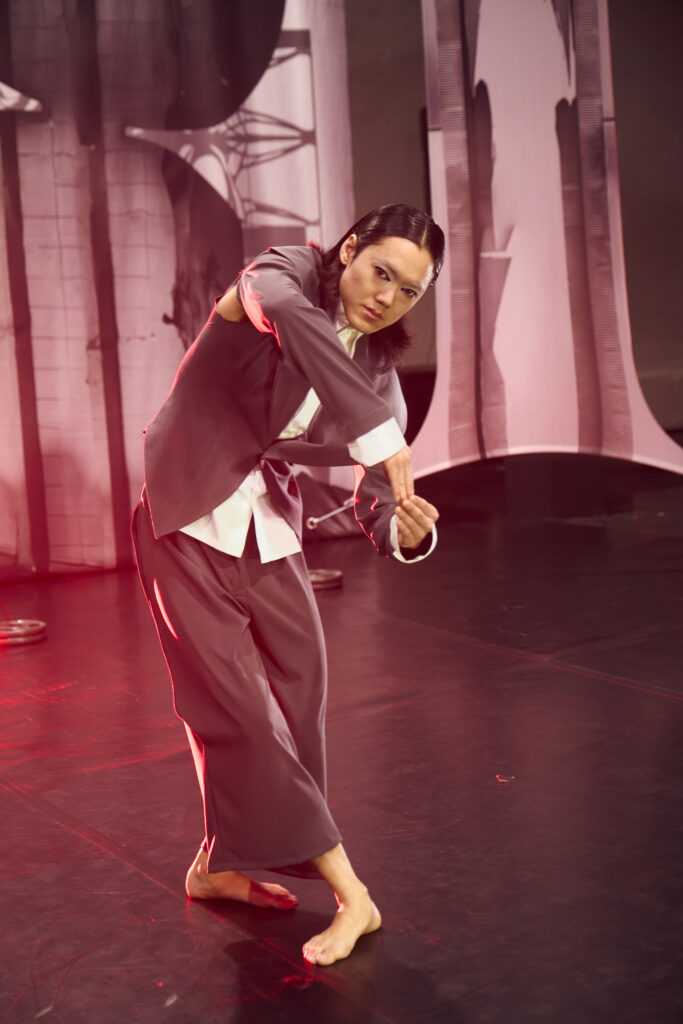
You’re designing both the scenography and the costumes with Maty Grznár. How do you translate these ideas into physical space and bodies?
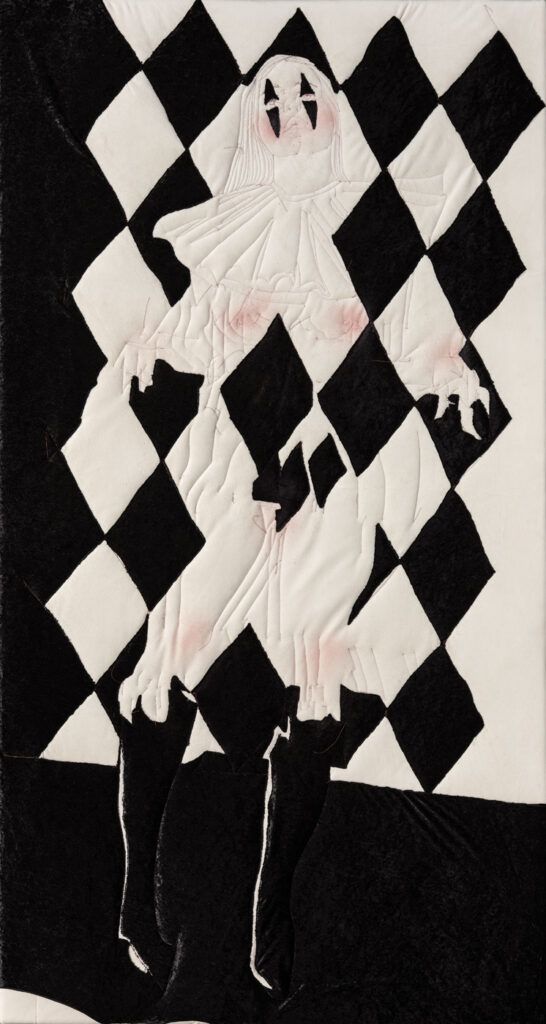
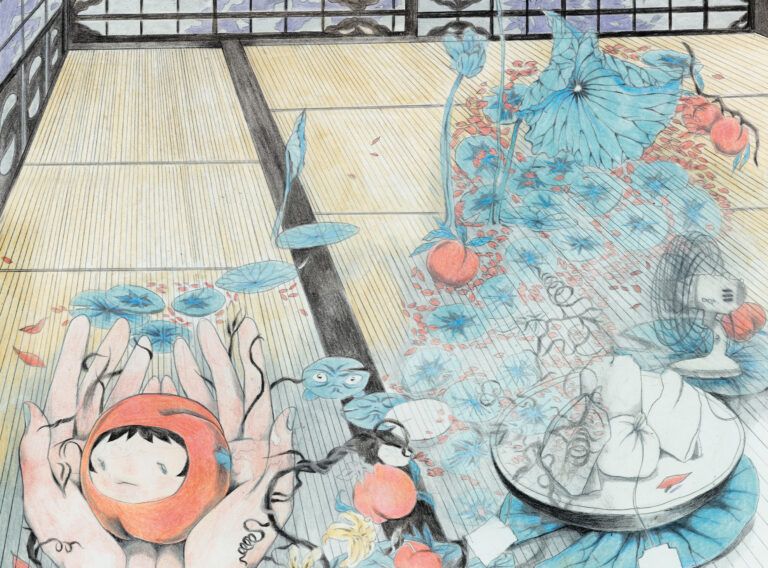
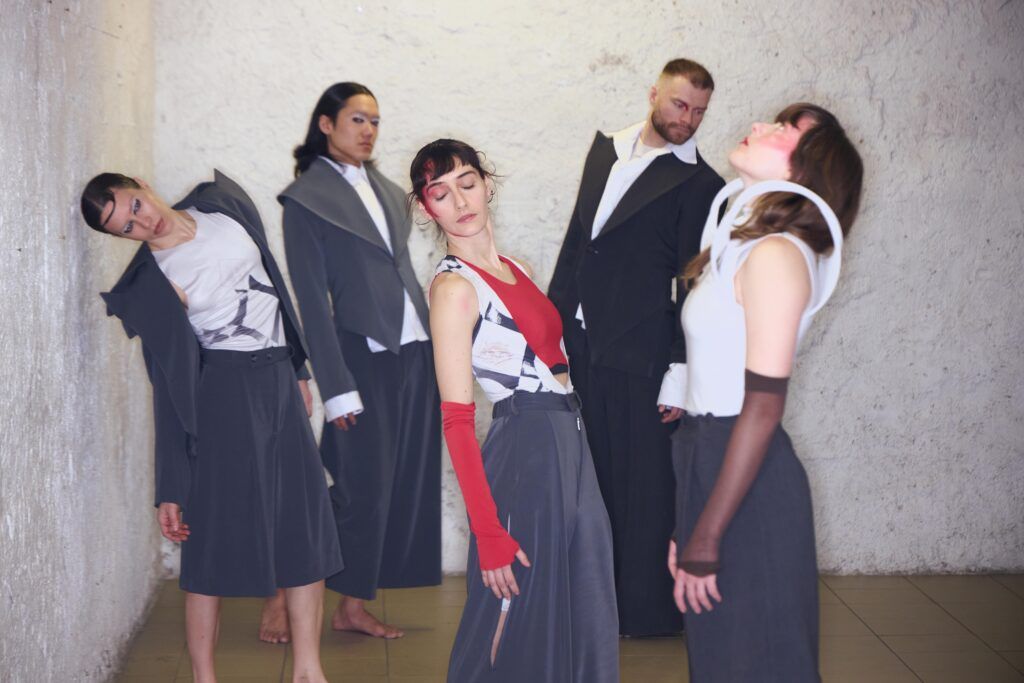
Paula: We were thinking about how to recontextualize certain classical circus tropes and substitute them with structures that might open up different ways of reading what the choreography is trying to communicate. Some motifs we worked with were turned out far-fetched, some were completely replaced – the main idea was really just to play with ambiguity.
Working within the limits of a backdrop format was challenging, but I think we’re onto something. We’re very excited to see how it all comes together once the preparations are finished.
What does this piece demand from the audience that might be different from more traditional theatrical or dance experiences?
Paula: It’s hard for me to compare, because this is still a very new field for me personally. But maybe that unfamiliarity created something exciting on both sides – it allowed us to explore the possibilities of a conventional scenographic setup without being too tied to traditional approaches. It felt fresh. We definitely had a lot of fun brainstorming with Maty and Iza.
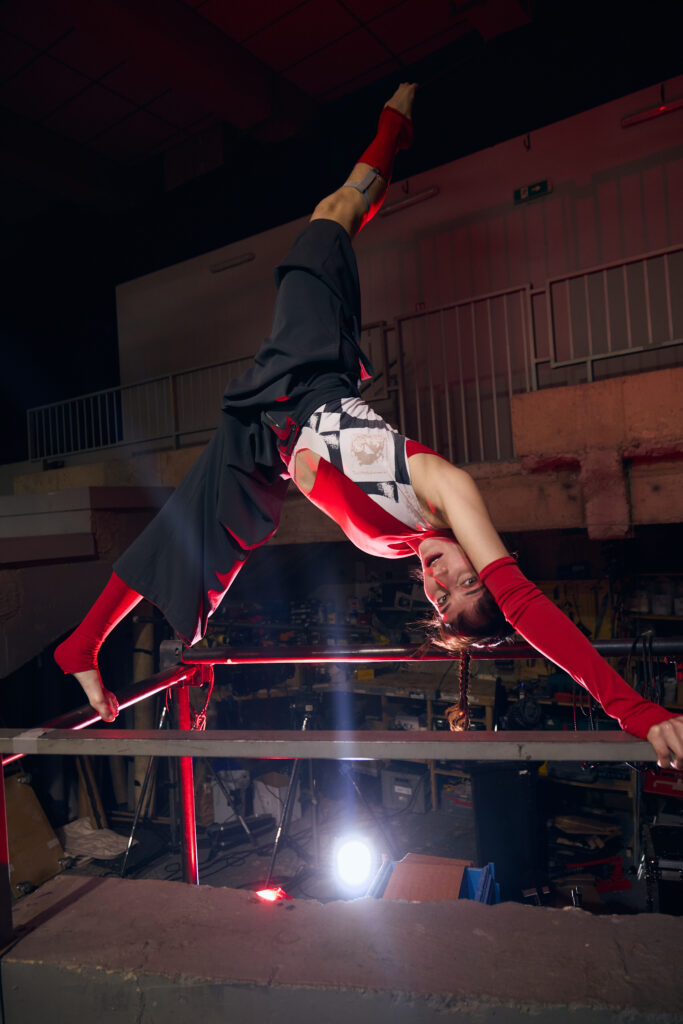
You work across visual arts and theatre. What does your practice as an artist bring to the theatre environment that might be different from working purely within theatrical conventions? How does that artistic perspective shape your approach to scenography and costume in Trapeze?
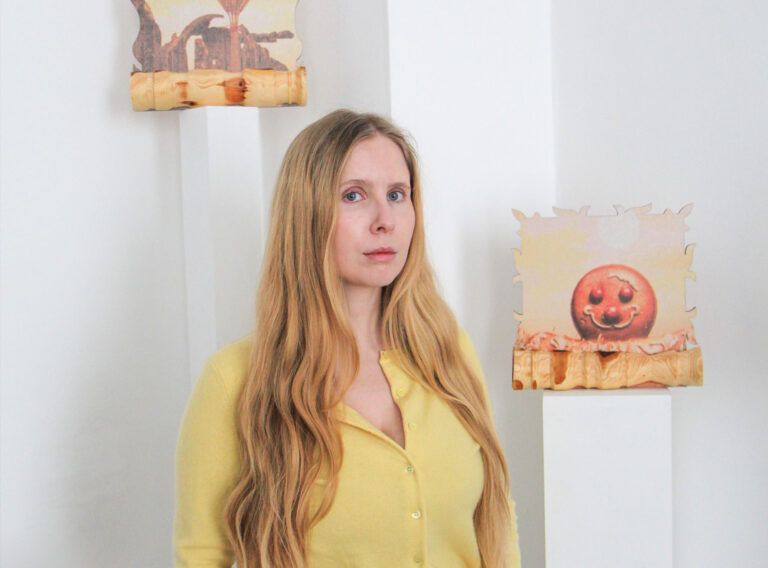
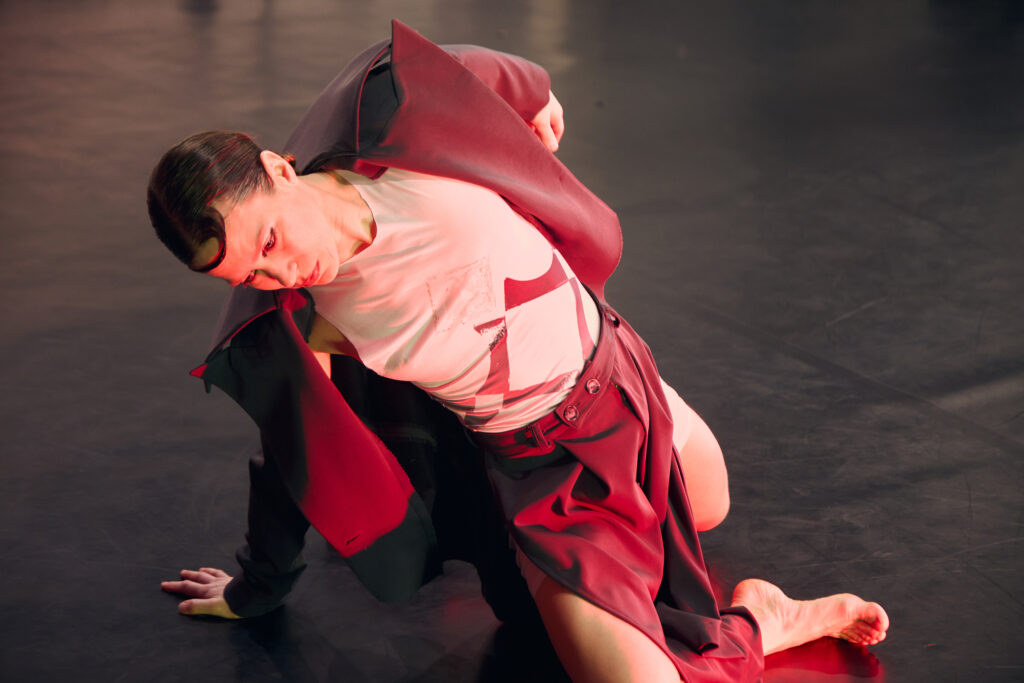
Paula: Theatre is not really my primary field, as I mentioned, but I think that might also be why Iza and the team at Studio Hrdinů approached me. I imagine Iza’s intuition and her desire to experiment played a role in inviting me into the collaboration. Because the medium is quite different from what I usually operate within, I had to rely a lot on taste, associations, and ideas while navigating the project. That’s also why I invited Maty – he’s much more experienced in this environment and brought very valuable input to the whole process of designing and producing the costumes.