The last time Swarm featured your work, you were making most of your artworks in 3D and then presenting them in creative installations at exhibition spaces. How did the practice cross over from the screen into physical objects, and was there a single work where you felt the shift happen?
In 2023, around when we last spoke, I reached a stage where I became much more interested in creating installations than making videos. Moving the worldbuilding aspect into the physical space.
Pretty drastically, I told myself: what happens if there is no more digital intermediary in your exhibition? What happens when there is no projector, no screen, how would that work?
This was coming off the Covid period, right when I was engaged in a more traditional “digital art” practice, making videos and involved in online projects. At that time, my goal was to challenge the lesser-known medium of online exhibition to its fullest. For example: using horizontal scrolling on a website like a parchment and producing medieval icons as GIFs, or creating an 80s-style choose-your-own-adventure browser game (with Pita Arreola and Elliot Burns of Off Site Project).
At the same time, I never saw myself as a “digital artist”. I was mainly constructing CGI using a video game engine as a tool, but never creating functioning video games out of it. Even then, I was already tweaking the techniques and technologies in a way that wasn’t expected of them. I was constructing sets, or stages.
But the research, the references, even the models I used, came from historical places, highly charged and symbolic. I really knew my 3D worlds, I could pan through them, zoom through them, almost as if I could walk through them. So the digital process was – weirdly enough – very physical.
From afar, I was also looking at the rise and fall of NFTs, to which I felt no connection. I wanted to escape. Press Exit. Devote myself to this goal of making installations.
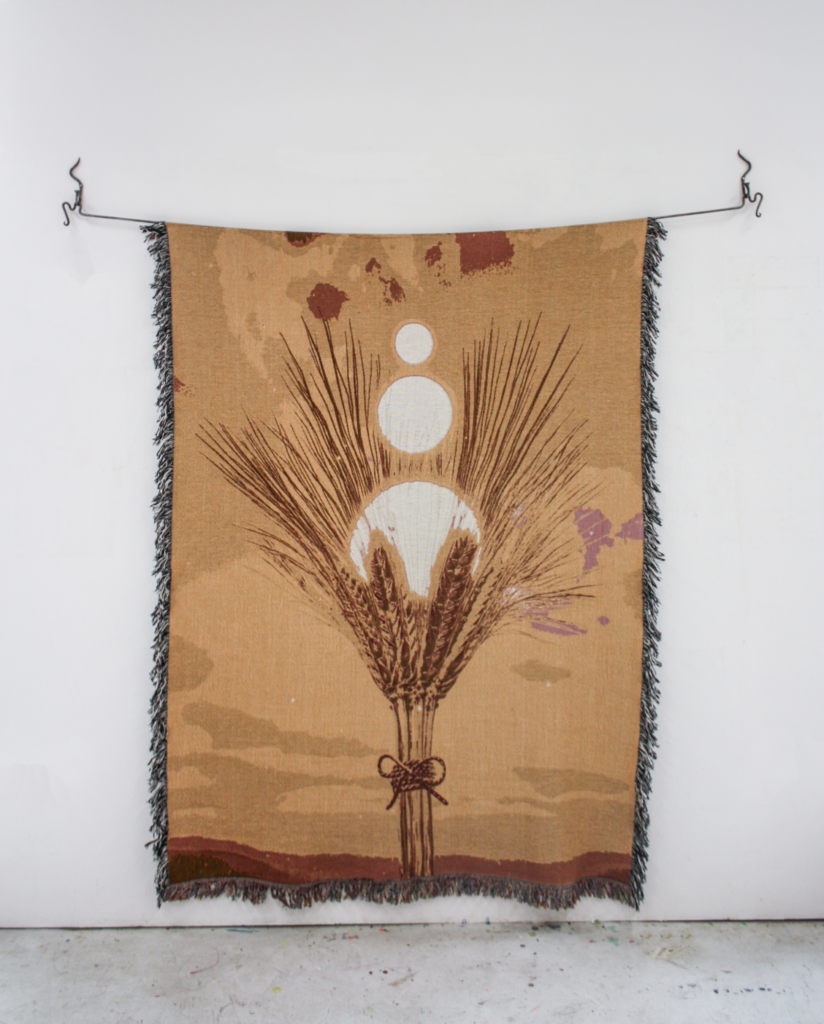
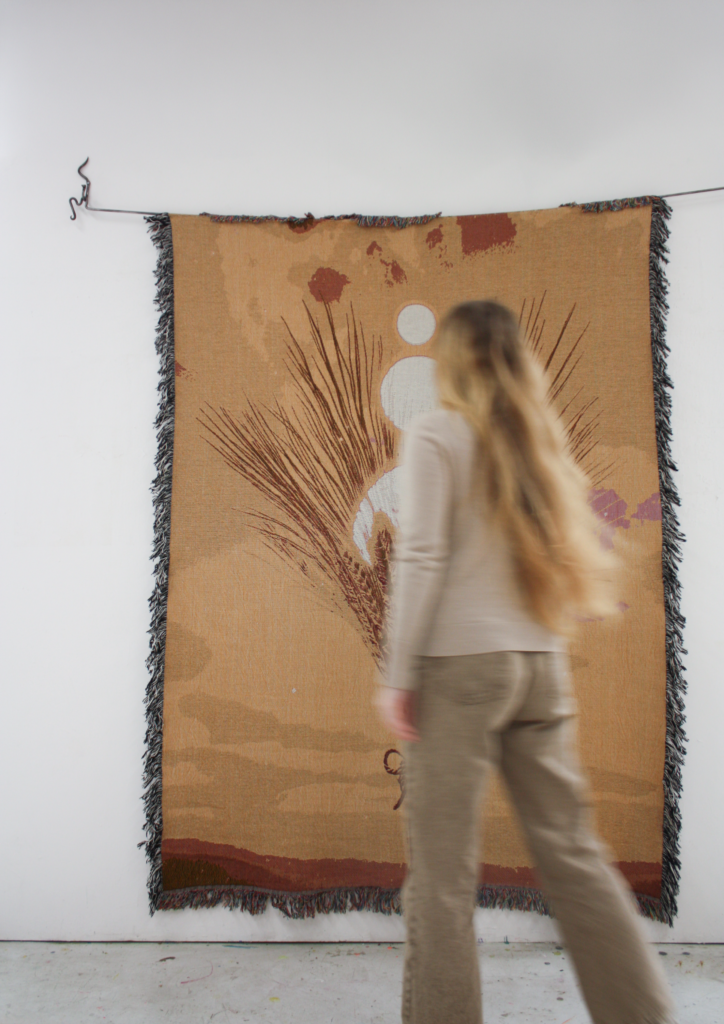
You now move between game engines and genuinely old crafts – jacquard weaving, wood turning, forging. What did you have to learn or unlearn to work with materials that push back, after years of working in spaces where anything is possible?
2023 was only 2 years after graduating from the Royal College of Art and just before, Central Saint Martins. That form of higher education always pushed me towards the research, the thinking. But never truly towards the materiality. It taught me to question every single thing, which is what I have kept doing in any new sort of technique or skill, digital or physical.
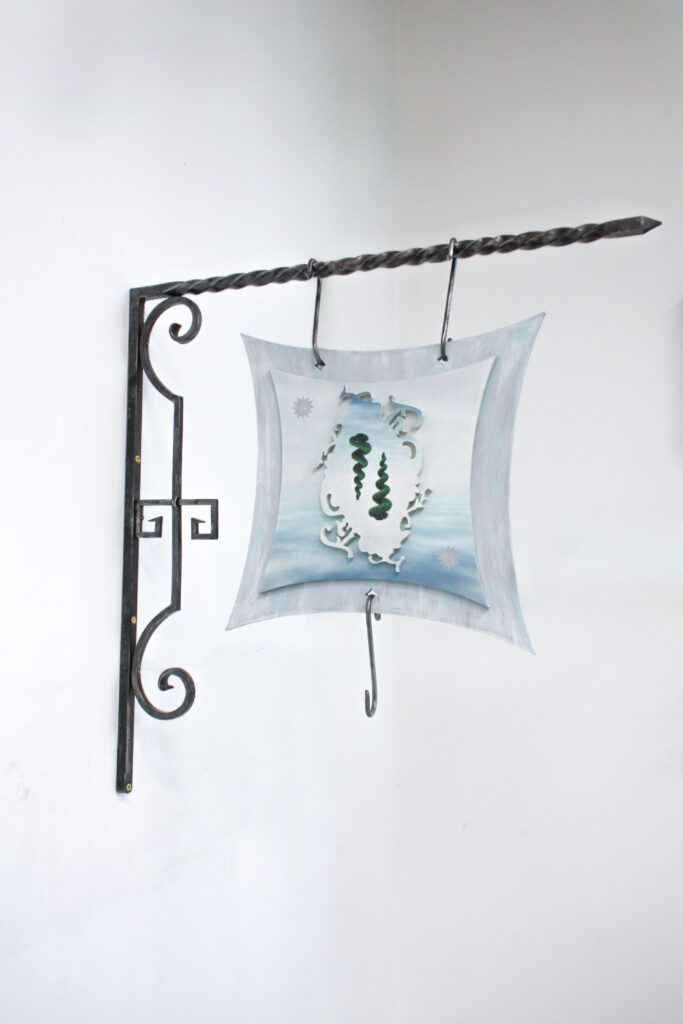
In 2024, I was fully immersed in producing installations. I was involved in many amazing shows where I was given the opportunity to experiment and turn mockups into reality at full scale. I’m so grateful for that trust. Using wallpapers, wall painting, installing tapestries and working with forged metal for the first time. I became comfortable in occupying a whole room, a whole space, and implementing that idea of worldbuilding in the physical realm.
But, as that became comfortable, I wanted to challenge myself again, and the next goal was to produce sculptures. Now, what that meant for me was: works that could stand on their own, that could work in a white cube, that didn’t need any wallpapers, or painting or any decor around them.
At times a bit secretive, in 2025, I spent most of the year following that goal: learning, experimenting, attempting to tame the many crafts I’ve been so drawn to my whole life. Learning skills from wood fabrication, turning, and carving, metal welding and blacksmithing, stained glass, medieval illuminations. And this year metal embossing, glass gilding, gothic tracery, wood marquetry, glass leading. It was a big investment in my practice, and a leap of faith.
At times overwhelming, I quickly learnt that anything is possible in the material space, just as it is in the digital space. Indeed, the materials push back, but just as they do in the digital space.
What was important in learning those techniques myself, instead of outsourcing, was to understand the process, get a grasp around it, and learn when to let go. I never want to push a certain material or a specific technique into my practice. I’m not trying to fetishise them, to integrate them just because I love them. Some work and add so much to my practice, yet some are total fails, some simply aren’t coherent and should not be integrated to disrupt the whole. But generally it takes a while in between learning and integrating; it needs to come back to my mind with a purpose.
Now, halfway into 2026, I am finding a comfortable tension in my workflow of layering digital and physical processes. The techniques are turning hybrid and no line can clearly be drawn. Now, it makes sense.
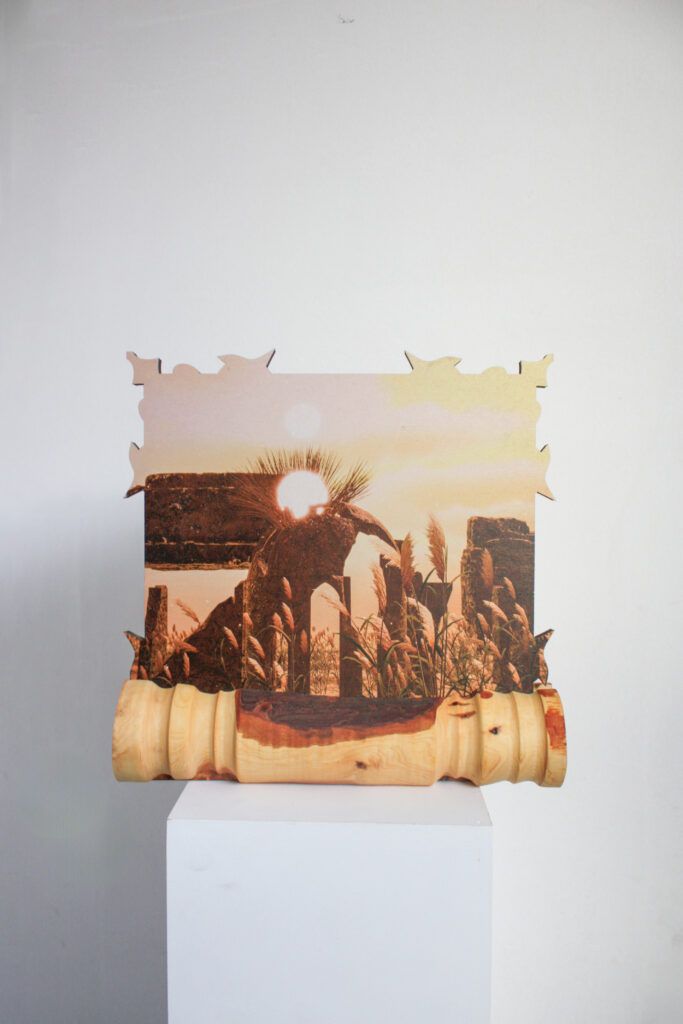
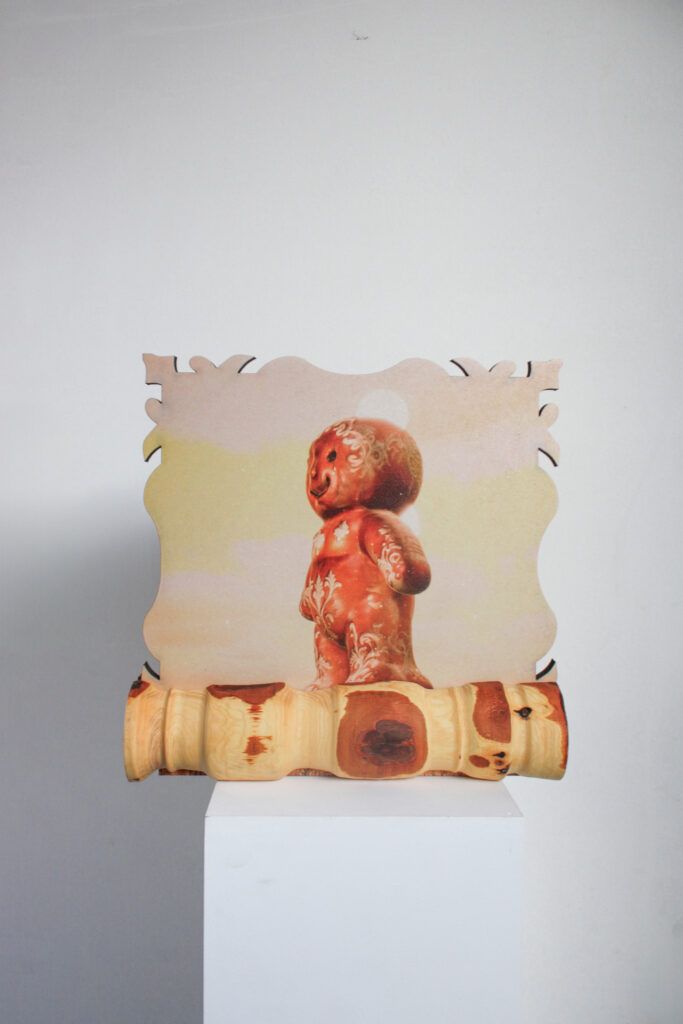
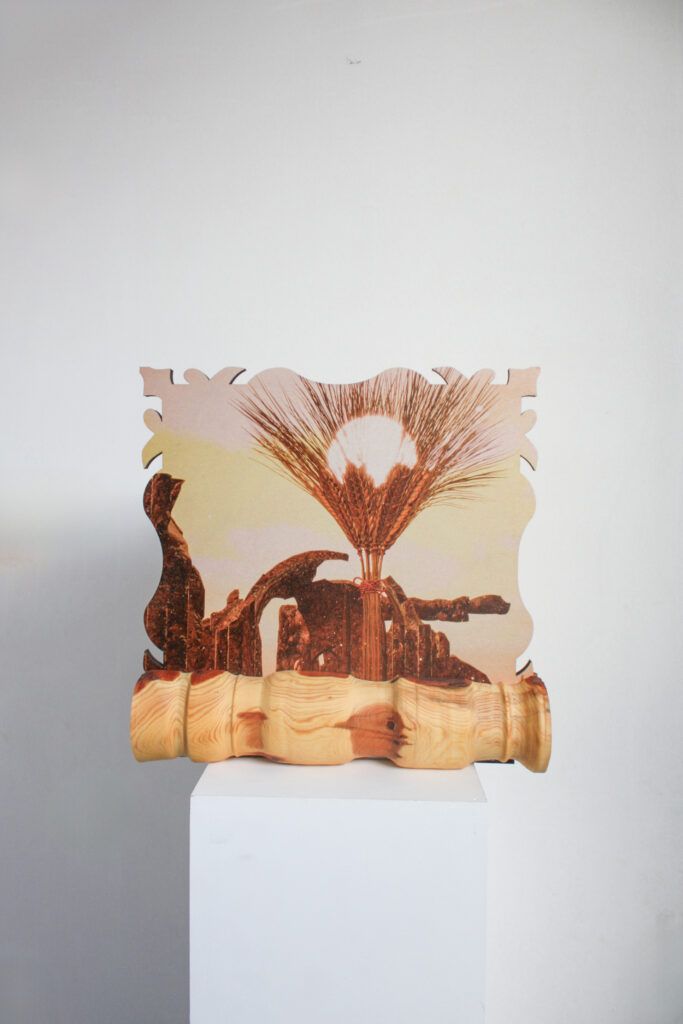
When a digital world of yours becomes a tapestry or a sculpture, something is gained and something is lost in the translation. What survives the move into the physical, and what refuses to come along?
I think it’s exactly that feeling that you mentioned, “lost in translation”, that drives me towards it. Those different materials pushed together, that probably shouldn’t have met, this sentiment of something being out of place, out of time, out of use. I’ve always been drawn to that feeling of something familiar and eerie at once, that pulls you in, yet that throws you off upon closer inspection. I think it calls for many different readings.
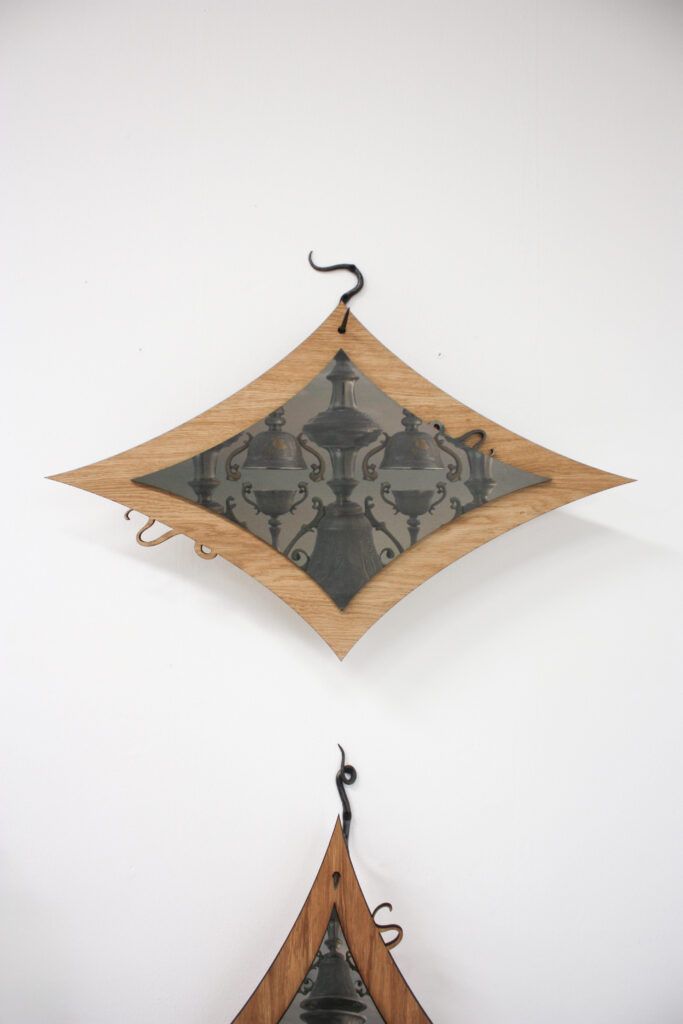
Moving towards tapestry was such a clear transition; jacquard being the ancestor of modern computing. It felt almost too smooth of a transition. The first tapestries I made date back to 2019, as I already had that calling towards the edge of the digital. I wasn’t sure of them until I started integrating blacksmithing in the final display (for a 2024 show), and it found its equilibrium. The work finds its place as the line gets more and more blurry in the nature of the processes.
I have often described the merging of the computer-generated imagery in the final display, whether it’s wallpapers or frames, with the term “portals”. Something liminal, a threshold of sorts. Something that is there yet calls to another place.
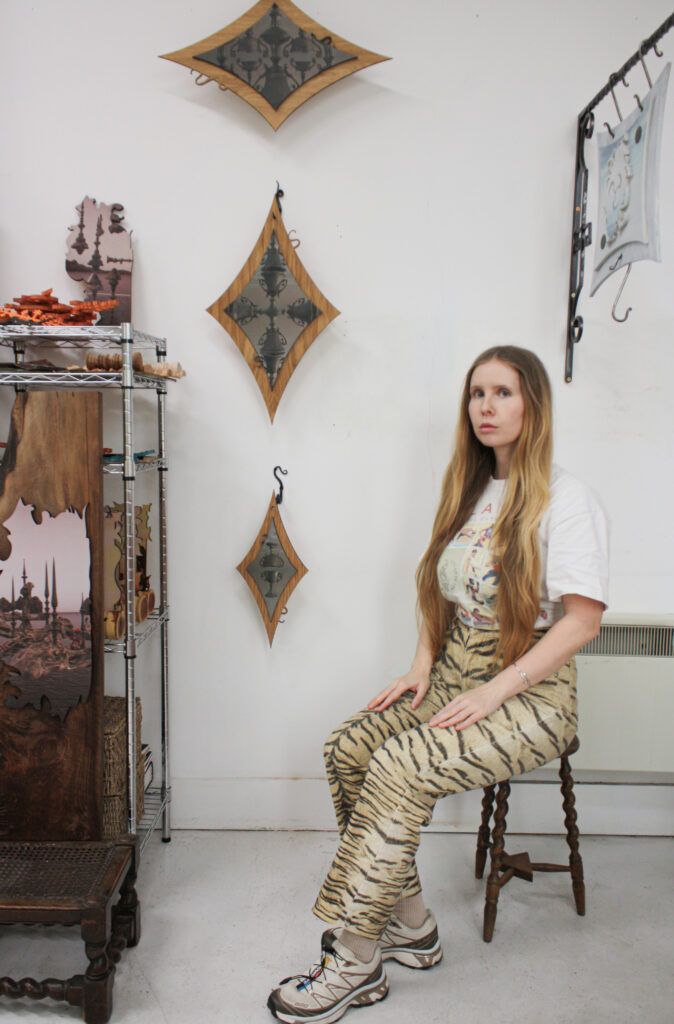
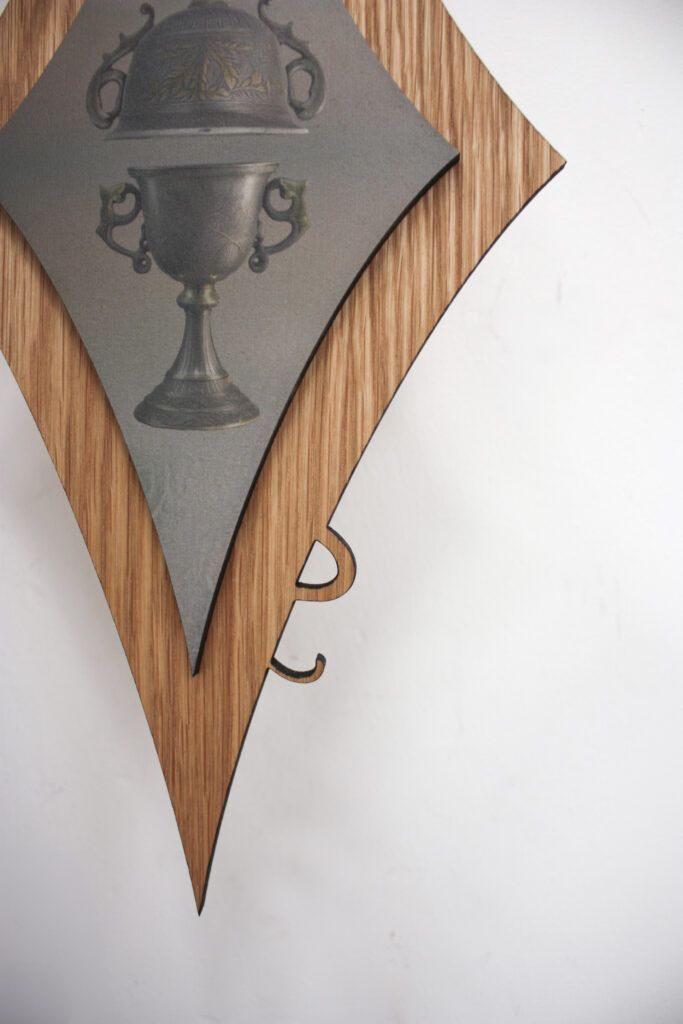
You call yourself a “dream archaeologist”. Has the meaning of that role changed now that you’re handling real materials, or were you always excavating something that was never quite there?
Even though I’m now handling physical materials, the research remains the same. It’s true, I was always excavating something that wasn’t there: remains, fragments, relics of our collective memory, symbols that appear in tales, dreams, and visions.
Upon reading Robert Moss’ The Secret History of Dreaming, I was completely captivated by this idea of being a “dream archeologist” and his call for action. As he describes it:
“‘Dream archeologist’ is my name for the kind of investigator who is able to read all the clues from a scene in another time, enter that scene, and then bring back new discoveries that will stand up to cross-examination. While archeology is often understood to be the science of unearthing and studying antiquities, the root meaning of the word takes us deeper: it is the study of the arche, the first and primal, chief and essential, things.”
Maybe we’ve talked about it before, but I’ve always been drawn to the practice of archeology. It wasn’t necessarily about the objects or about the sites. Now, as I’ve grown to understand it, what drove me to this idea of archeology is rooted in what I call “impossible encounters”. The unattainable, the unthinkable, the “non-event”, the sheer delusion that you could have a true encounter with something, anything from our past – with a person, a timeframe, a place, a site, an event, a feeling, or even a memory. The doomed idea that any of those encounters is possible, as we will never truly grasp anything outside of our framed reality.
In this sense, acting as a “dream archeologist” is entering that fictional realm, bringing back a trace, and assembling “impossible encounters”.
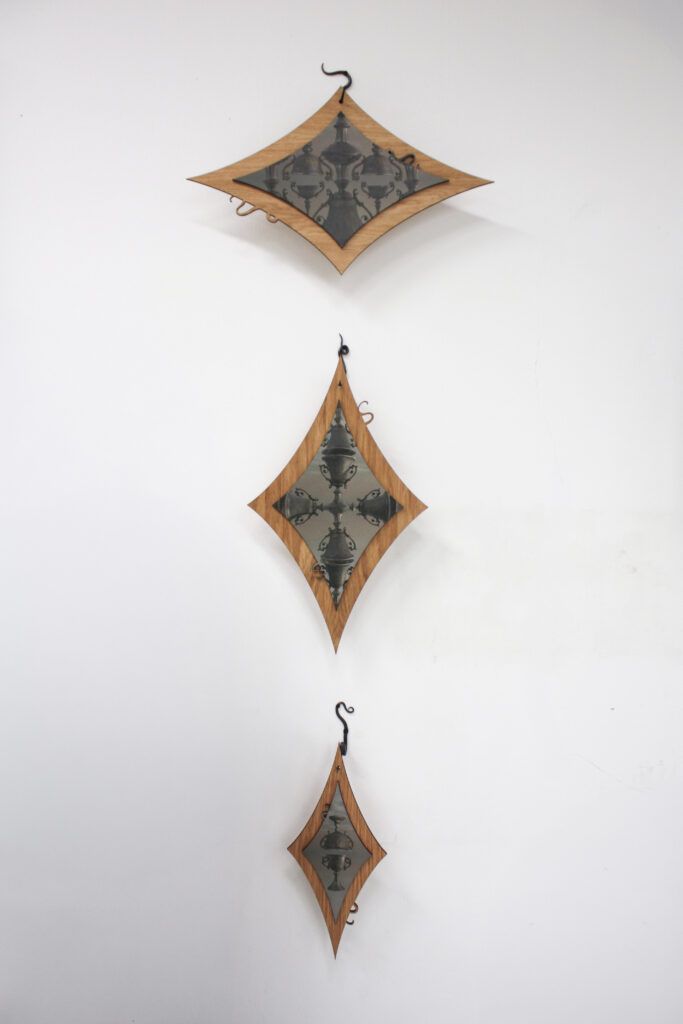
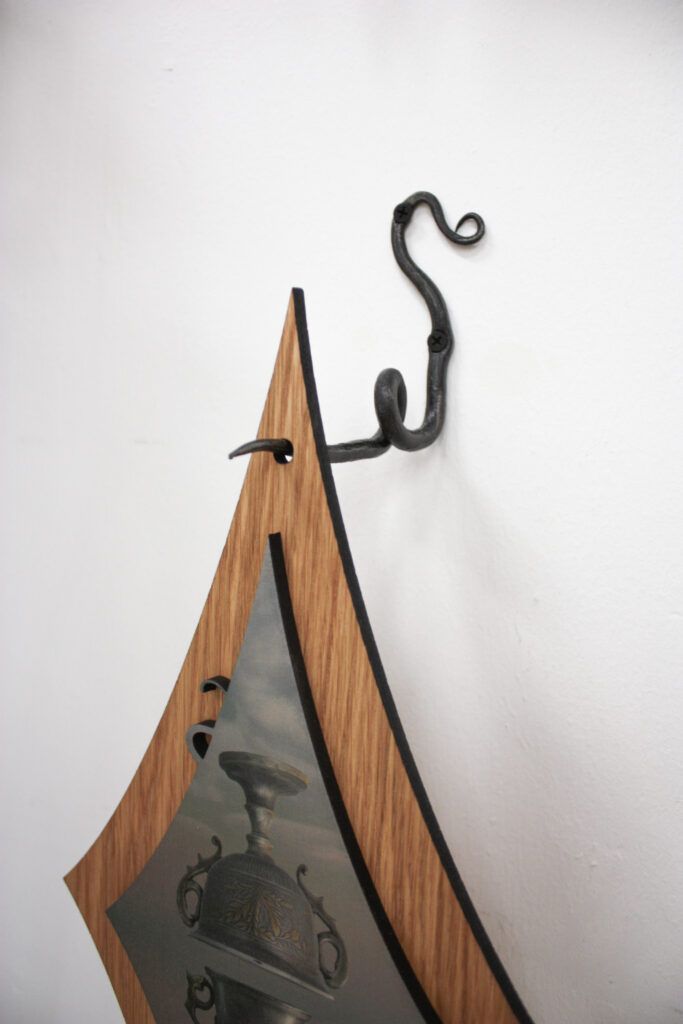
Cyclical time, ritual, sacrifice, divination – these have run through your work since Dear One, Dear Dead. How would you say those obsessions have matured rather than simply repeated over the last five years?
I’m always scared to repeat myself. When a motif shows up once again I’ve tried to let it go, to refuse it, but I seemed haunted. Now, with a couple of years of practice behind me, I understand this is really what it’s about. Being haunted by your own motifs, understanding this magnetic pull, and embracing this cyclicality, this eternal return.
Corn Spirit leans hard into folk horror – crop circles, harvest rites, ergot hallucinations, anthropomorphic bread figures left as offerings. What pulled you toward this specifically rural, agrarian strand of the uncanny?
Cyclical time has always been a large facet of my research. A time defined by the seasons, the elements, and the agrarian calendar. Festivities, communal life, the lore, even the sheer understanding of the world and the beyond, was built on that link to the cycle of time.
Yet now for most people, the rural space doesn’t feel familiar. It feels eerie, other. A site of conspiracy, of nocturnal visions, of bizarre apparitions, a place that combines old tales and newer crazes.
In Corn Spirit I was considering the 80s phenomenon of crop circles, which was UFO-adjacent, in light of similar mirages across time. How these geometrical symbols in the crops seem to come back cyclically. And what they could mean in our context of ecological urgency. Should crop circles be understood as a message, a warning? So then, who is speaking? The Corn’s Spirit?
At the same time, I was interested in episodes of collective hallucinations through ergot poisoning. Naturally occurring in times of bad harvest due to the weather, ergot develops itself on the crops. If those batches couldn’t be sold, in times of famine, they were better than nothing. There is this interesting episode that occurred during the period of the French Revolution, when bread was famously unavailable. I used that as a stage for my narrative: the possibilities opened up by collective hallucination. An other state, that could maybe bring forth an impossible encounter?
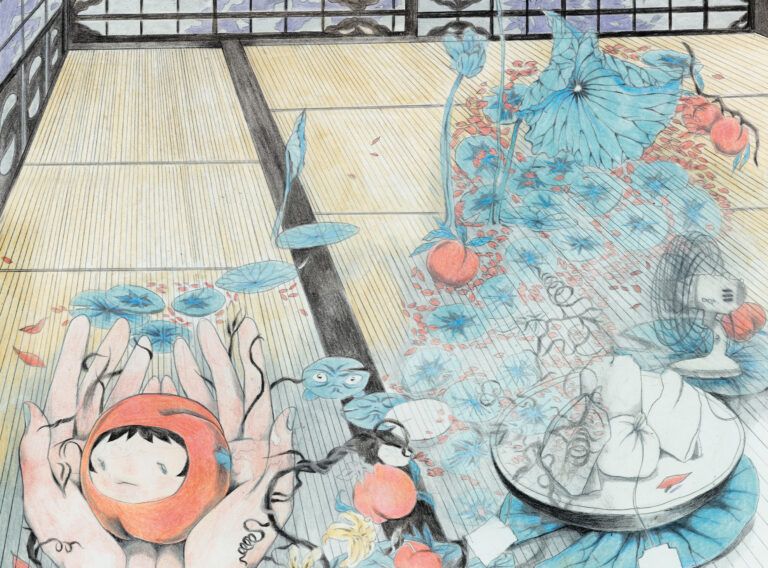
I was still pursuing my quest into ancestral harvest rites and sacrificial offerings (since Dear One in 2020). I was now drawn to the idea of effigies: anthropomorphic offerings that mimicked the once bloody sacrifices. The rite of baking a loaf in the shape of a man, and offering it to the land that provided the grains to make the bread in the first place.
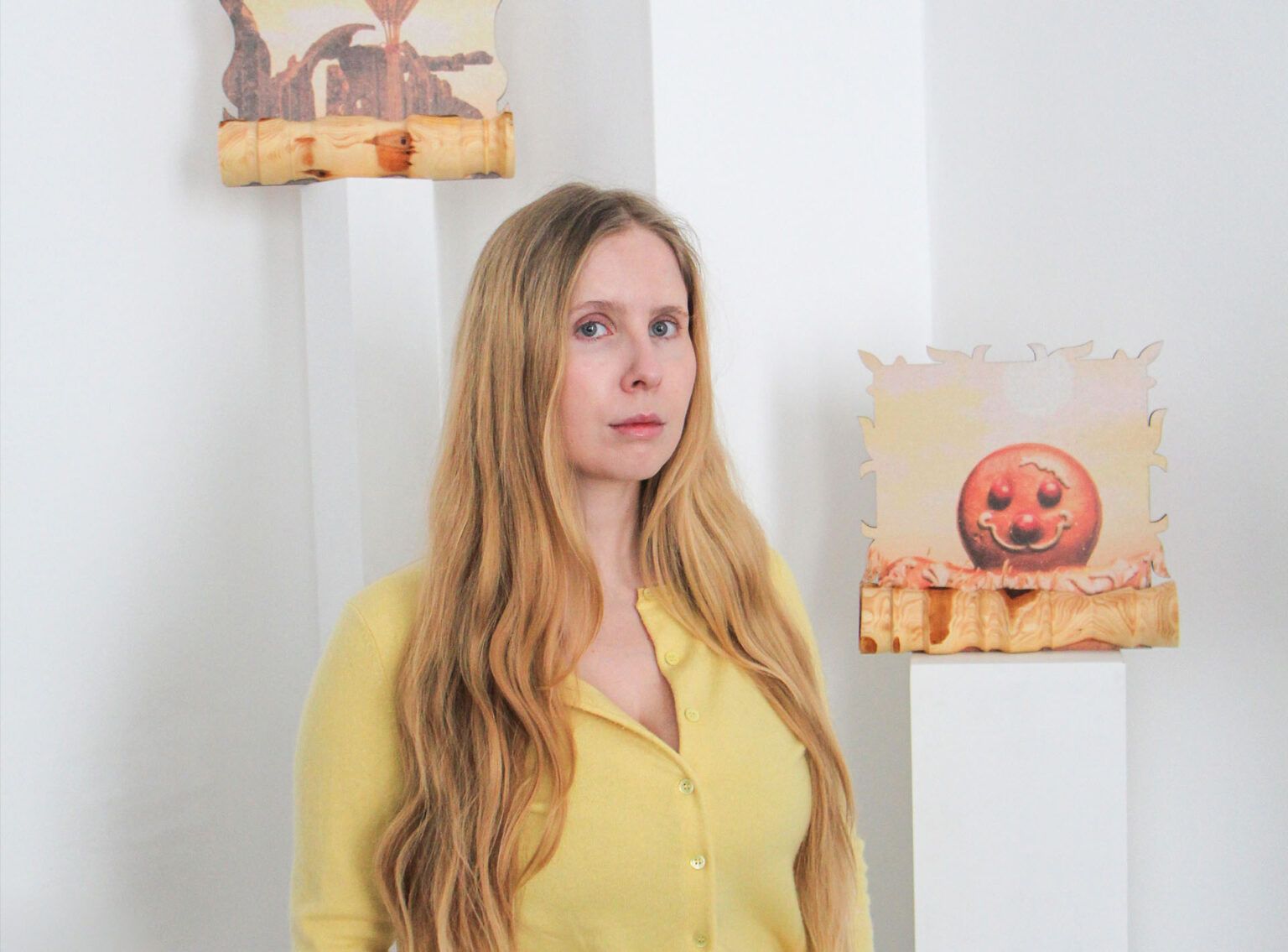
Now, if that seems like a remain from a distant past, we still cyclically eat those human-shaped breads around the period of the new year; gingerbread man, bonhomme de pain d’épice, lebkuchenmann. I was fascinated by this dissemination in our banal yet festive life and in popular culture.
In Corn Spirit all these symbolic fragments from our collective memory collapse at once. Drawing on the trope of folk horror, yes, but questioning what makes our folklore so prone to being horrific? Maybe there should be something enchanting about the Corn taking over?
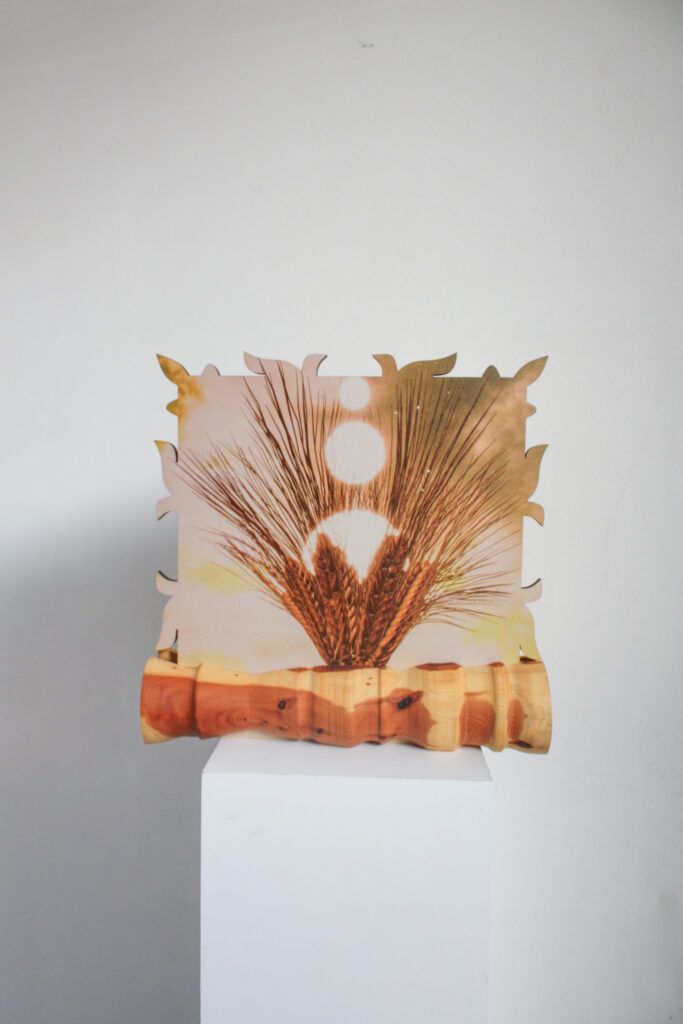
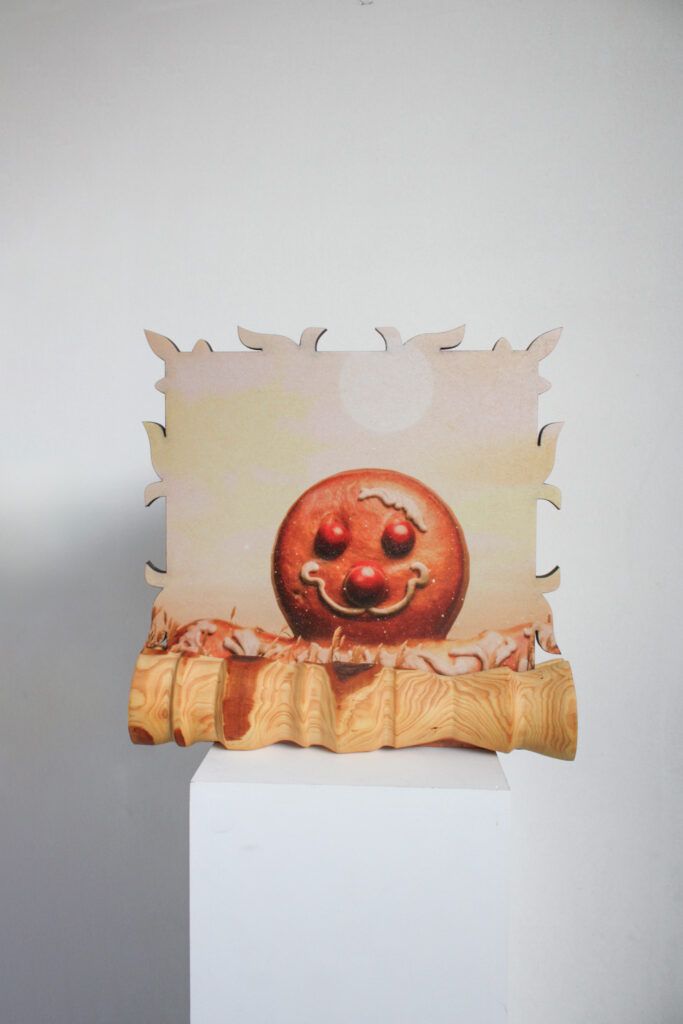
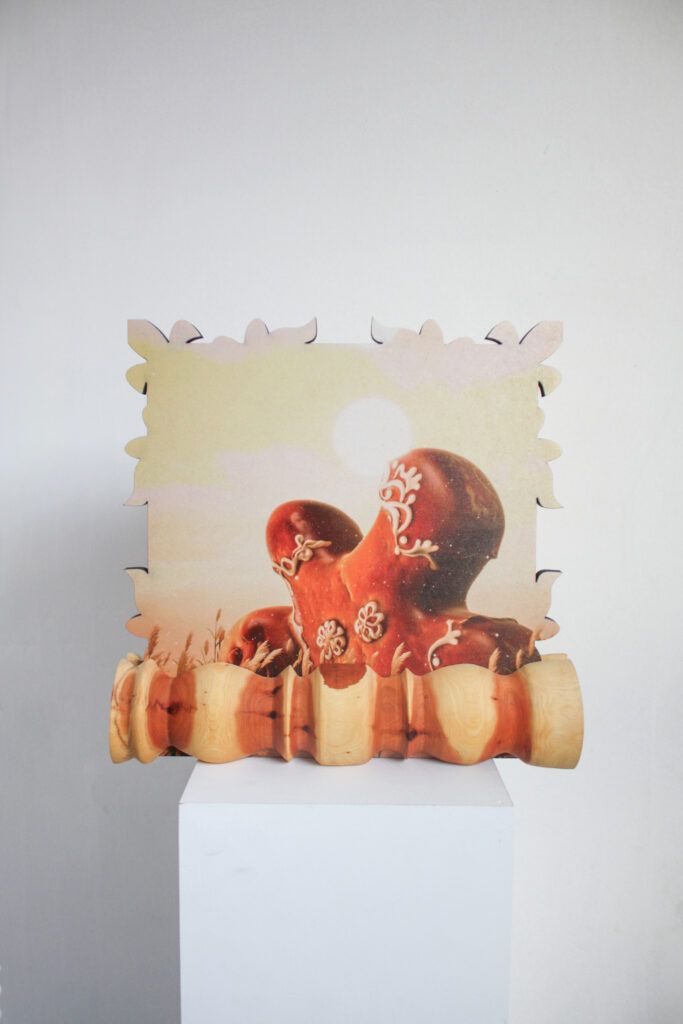
There’s a real shift in permanence in your materials, from GIFs and renders that could vanish with a dead Flash player, to forged steel and woven cloth built to outlast you. What does durability mean to you now, and did losing that ephemerality change how you make?
It’s interesting that you mention the fragility of the digital. The idea that your project can be wiped out; it’s a new nightmare trope for sure. Other than constantly saving on different platforms, I was never terrified of that. A lot of the time I spend on my practice is devoted to my sketchbooks, notebooks, and stepping out of the digital, even if just printing, cutting and gluing references, as we were taught in school – that matters deeply to me. It brings works into life.
But I’ve never been as scared of a material as when working with glass, for example. It seems perennial, but carrying it, working on it, it can break at any moment. Even though the physical materials seem more durable, they evolve, they age. If you think of older artworks, older elements of architecture, whatever the craft, they all need restoration at some point. It’s all ephemeral. The hard drives will certainly outlive us all.
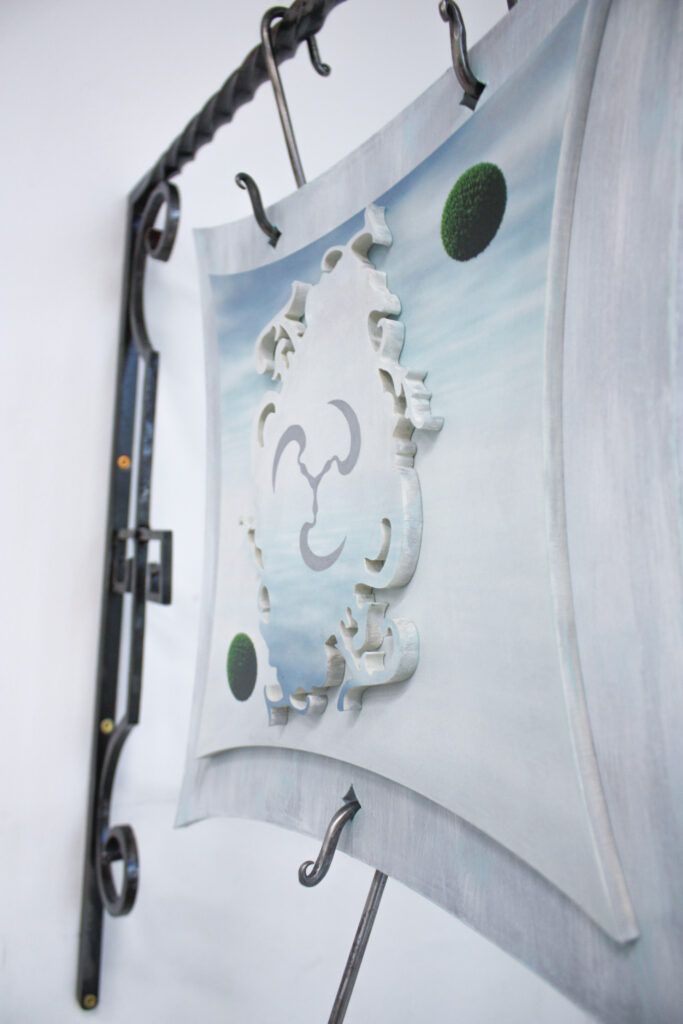
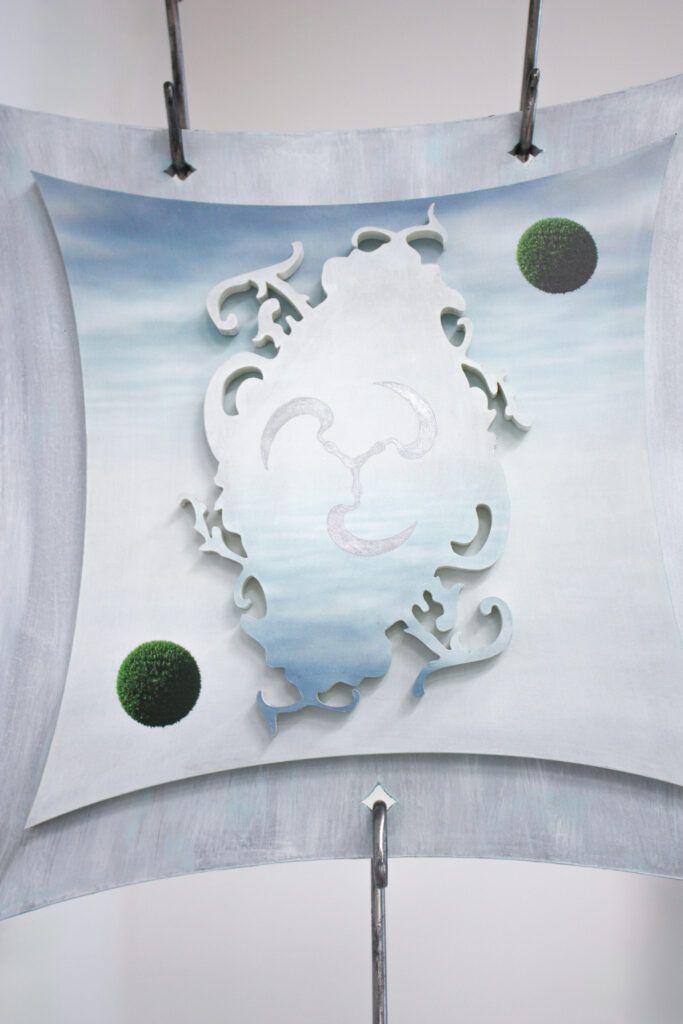
Your titles often reach for ritual or liturgical language – Latin, incantation, prophecy. Is naming part of the worldbuilding itself, a spell you cast over the object, or a key you’re handing the viewer?
I’m sure naming is a hard part for everyone. After weeks, months or sometimes years of focusing on a project that bears its own nickname (or work in progress title), you are facing a moment where it needs to exist on its own, and it needs a public title.
I’ve never been drawn to an “Untitled” series. Instead, I see titles as a place to hint at the research behind the work. The viewer isn’t expected to read a full statement, or hear me speak about it, to hopefully appreciate a work. Sometimes, it can even be disappointing to hear artists reveal what they imagined they were doing with the work, as every person has a totally different understanding of it.
But by reading the title, it gives a clue, an indication of what I’ve been thinking whilst producing the artwork. Sometimes it will engage the viewer to research more, as the titles are indeed a little enigmatic, or it can draw someone away completely.
I like your idea of a spell, or maybe an incantation. It’s a way of letting go, and maybe giving agency to a work to exist on its own.
You’re showing across London, Warsaw, Tbilisi, Marseille, Kaunas. Does the work change depending on where these half-invented histories land, and do different places read your folklore differently?
The work will always change depending on the location. My goal is to show works in what I call different “iterations”.
Developing site-specific projects has also always been at the core of my practice. Over the years, it has been as simple as focusing on an oddity in the architecture – a nook, a column. To engage with passageways; featuring wallpapers on staircases, transforming a doorway into a “Hellmouth” (Warsaw). To respond to the existing colour of a wall (Kaunas). To draw on specific architectural fragments of a town (Tbilisi). To develop a whole narrative based on the location of the space (Marseille).
I hope each place responds to my work differently. Visitors coming from different cultural perspectives might be intrigued by different elements of the works. Even though I come with my own background (Celtic, French), I employ symbols, shapes, figures occurring around the world, and across time.
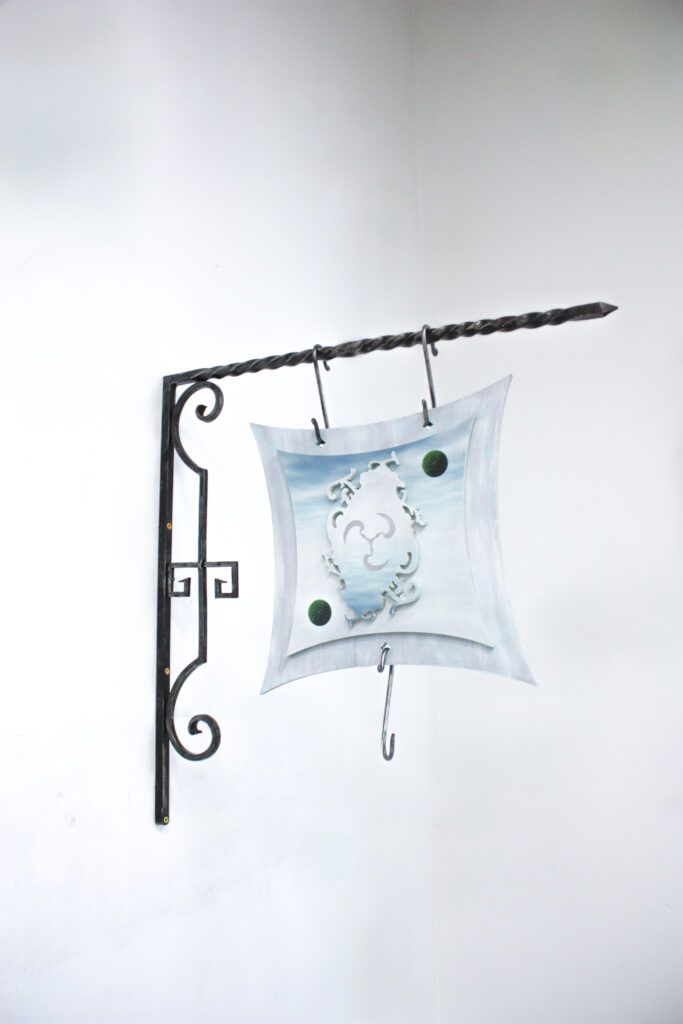
After Rose Jail, where is the practice pulling you – deeper into craft and the physical, back toward the digital, or somewhere the two stop being distinguishable at all?
I think the line is not distinguishable at all anymore, it’s totally imbricated. In a given work, there are so many layers of processes, both digital and physical. To be fair, sometimes they respond very well with each other, and sometimes they collapse. It’s a balancing act, and I’m trying to situate myself just before the rupture, so it’s bound to cave in sometimes.
What makes sense in this interaction of processes is a common approach. I’m always shifting the expected behaviour of a certain material or technology. To the great dismay of many of my tutors who’ve taught me different techniques over the years, I can never finish the course with the expected outcome. In a way, it might be a strategy of always staying an amateur; knowing just enough of the craft to keep my distances, allowing myself to shift expectations.