We spoke to Ema about how living “in between” shaped her practice, what traditional techniques offer that contemporary art often overlooks, and how she builds a visual vocabulary that resists easy categorisation.
You lived in Tokyo for several years and studied traditional techniques in Indonesia and Vietnam. How did those experiences change the way you think about making images?
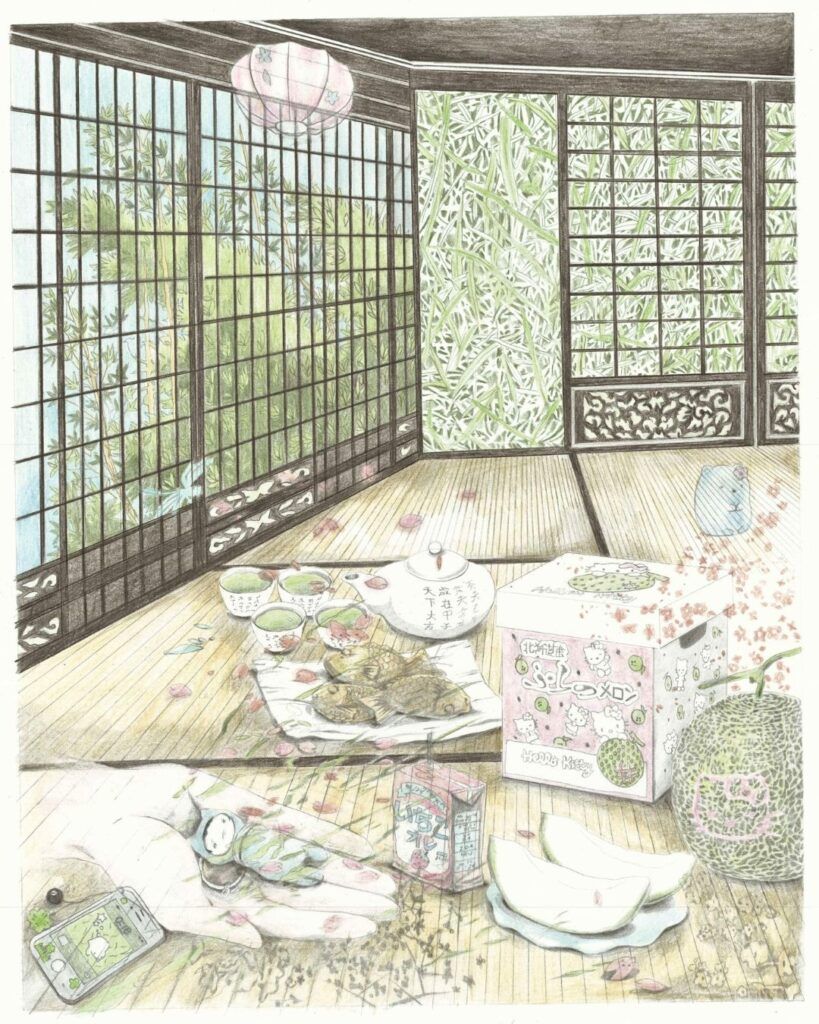
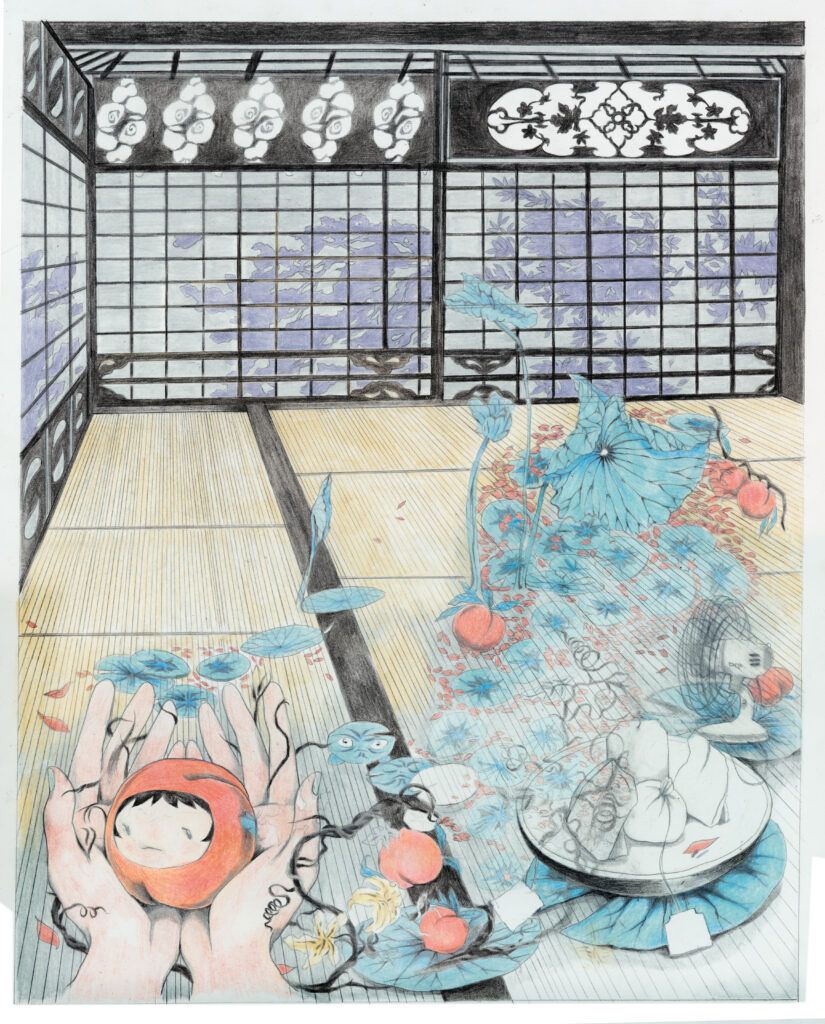
All my work is somehow connected to my relationship with Asia, which started very early in my life. I did Tai Chi from the age of five, watched Kung-fu films, celebrated the Lunar New Year, and looked up to Mulan as my main childhood hero. Later, as a teenager, I started going to Tokyo every summer to work as a model. The Japanese urban infrastructure, traditional interiors, night streets, anonymity, temples, arcades, robots, fashion, food… created an intense, multi-layered reality in which technology, spirituality, commerce, and intimacy blend without any clear hierarchy. That became a key reference for most of my work. When I stay somewhere for more than a short visit, it slowly starts to feel like home. I get attached to those places, and I miss them once I leave, so I return to them in my practice, working from memory as a way of holding onto them.
Recently, I’ve been trying to stay a bit more grounded geographically, so I don’t have to depend on living abroad. I started returning to childhood memories, and two very strong visual worlds emerged: visiting medieval castles and ruins with my grandparents, and sitting next to my older brother, watching him play video games like Space Invaders, Kao the Kangaroo or GTA San Andreas. That is my current source of inspo.
You describe your work as offering “scattered meditation on a world permeated with empathy and vulnerability.” That’s a generous way to frame it: not critique, not distance, but empathy. Why is that important to you?
Because my work is very intuitive and memory-based, empathy naturally becomes its core. It is a very big part of my way of thinking, maybe even more than I would sometimes want it to be. I am a very sensitive person, and it can be quite exhausting to feel everything so intensely all the time. So it is not something I would consciously choose, but something I have to live with. On the other hand, I am very interested in Buddhism, which teaches us to be altruistic, kind, and empathetic toward all beings, including ourselves. In that sense, it becomes a way of being kind both to myself and to others. Through my work, I try to create moments of softness and kindness.
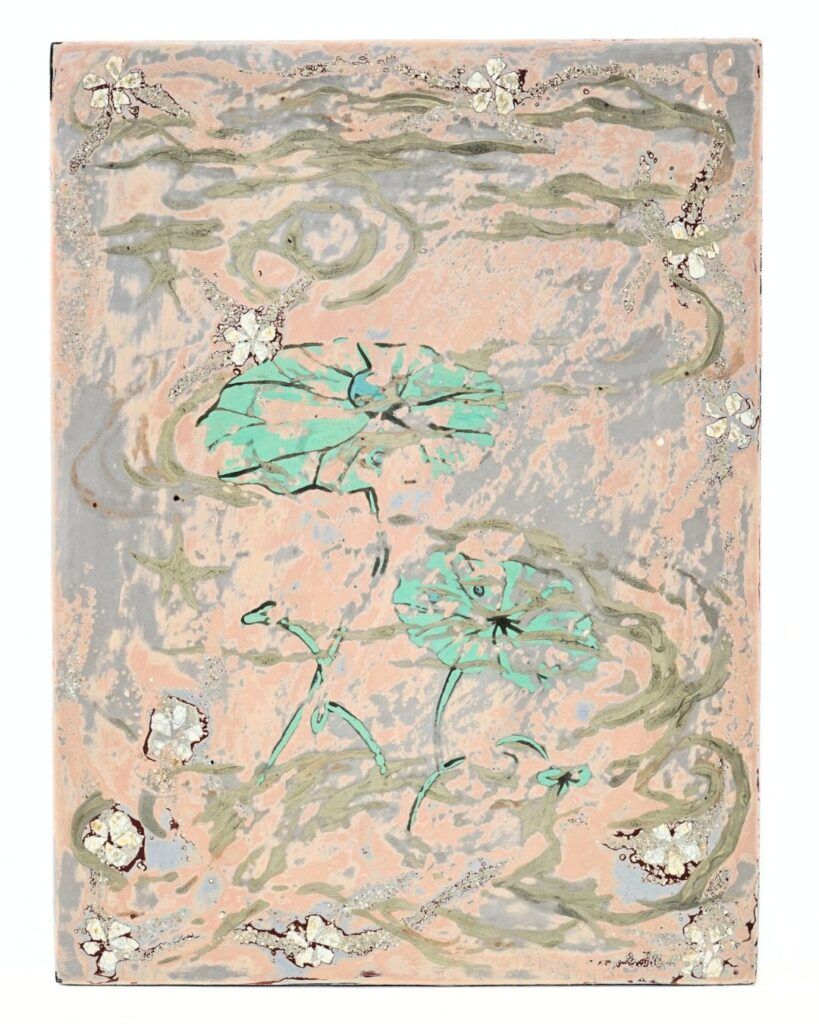
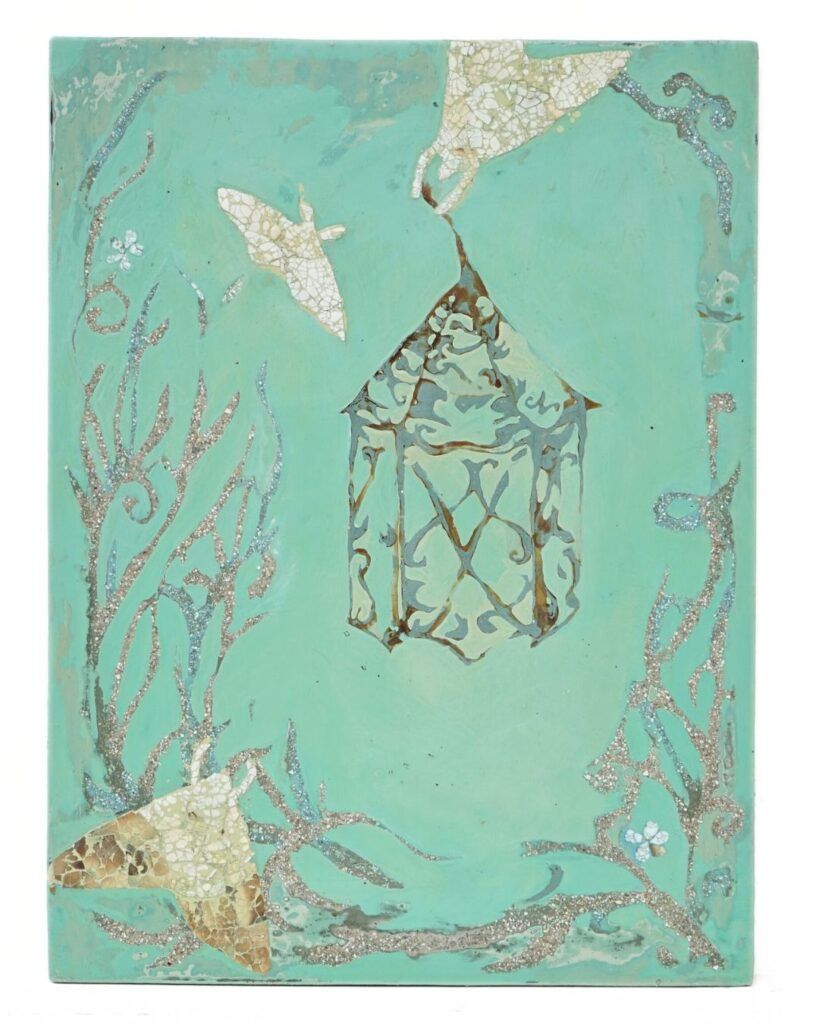
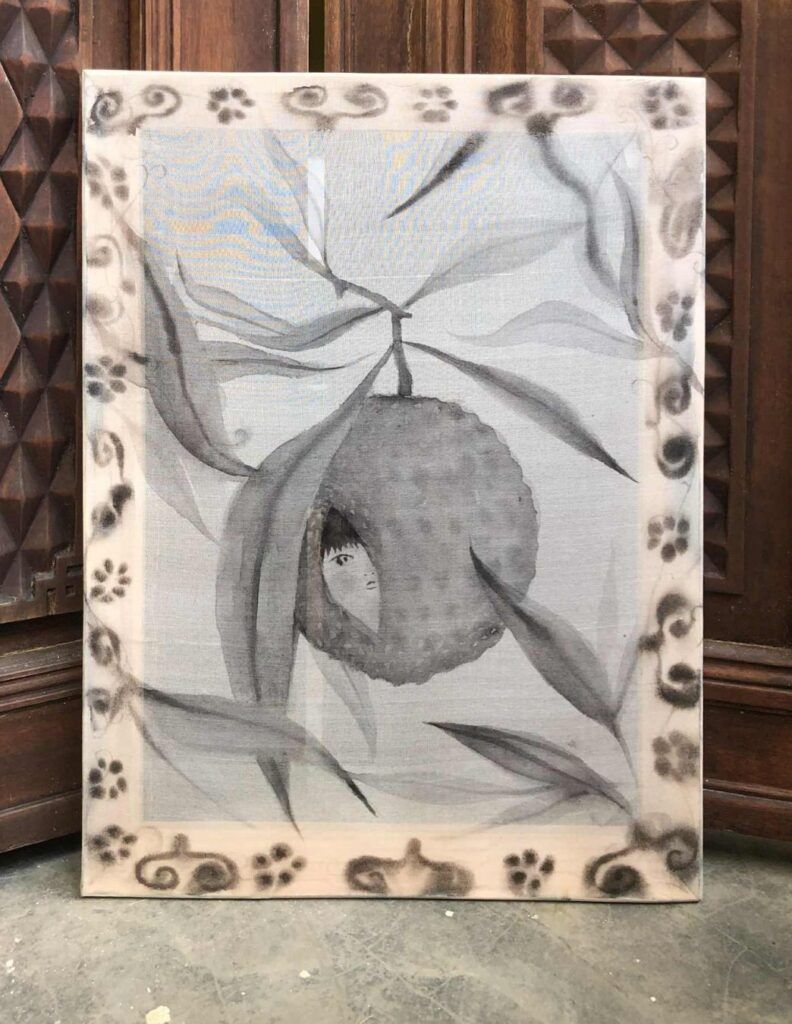
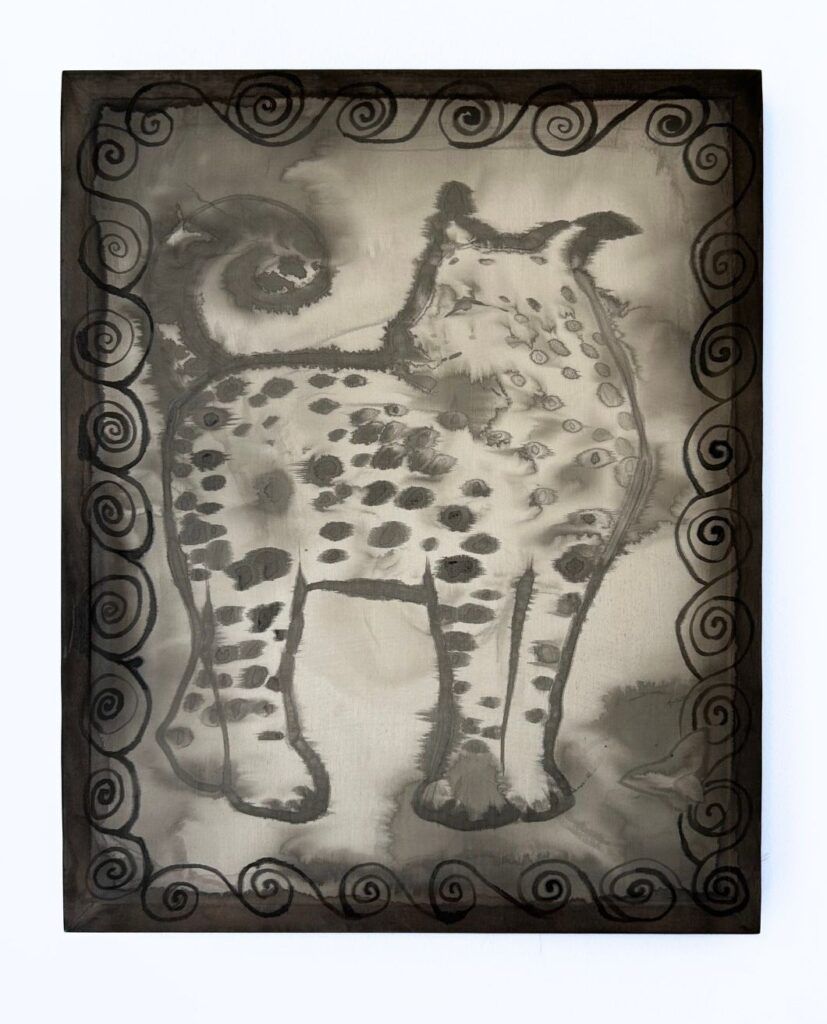
There’s a specific quality to traditional techniques like lacquer painting and silk painting. They demand patience, process, repetition. How does working with those methods affect what you can say in the work?
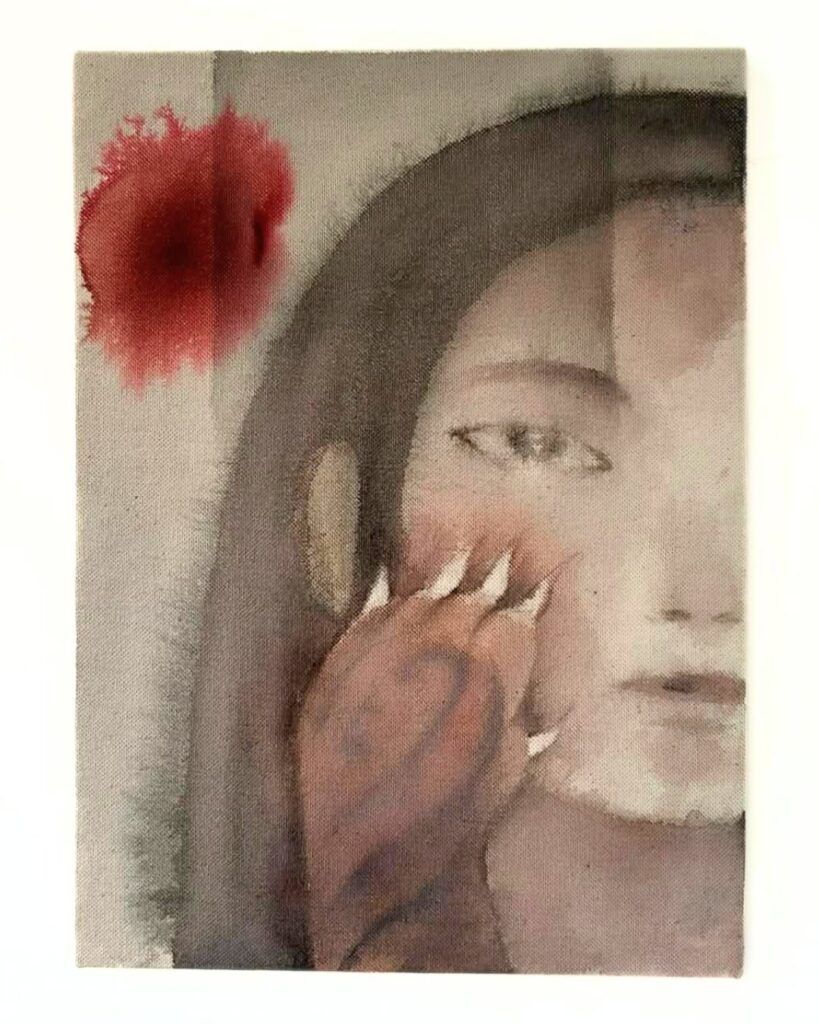
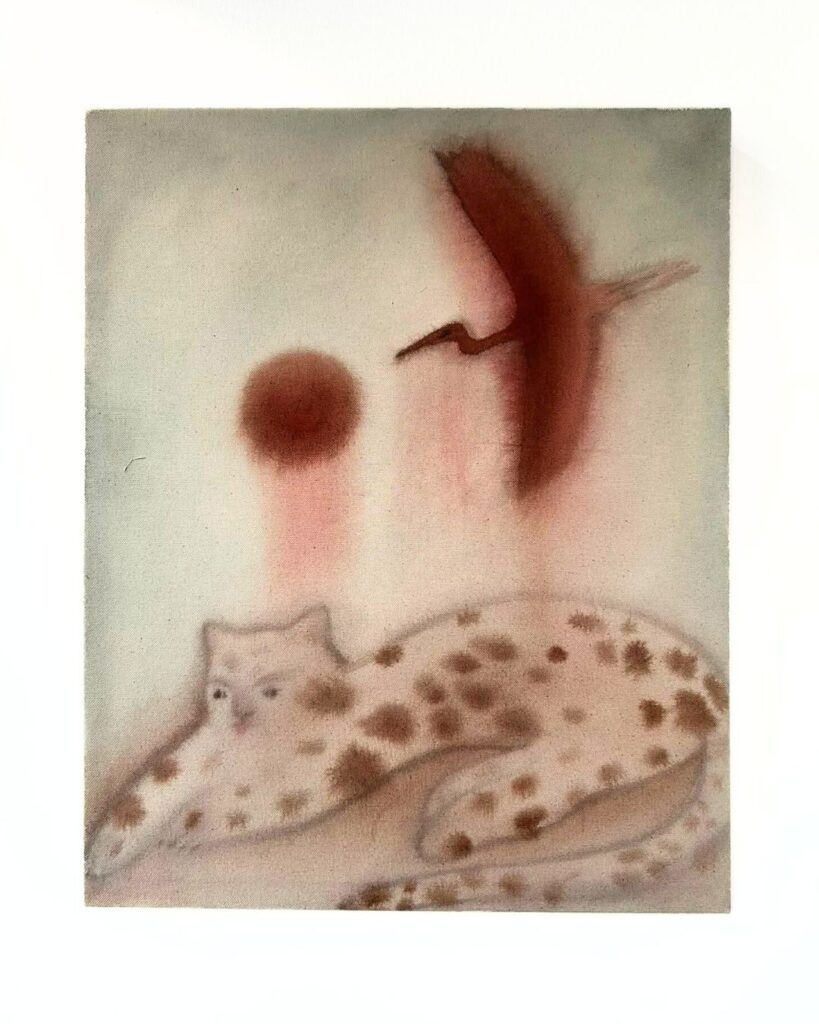
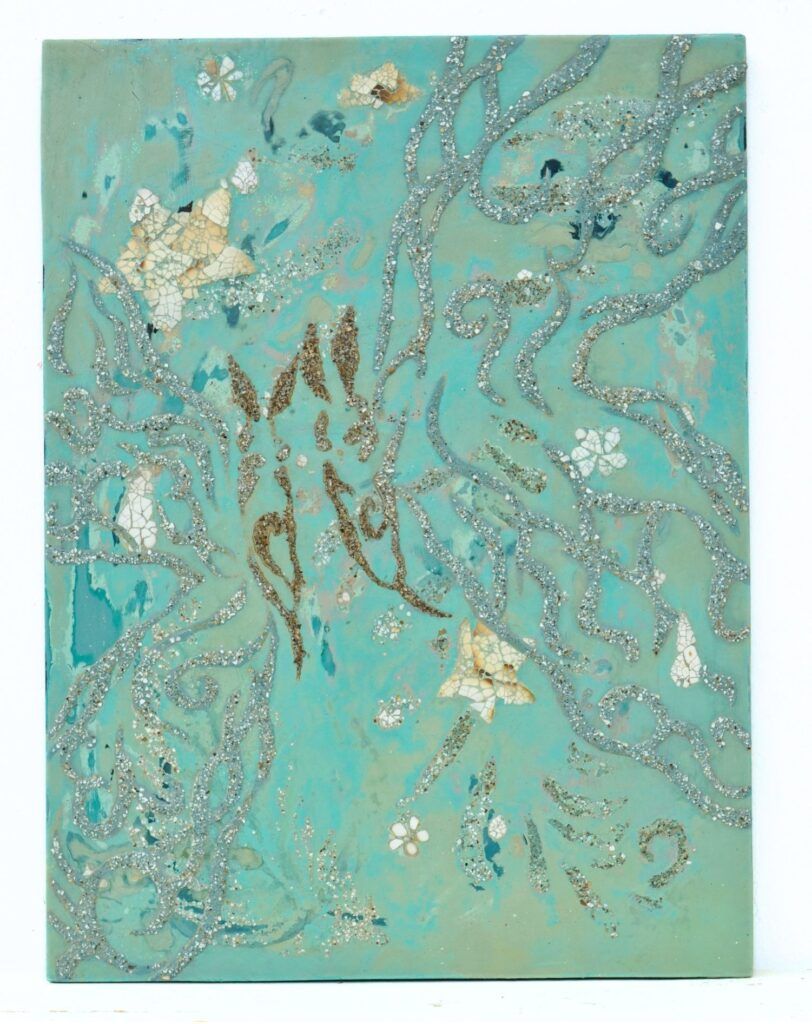
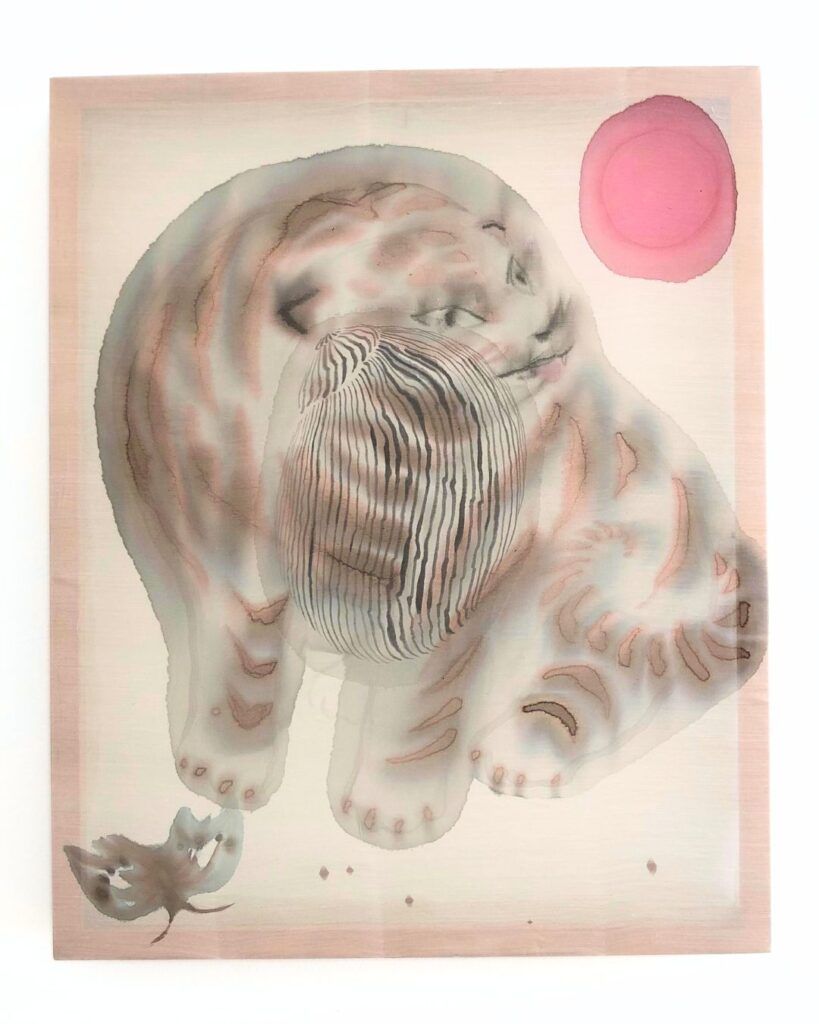
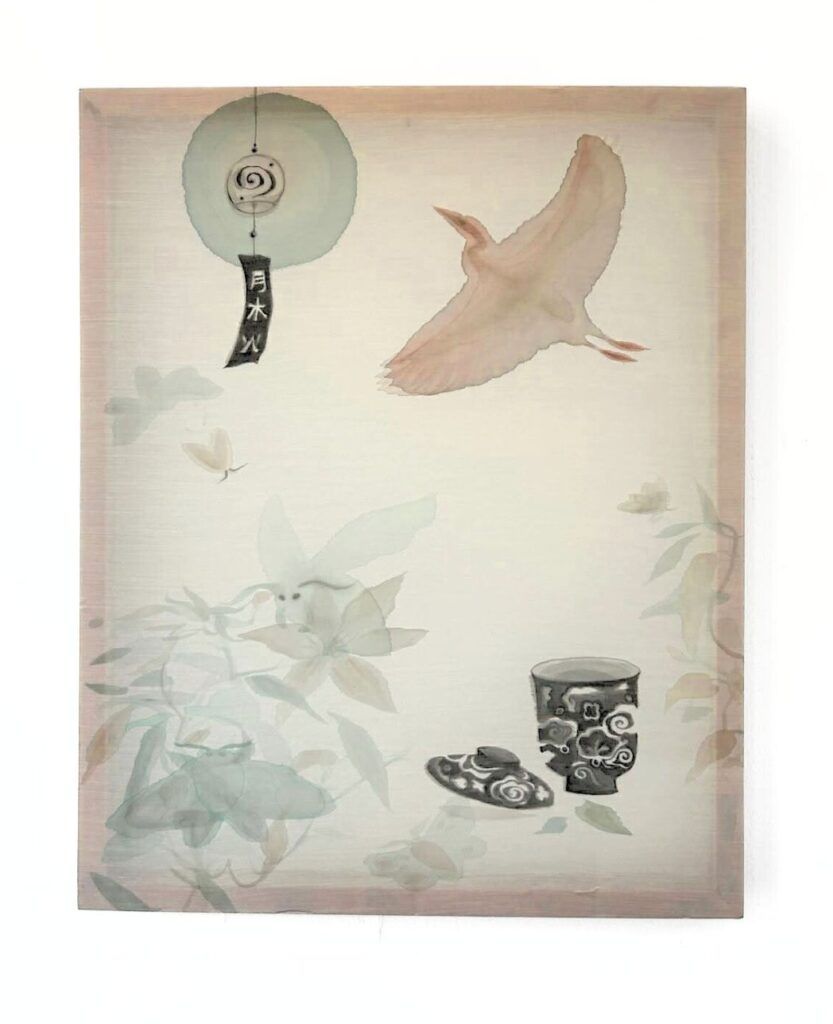
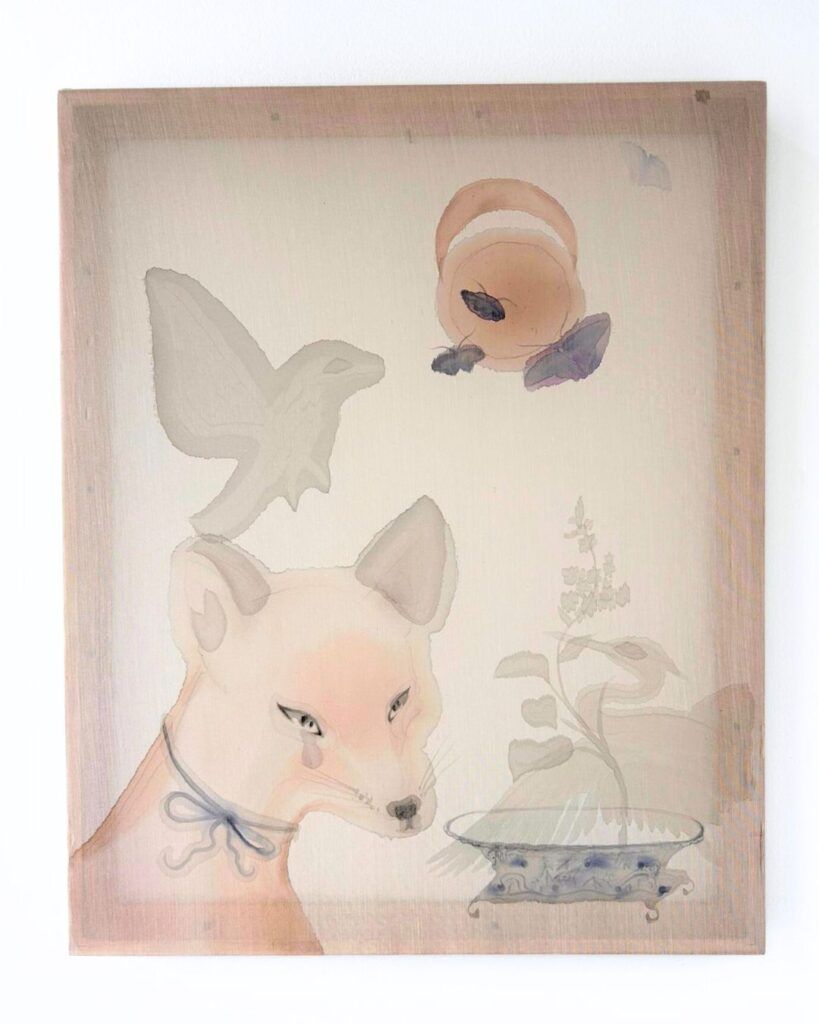
With lacquer painting, it’s quite simple: it is so difficult, time-consuming, and unpredictable that you can’t really plan what you want to make (or at least I can’t; true masters like my lacquer teacher Mr Quoc can definitely do that). It often feels like it is controlling you, rather than you controlling it. Silk painting, for me, is like calligraphy: fast, exciting, and a bit scary. I am always quite nervous when working with it. It is very limiting, you cannot erase or overpaint anything. Because of that, the motifs have to be more free, light, and even pure. It also feels to me like a kind of Kung-fu – very precise, disciplined, and physical at the same time.
Your work draws from Eastern aesthetics and spiritual principles, but also from pop culture: animated films, early video games. Those feel like opposite poles. How do they coexist in your practice?
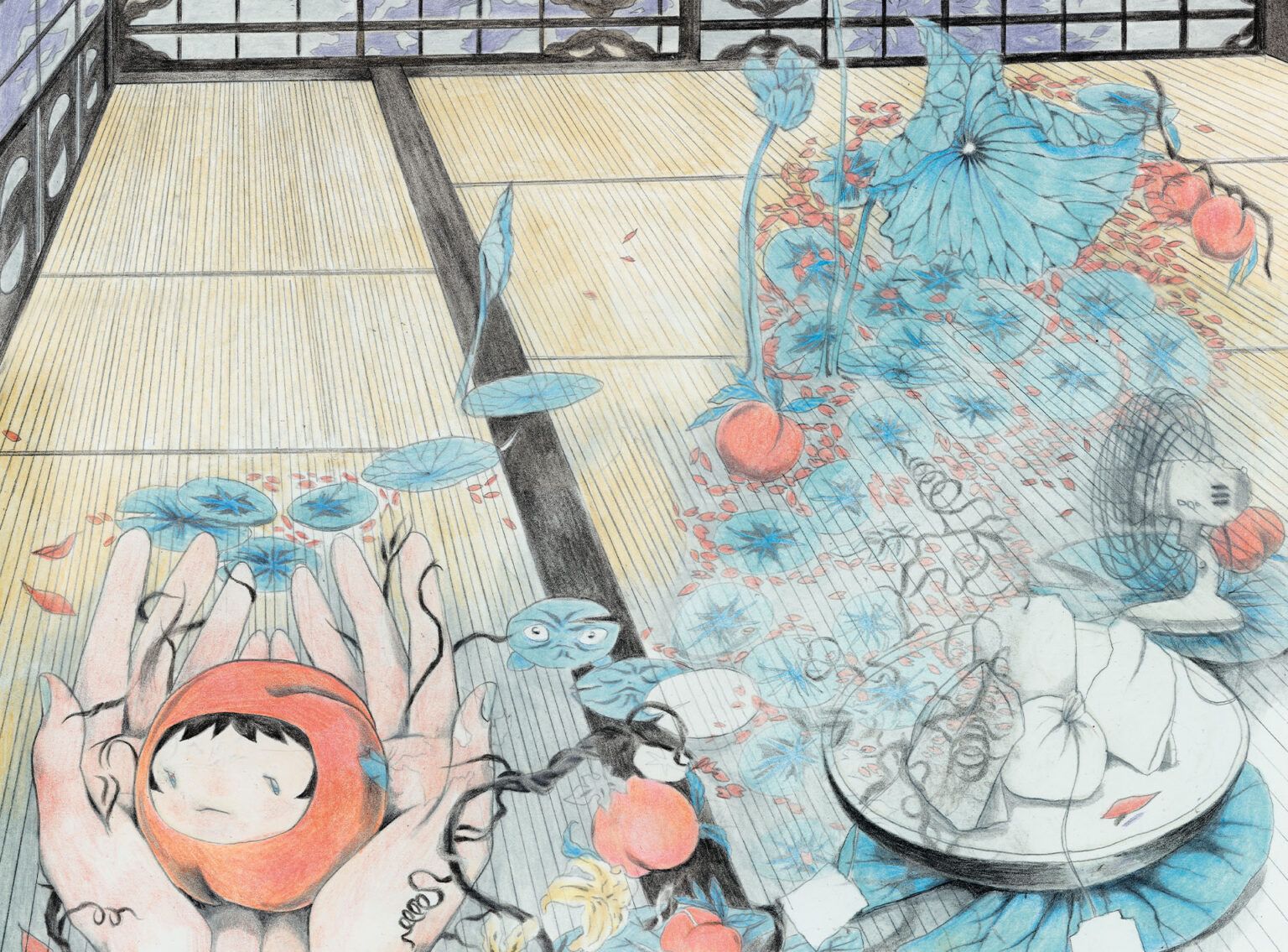
My work brings together high and low culture, drawing from pop culture references, childhood and teenage memories, as well as things I notice while walking through the city or find online. I also incorporate imagery and themes from art history. It is very much like my life. I meditate in the morning, then I watch a crazy reality show. I do yoga and follow traditional Chinese medicine, and then I go and eat a jar of ice cream. I read books by the Dalai Lama, and then spend hours on the internet just scrolling on Pinterest or Vinted. I used to think I had to choose – to be either this kind of girl or that kind of girl. Then I realised I don’t have to, and I brought that into my art. It is all about balance. (That is something I love about Tokyo. One minute you are meditating at an ancient Shinto shrine, surrounded by pure calmness and spirituality, and the next you are in an arcade playing Zelda on the 12th floor of a skyscraper.)
You’re graduating this year from the Academy of Fine Arts in Prague. How has moving between the education system here and your time learning traditional techniques in Asia shaped your approach to being an artist?
I definitely appreciated the high quality of education we have here, but I also realised how individualistic the environment is for me. In Indonesia, I learned how to be more collective and less individualistic, which is not entirely natural for me, as I tend to enjoy being alone. There, I experienced a very strong sense of collectivity – classmates were constantly working together on fun projects, exhibitions, and collectives. There was little concern about whether members of a group were on the same “level” or whether a gallery was famous. They would just sit somewhere on the street, come up with a theme, for example, “let’s draw a cassette cover,” and start working together. What mattered was the activity itself and the sense of community. Compared to that, here, I often feel more isolated in the process and more affected by hustle culture.
On the other hand, in Vietnam, my individuality actually became quite useful. I was somewhat separated from the other students, mostly due to the language barrier and shyness, so I often spent time on my own at school, listening to true-crime podcasts. Sometimes my classmates would observe me from a distance, take photos, say a very shy “hello”, and then disappear again. That experience made me realise that total isolation is not ideal either.
What I took from that contrast is a kind of in-between position. I still work very individually, but I am much more aware of how context, tradition, and collective thinking shape the way artistic practice is made and understood.
The work seems to insist on slowness, on contemplation. That’s not exactly what the contemporary art world rewards. How do you hold onto that in a context that often demands speed or spectacle?
I really like the idea of spending a long time on a single piece, almost like a medieval painter, but in reality, I have to think more strategically and find ways to make my process faster. I’ve had the privilege of dedicating several months mainly to my practice during internships, but combining work, friends, travelling, and everyday life with drawing for five hours a day is quite intense. So to be honest, I try to work as fast as I can. Because of that, I’ve started to think more strategically about my process: how to keep a sense of slowness and depth, but within a faster rhythm. In a way, it’s a constant negotiation between these two modes.
What are you working on now, and where is the work moving?
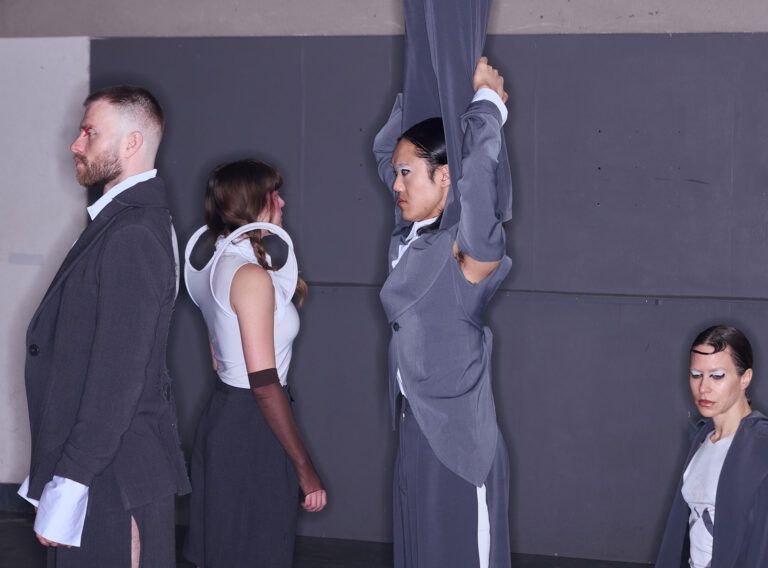
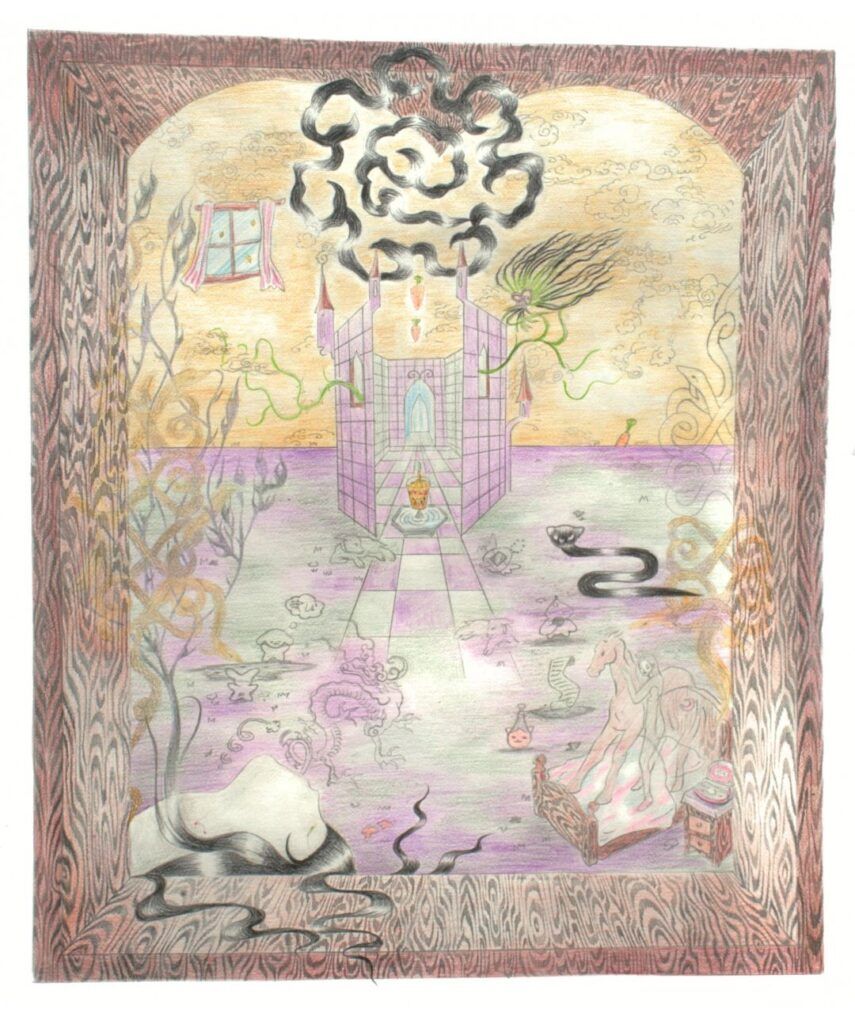
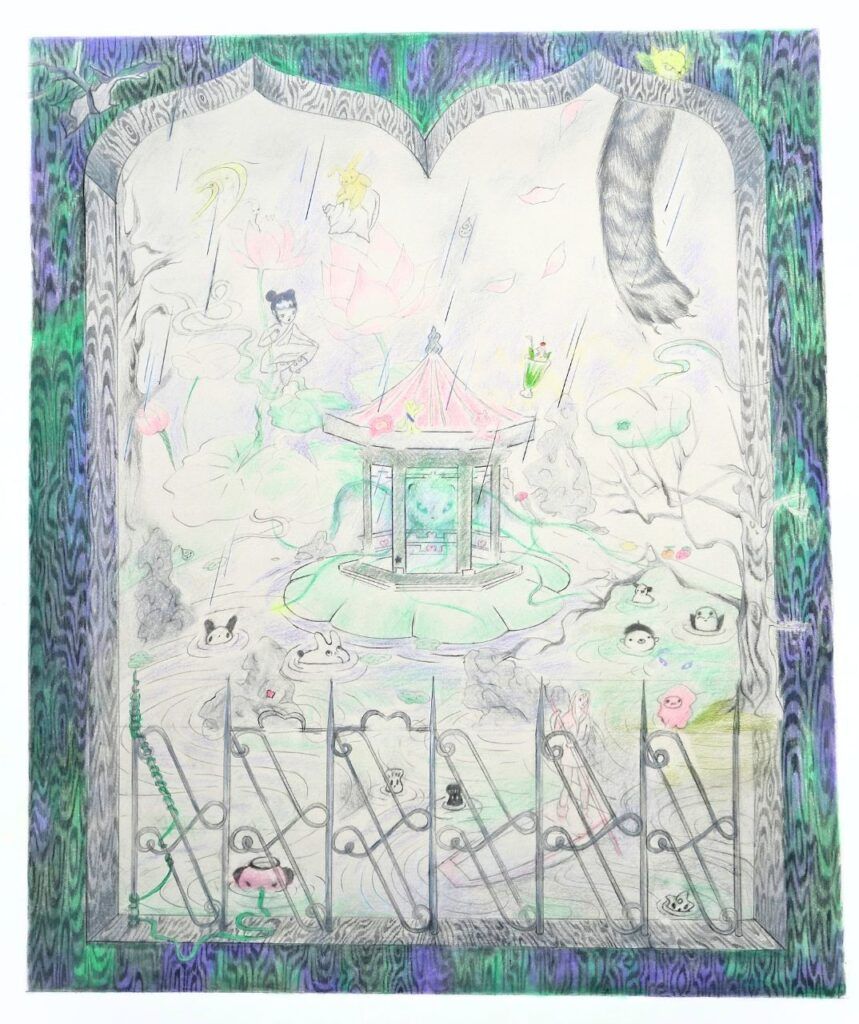
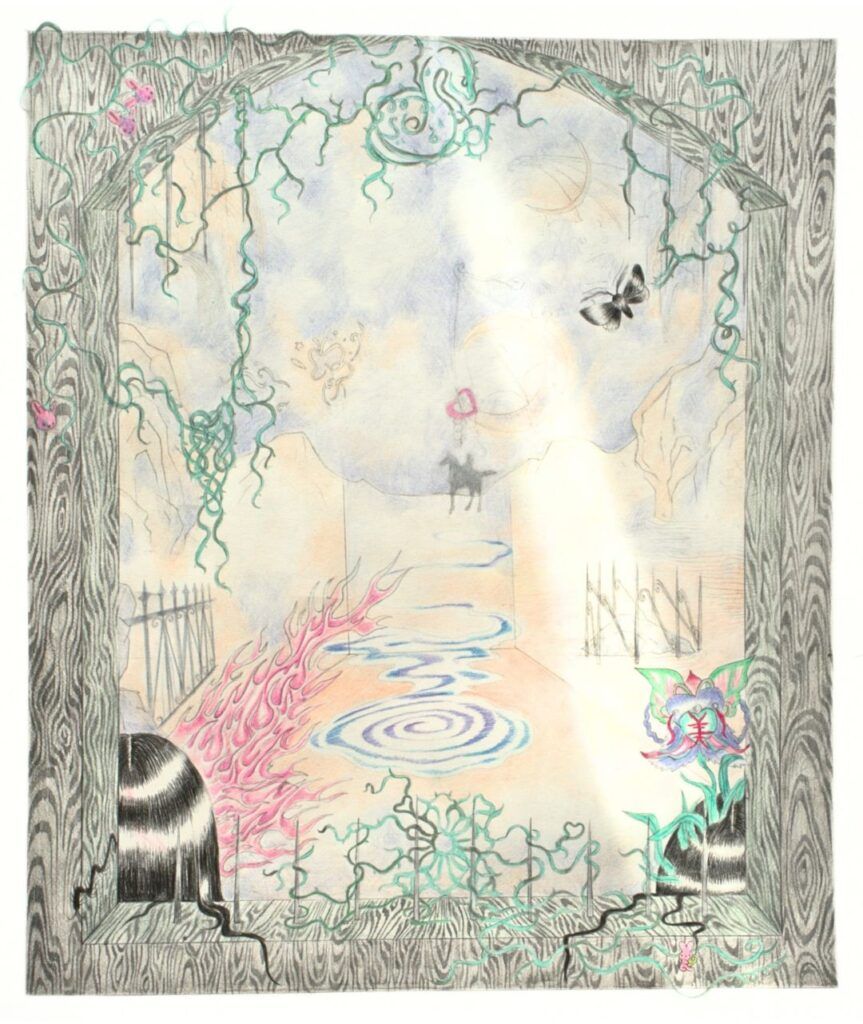
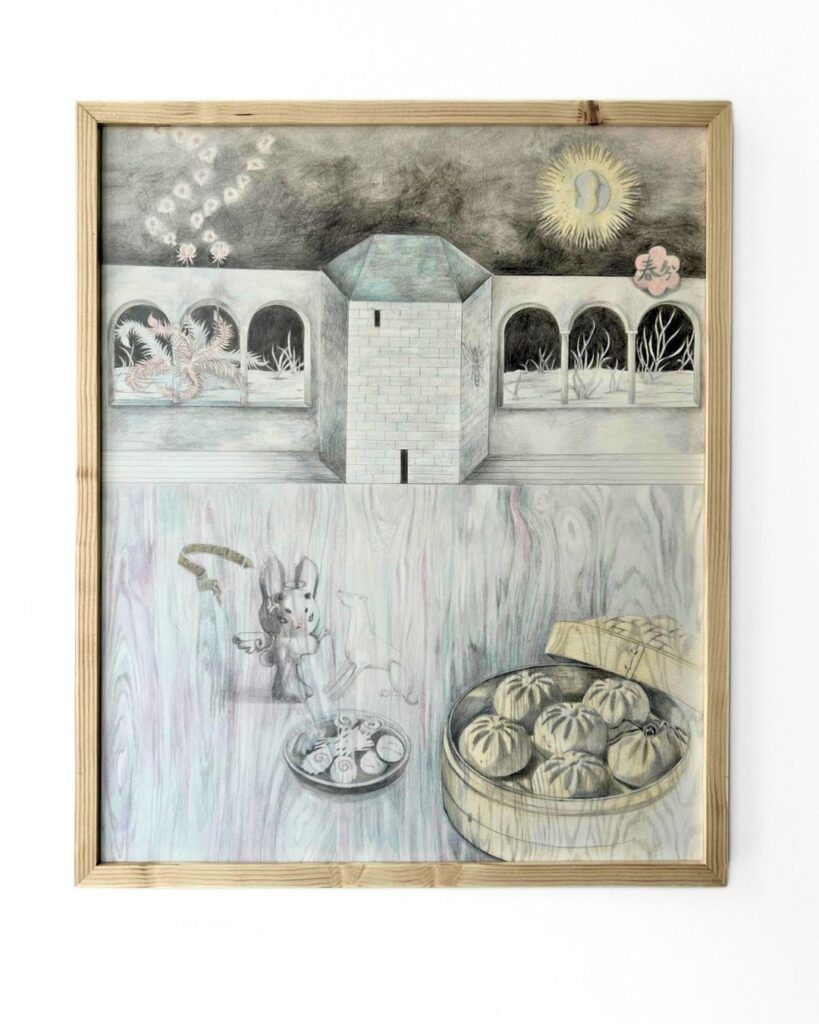
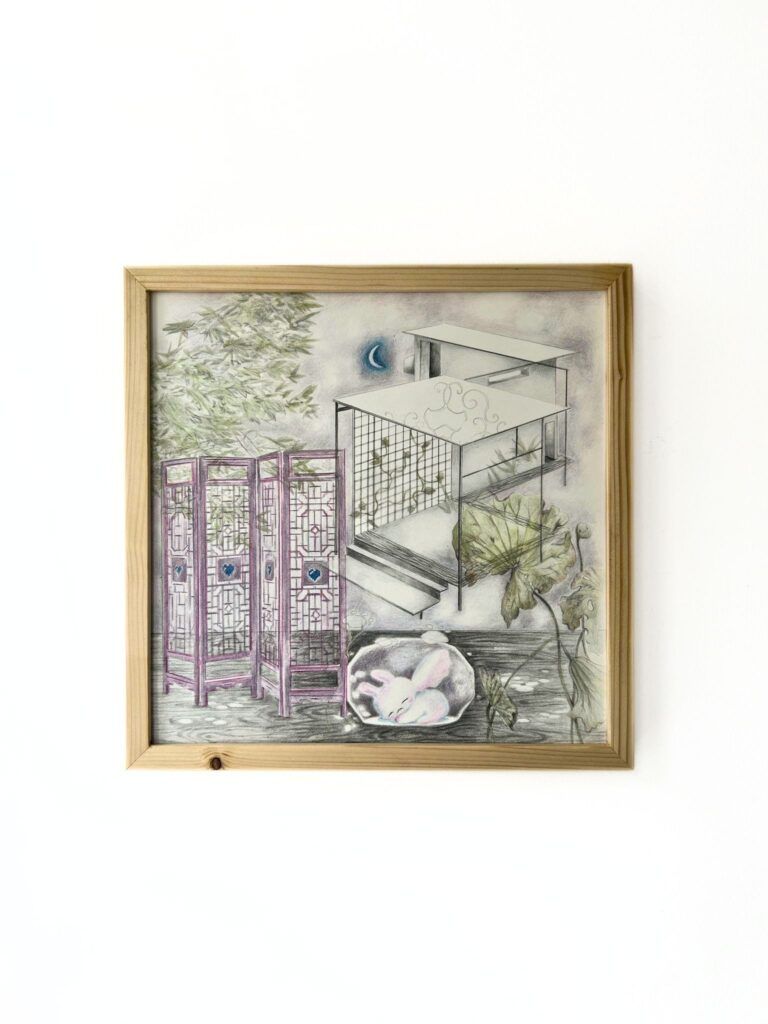
Right now, I’m fully in the process of my diploma work and I really love it. I have a lot of very zen, custom-made wooden frames, and I draw all the time while watching Friends or The Simpsons. Lately, my work has been revolving more around architectural structures. I often start with a wall, a wooden surface or a frame, and then place characters, spirits, and objects into that space. These environments feel enclosed, almost sacred, loosely inspired by mediaeval and early Renaissance imagery, but shaped by a contemporary visual language influenced by digital aesthetics and soft, pastel tones. I have more ideas than time at the moment – a large painted paravan, custom-made lamps, and even a performance inspired by the Buddhist practice of mandala making, where detailed works are created over several days and then destroyed immediately after completion.
Overall, I feel really excited to be completely free after my diploma. I’ve been offered a work internship in Niigata, Japan, and I’m also hoping to spend some time in a Buddhist monastery – I’m trying to stay open and see where it leads.
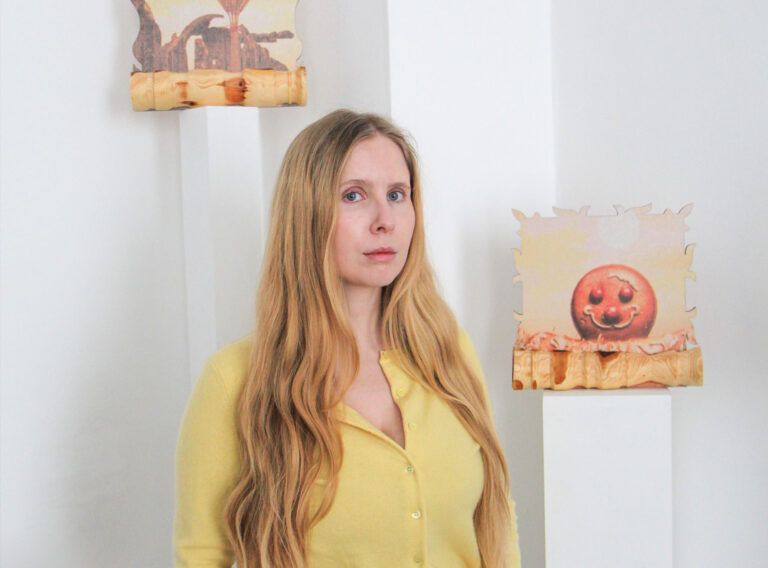
Ema Prosová is graduating this year from the Painting IV studio at the Academy of Fine Arts in Prague. Her work draws on her long-term experience of living in Asia; she spent several years in Tokyo and completed study residencies in Indonesia and Vietnam, where she learned traditional techniques such as lacquer painting and silk painting. These experiences have gradually become an integral part of her approach to image-making and to the creative process itself. She works primarily with drawing, illustration, and painting. Her practice draws on East Asian aesthetics and spiritual principles, as well as on the visual language of animated films and early video games. She is inspired by dreamlike symbols and by both natural and urban landscapes, through which she develops a complex system of signs, symbols, and archetypes. Through her work, she seeks to connect imagination with reality. Within this visual space, she offers a diffuse meditation on a world permeated by empathy and vulnerability.
Art / Ema Prosová @emaprosova
Interview / Markéta Kosinová