PALE BLUE DOT

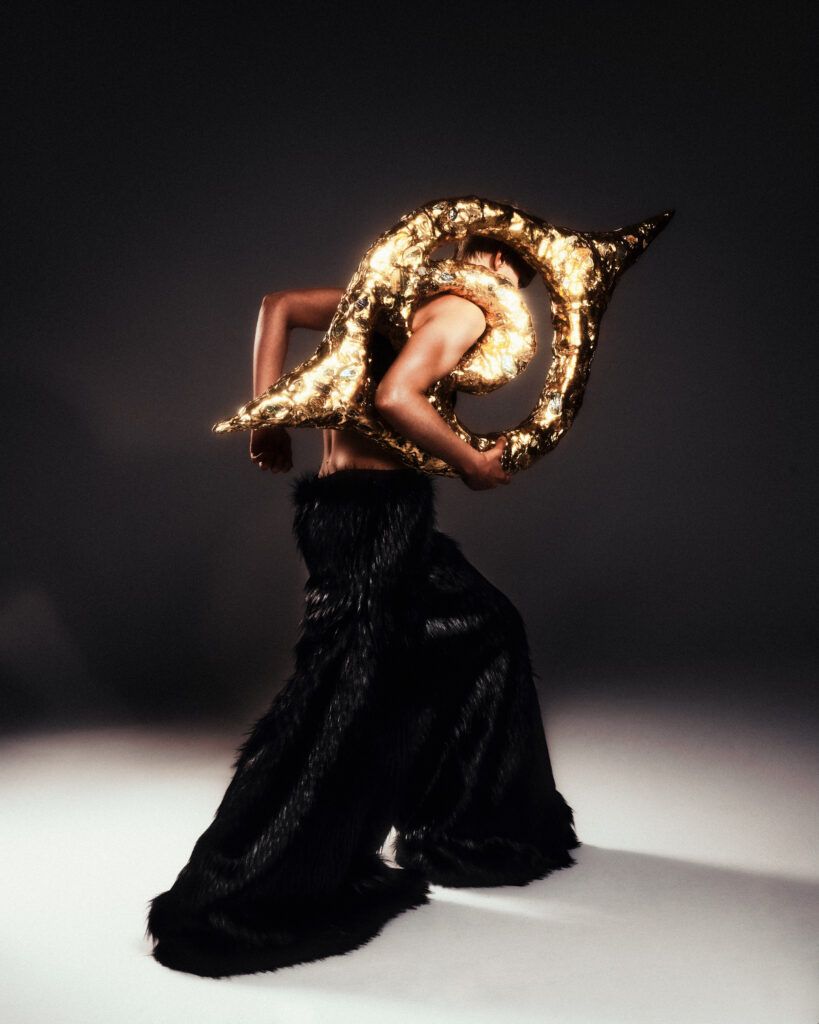
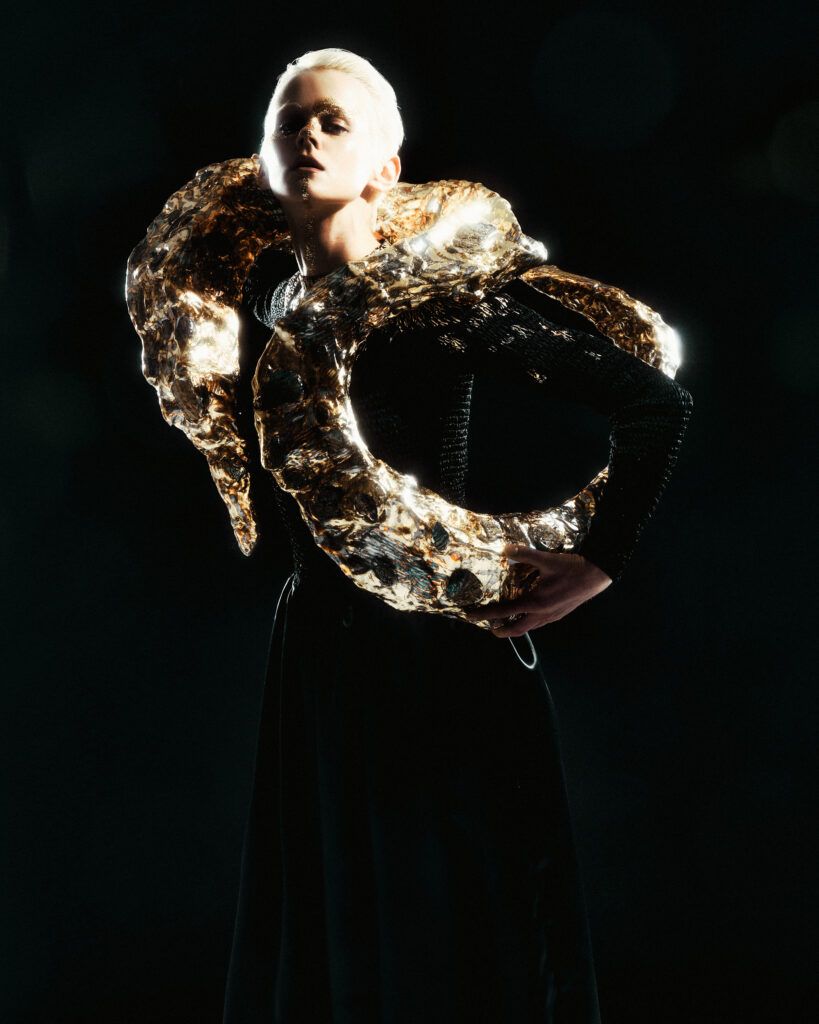
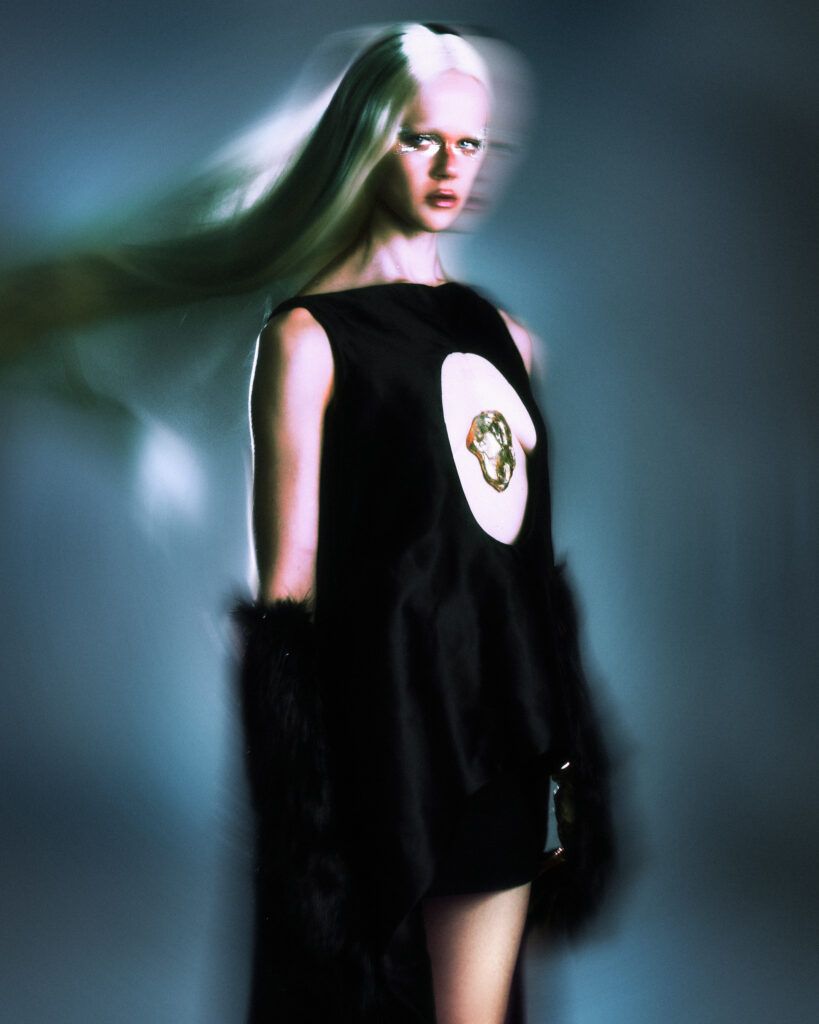
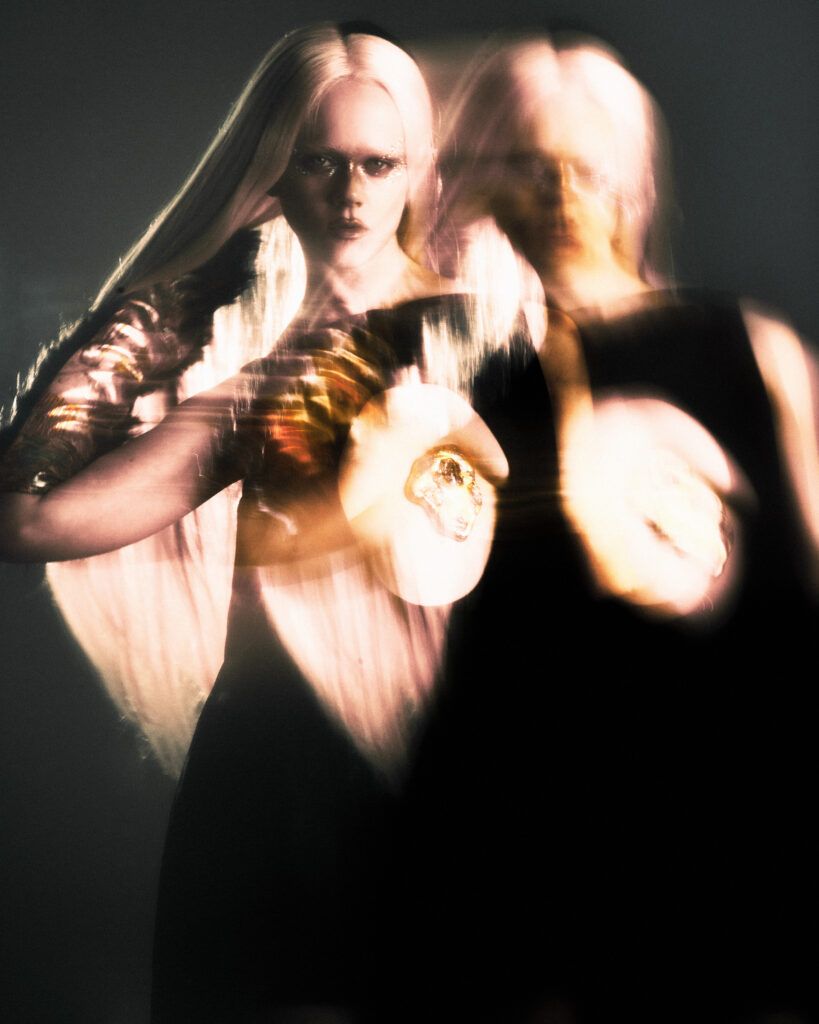
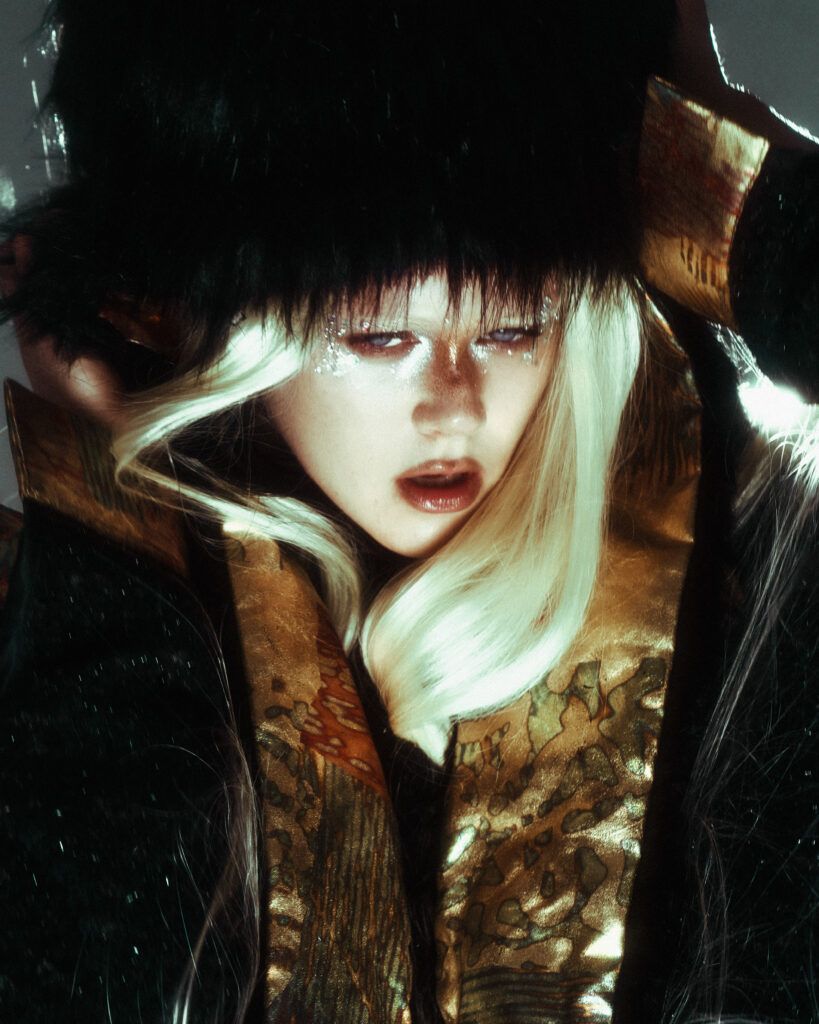
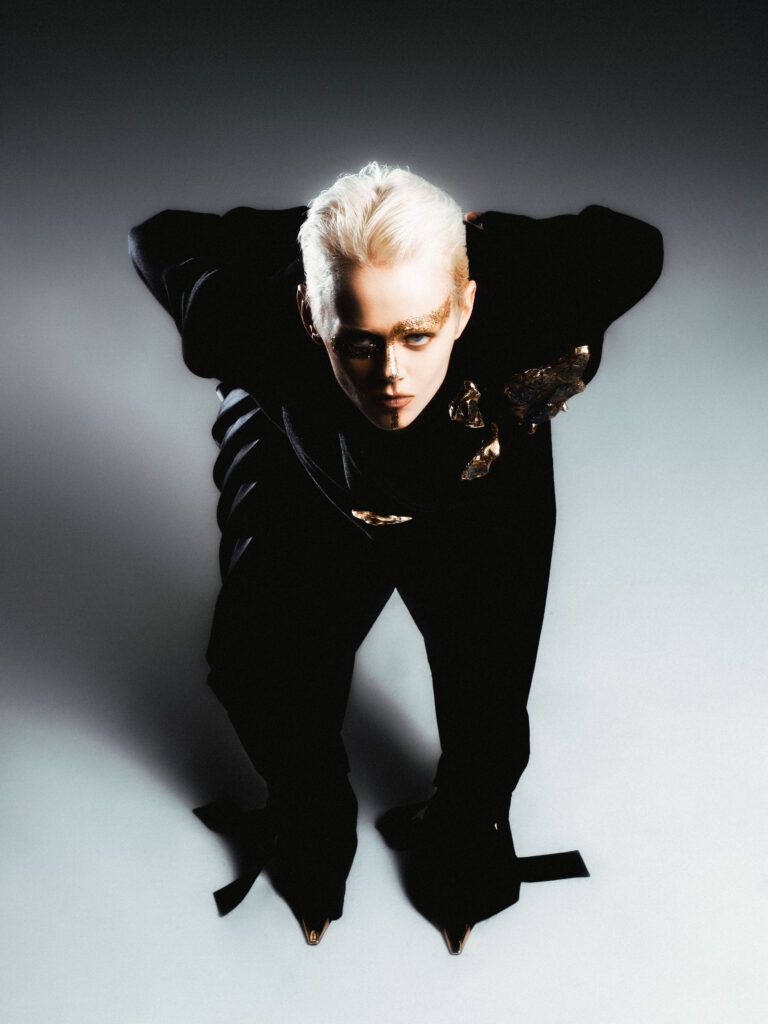
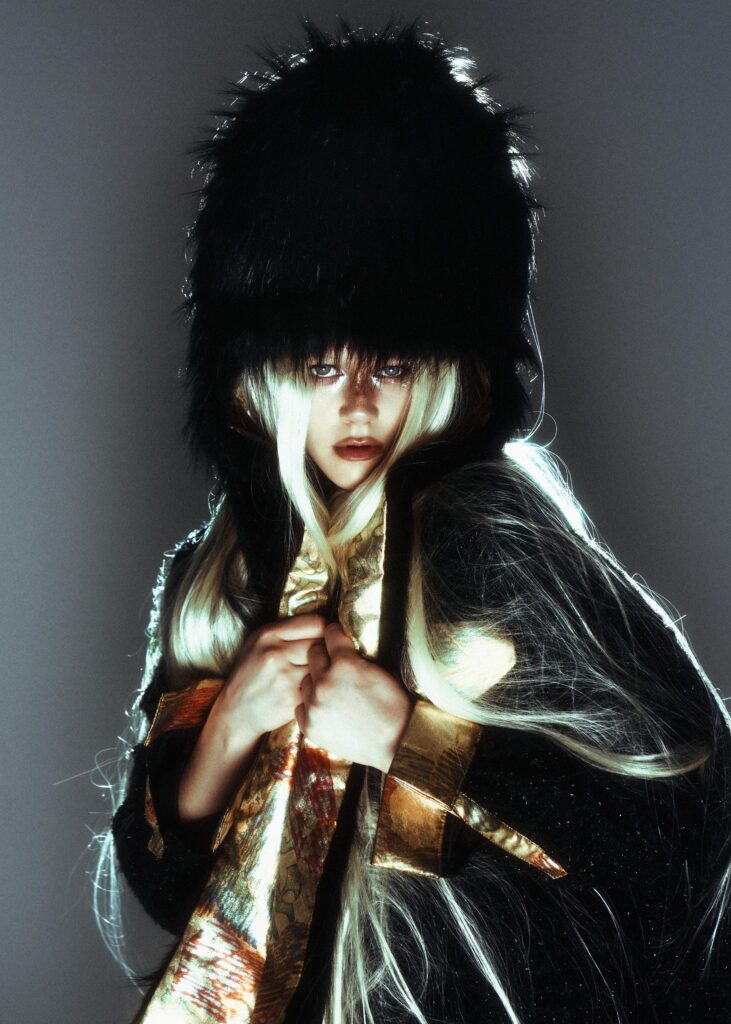
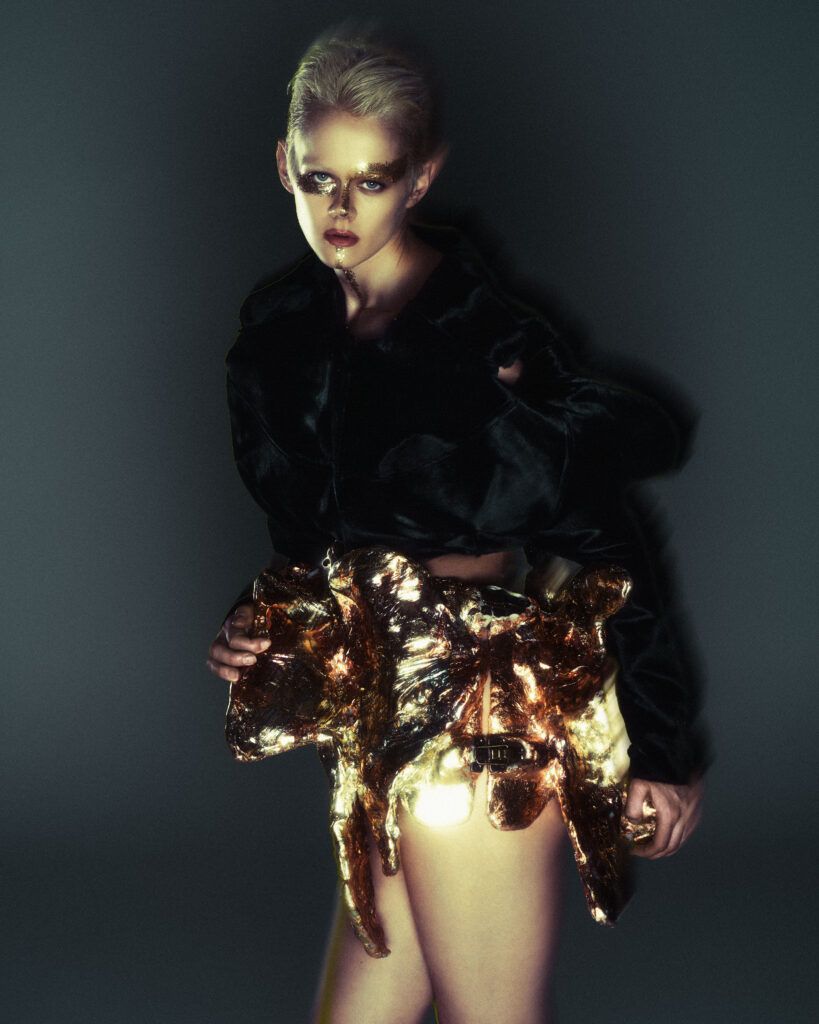
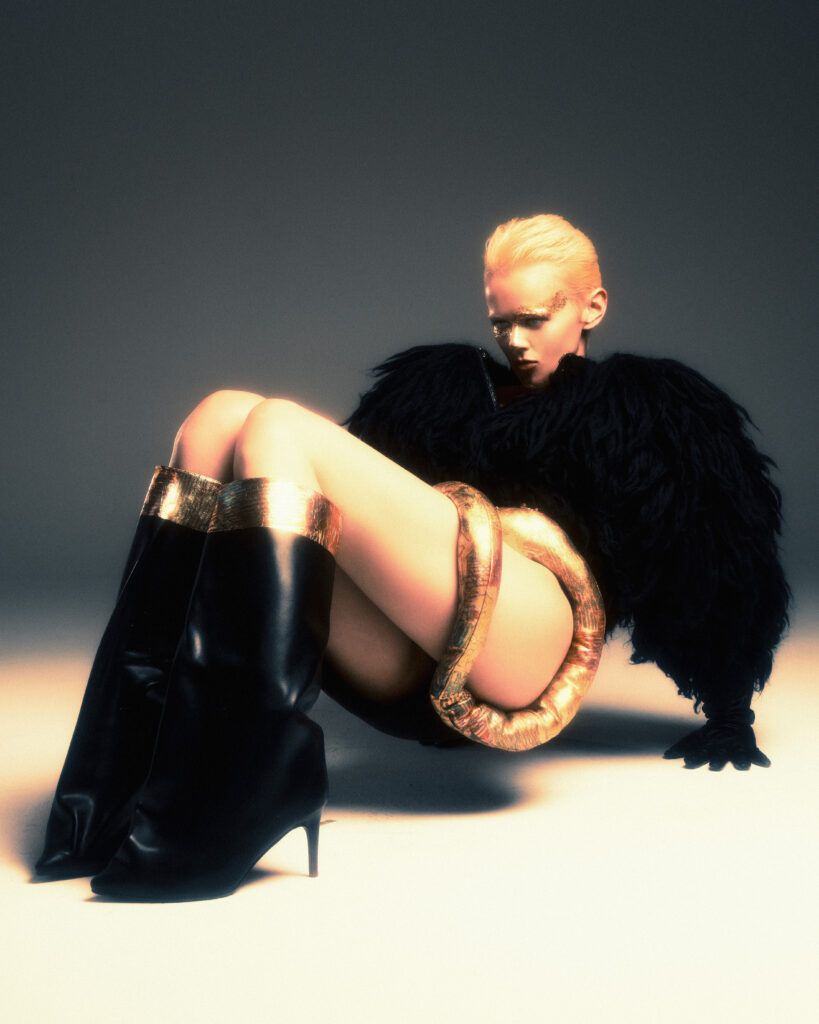
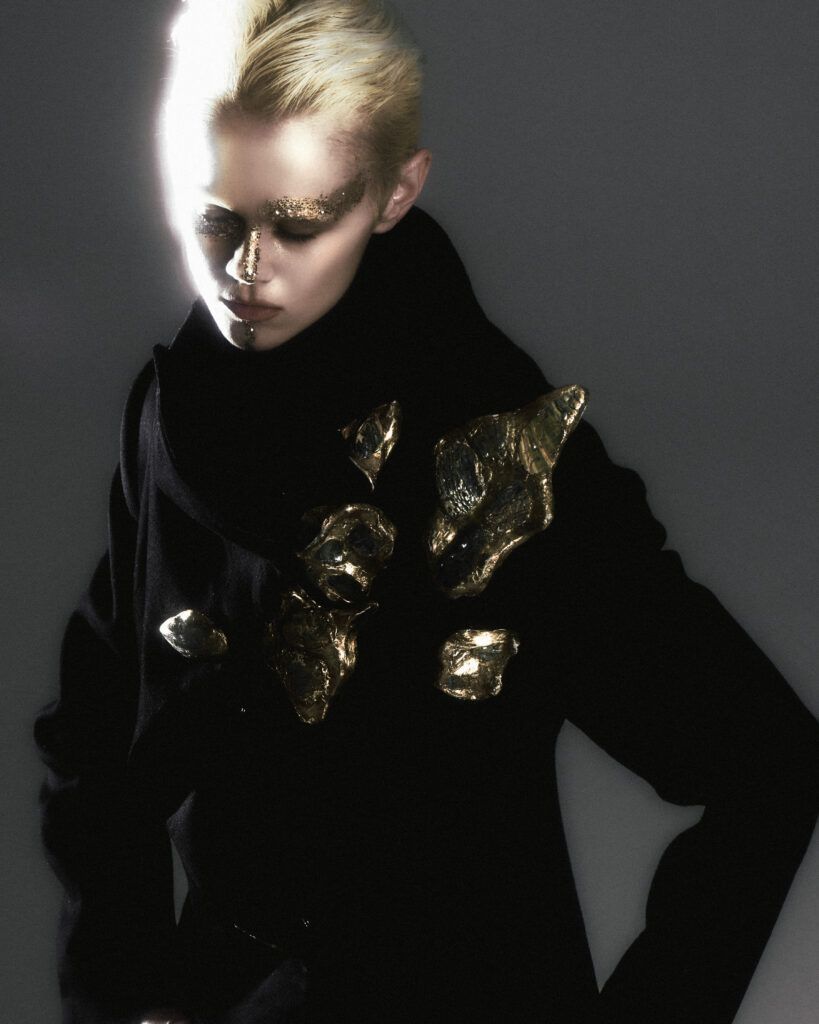
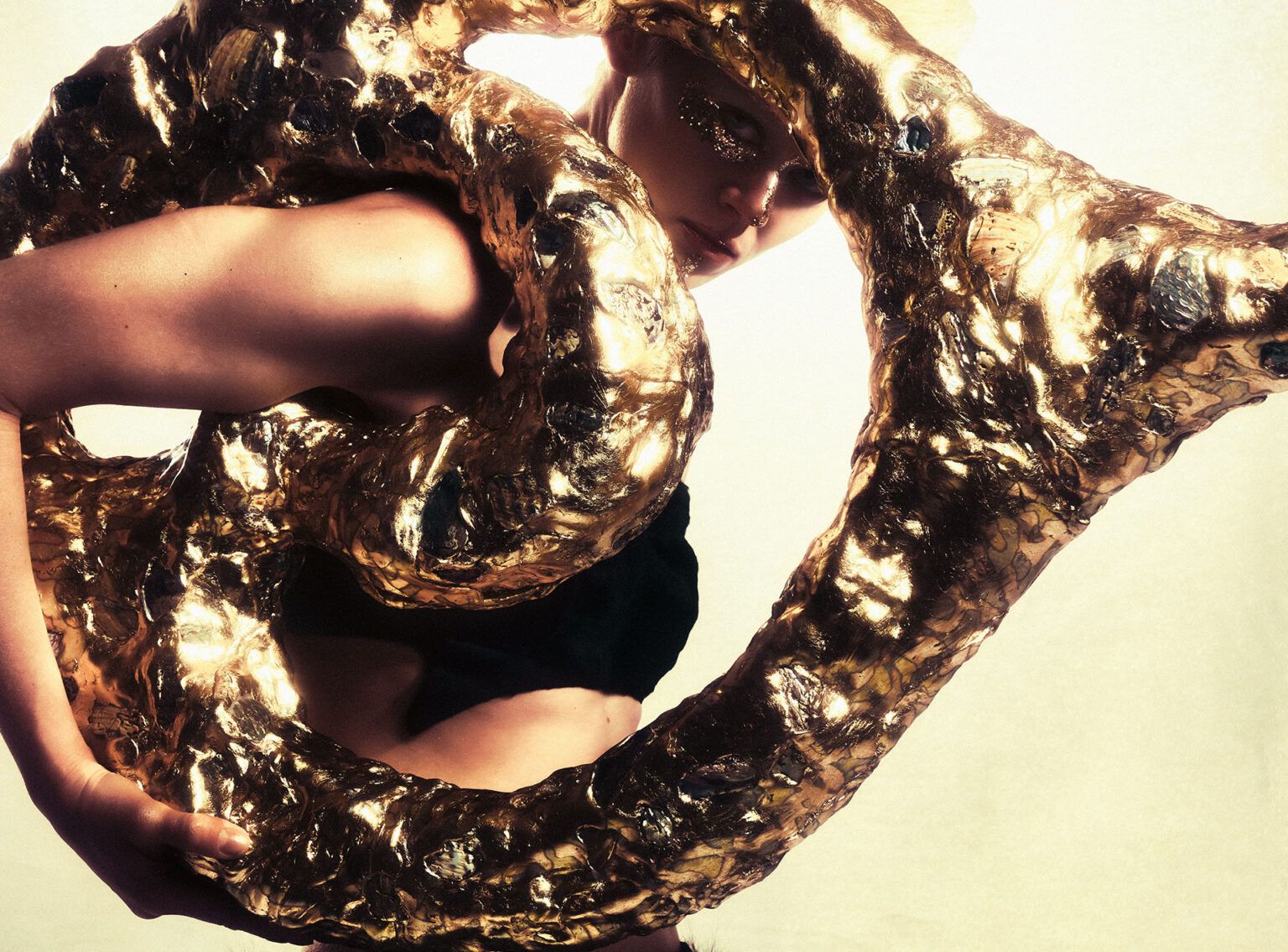
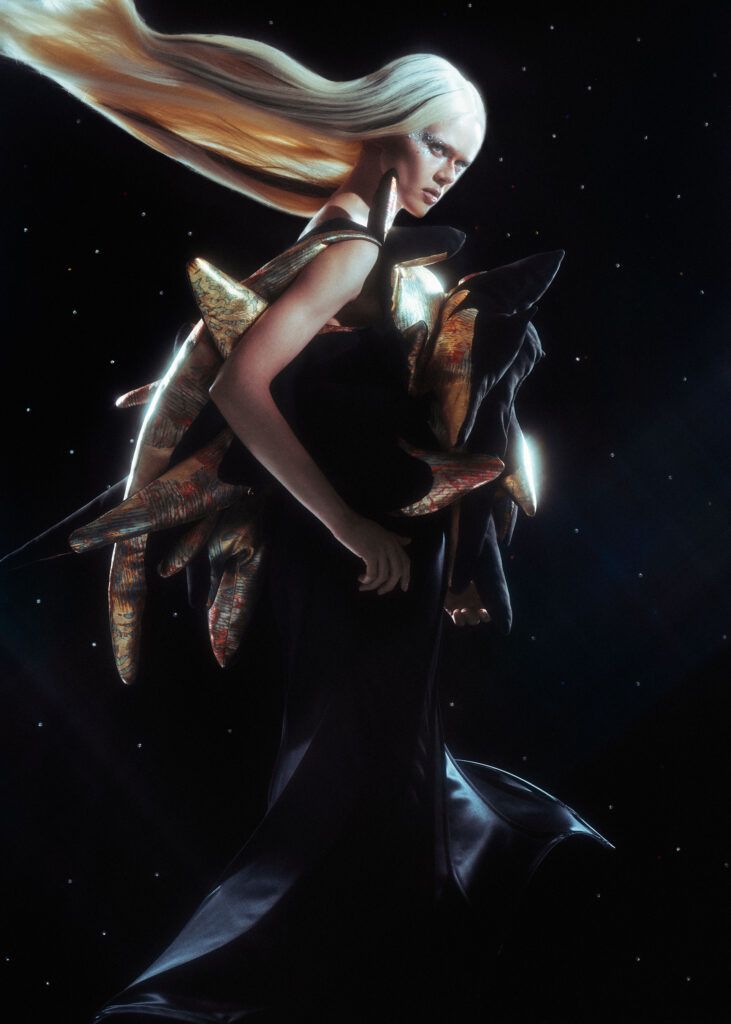
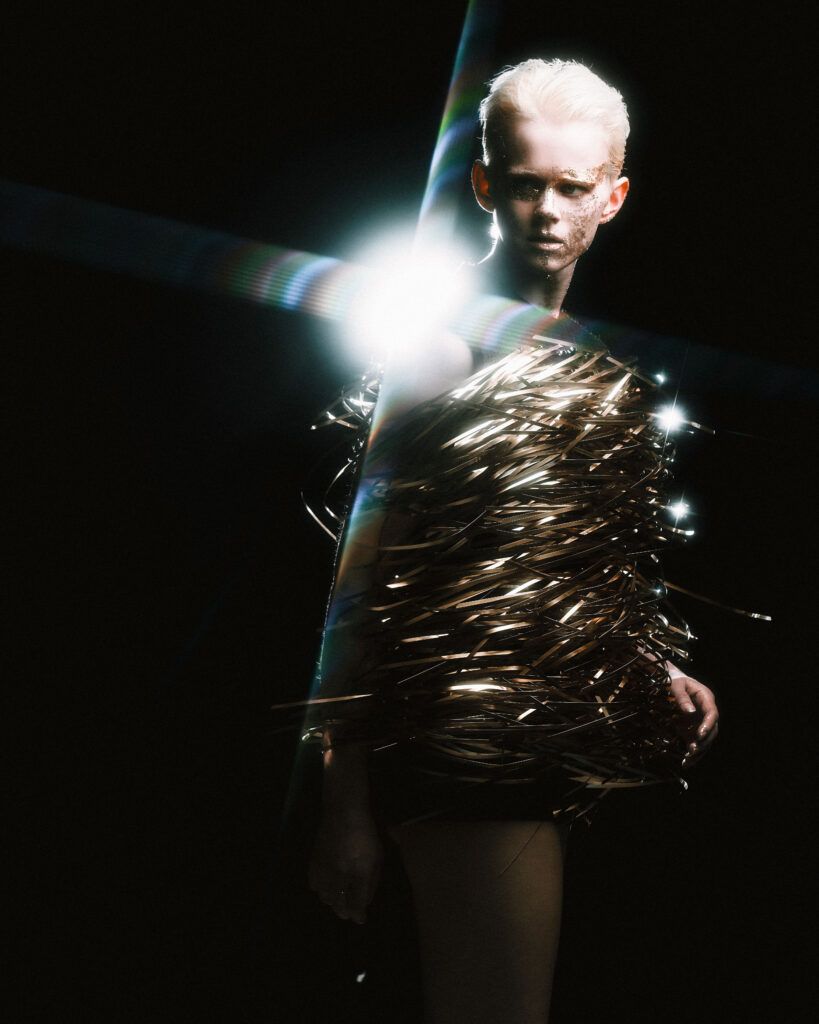
“[My] pieces aren't about hiding the body; they’re about making the internal cosmic.” Fashion designer Layla Dian Jin’s generous, sometimes even sculptural silhouettes feature striking elements covered in gold foil against dark fabric, and browsing them feels like stumbling upon scattered golden nuggets in the dark sand of a cold stream. The designer sat down with us to talk perspective shifts, the silence of empty spaces, micro and macro scales, and more.

Let’s begin with the title: Pale Blue Dot. What does this name hold for you?

The title comes from Carl Sagan’s iconic photograph and his reflection on Earth’s fragility. To me, Pale Blue Dot is both a cosmic perspective and a quiet plea – a reminder of our shared existence on a planet that is at once microscopic and miraculous. This image shifted how I see fashion: not just as adornment, but as a language through which we might speak to the vulnerability and interconnectedness of life.

There’s a kind of alchemy in your work; your use of gold foil feels almost like ancient armour. Are these pieces meant to protect, to adorn or perhaps something in between?

I love that you call it alchemy – because that’s exactly how it felt. The gold foil is both a shield and a shimmer. On one level, it’s decorative, like stars scattered across dark silk. But on another, it becomes a kind of emotional armour – a way of crystallising memory, grief, and wonder into something tactile. These pieces aren’t about hiding the body; they’re about making the internal cosmic.

What sensations or emotions do you hope your audience feels when encountering your pieces?

I hope they feel a kind of smallness – but in the most expansive sense. A recognition of being part of something vast, unknowable, and beautiful. I want my work to hold both awe and tenderness: the sense that we are floating, fragile, and yet full of stories. If someone looks at a garment and feels like they’re standing under a night sky, then I’ve done what I set out to do.

What first pulled you into the world of fashion, and what continues to inspire you to stay in it?

I entered fashion through a love for drawing and sculpture – I was always obsessed with shape, texture, and atmosphere. Fashion became my way of building stories that could be worn, touched, and moved through space. What keeps me here is the potential for fashion to hold meaning: to express emotion, time, material history, even philosophical questions. It’s not just about dressing bodies; it’s about dressing ideas.

Is there a question about your work that no one’s asked you yet, but you wish they would?

No one’s ever asked me how silence works in my garments –  but it’s something I think about a lot. The quietness of empty space, the quiet between stars, the pauses in storytelling. I’m very interested in garments that don’t scream, but whisper – that hold weight through restraint. Sometimes the most powerful parts of a piece are the negative spaces.

What are you currently exploring, any new ideas or narratives you’re excited to unfold in your next chapter?

Right now, I’m in the early stages of developing my own brand – a new and exciting chapter for me. I’m exploring how to carry forward the conceptual strength of Pale Blue Dot while making it more wearable and accessible. My goal is to create pieces that still challenge form and narrative, but also integrate seamlessly into real lives.

Sustainability remains a central value. I’m thinking carefully about materials, processes, and the kind of emotional longevity each piece can hold. To me, avant-garde design doesn’t have to be distant or cold – it can be intimate, thoughtful, and grounded in the world we live in.

Did you like it?
Share it with your friends

Bio

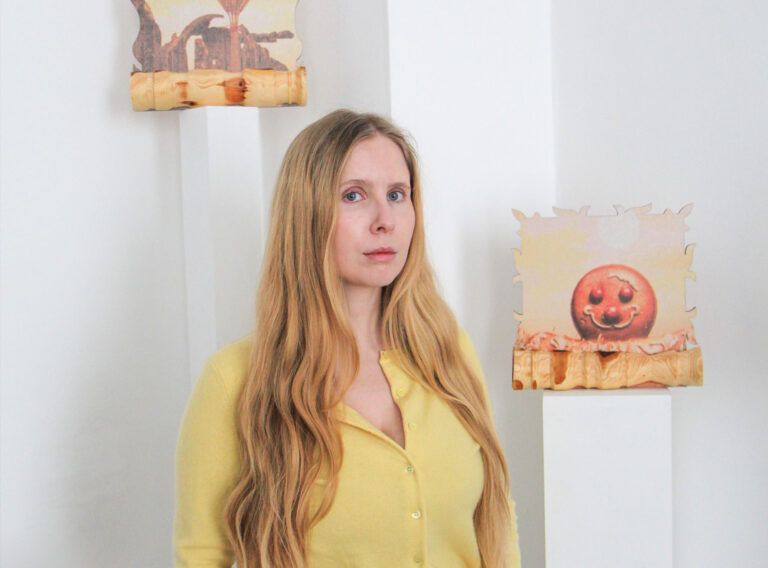
Layla Dian Jin is a Chinese fashion designer who earned an undergraduate degree in Art Marketing before pursuing her Master of Fine Arts in Fashion Design at FIT. Her work transforms abstract inspirations from the universe, philosophy, and cultural history into visually striking and conceptually cohesive collections. By deconstructing and reconstructing Eastern and Western clothing structures, she explores the interplay between tradition and innovation. With expertise in fashion illustration, wearable sculpture, and textile manipulation, Jin pushes the boundaries of craftsmanship to create designs that challenge tradition while embracing artistic expression.
Credits

Fashion designer / @dianjinofficial

Interview / @khynko

“P a l e B l u e D o t” Look Book

Fashion designer / @dianjinofficial

Talent / @plantbasedrio

Photographer / @yanran.xiong

Videographer / @isaiahsuko

Producer / @dsmdmds

Make up & Hair / @kaiashimua

Assistant& BTS Video / @ayokl

Instructors / @zorandobric @junjyh @a.alligateur

You may also like

Ema Prosová's work doesn't announce itself loudly. Her drawings and paintings on silk operate in a register that's contemplative, layered, almost whispered: figures emerging from lychee fruits, hospital rooms floating in eerie space, architectural fragments mingling with natural forms. The work comes from years spent moving between cultures and techniques, learning lacquer painting in Vietnam, silk painting in Indonesia, living in Tokyo, and now finishing her degree at the Academy of Fine Arts in Prague.
Polish choreographer Iza Szostak’s circus is a philosophical system, a choreography of risk, precarity, and collective survival mirroring the contemporary condition. Discover today how her new performance Trapeze, premiering at Studio Hrdinů in Prague, turns the trapeze bar into a narrator, and the clown into an energy valve for a world on the brink of collapse.
“It is a story about a long night, about everything that disappears during the day and only comes out after dusk.” Polish fashion designer Pat Guzik breathes new life into her garments by collaborating with visual artists, such as Aleksandra Waliszewska and Zbiok Czajkowski, whose dreamy and tongue-in-cheek works adorn the skirts, sweatshirts, jackets, and other ready-to-wear pieces by the designer.
French painter and illustrator Sébastien Pastor navigates between naïve figuration and abstract expressionism, building visual worlds where bold color palettes pulse with rhythm and absurdity. Discover how his colorblindness became a creative signature and how he leaves room for the enigmatic in his works.