Welcome back to Swarm Mag! We’re thrilled to have you with us again, especially after seeing your performance here in Prague. Let’s dive in. You’ve posed the question of whether finding your place in the world can replace the feeling of home. What’s your perspective on this?
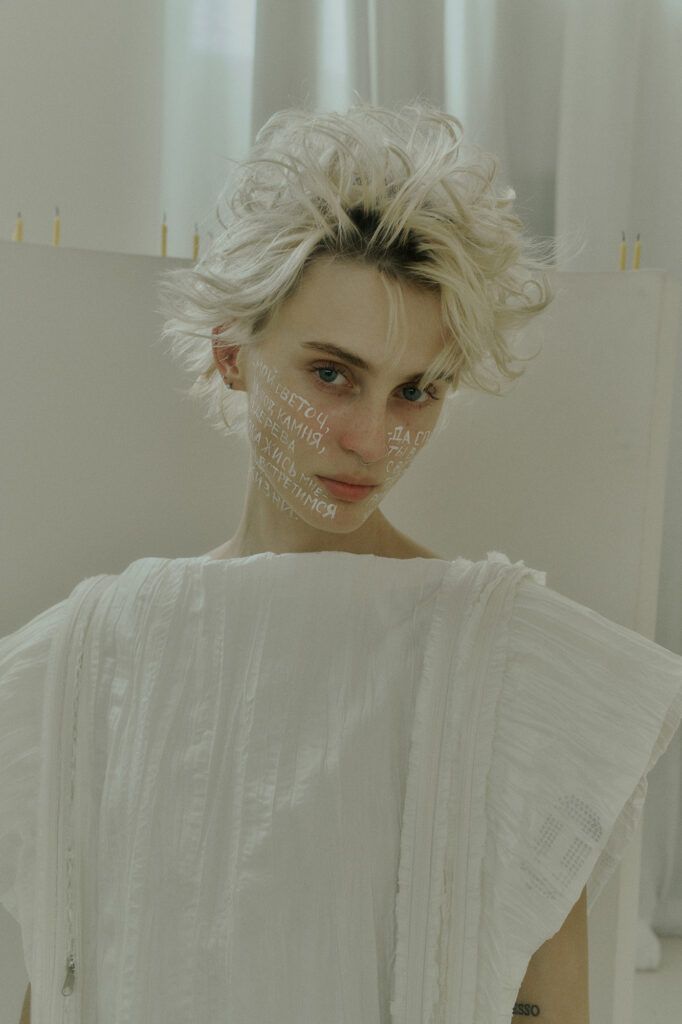
Having experienced evacuation from the war rather stoically, I suddenly broke into pieces upon a seemingly safe situation in my private life. In an attempt to recollect myself from debris, I have questioned the correlation between the natural human desire for self-discovery and the urge for homecoming. I dedicated my new collection to my personal escapist practice I’d define as ‘inter-refuge’. The SS25 line speculates on the ‘Utopia codes’ generated by humanity in aspiration to programme happiness. I’ve ironised symbols throughout the entire history of mankind and have paid tribute to the world’s declared encoding systems, from spirituality to commodity.
I suggested exploiting the civilisation’s eclectic semantics database to pave a path to a
subjective idyll. In other words, any sign, term or notion is a metaphysical source of power that can serve as a vector to ‘self-settlement’, as a strategy for coping with existential dilemmas. Even randomised references may well, if not better, lead to a destination point.
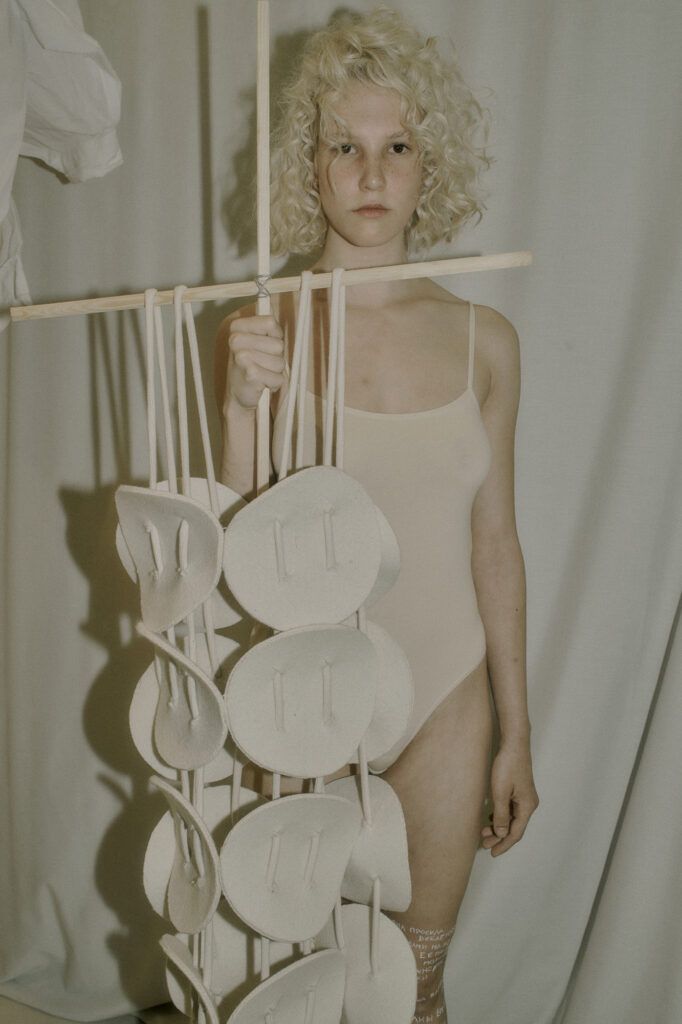
Your performance/collection dances between despair and hope. What do you want people to feel when they see it?
My entire creativity is missioned to evoke questions and reflections within the relevant existential narratives. Using abstract metaphors alone, I manage to provoke associations on the edge of the conventionally accepted. Season by season, I alienate myself from fashion and embrace design and multidisciplinary media as a visual tool to draw attention to raw and uncomfortable ethical dilemmas. Today, my approach stands far from the industry’s ‘greenwashing via microtrends’ paradigm. Besides, all my recent shows are a desperate response to indescribable grief and agony, transferring me to insanity. As a creator at the very core of my essence, I find it a natural, default solution to materialise my internal struggle in cathartic art. The brand is my fragile soul whereas I am a forever servant of its social mission. We are indivisible and therefore, I don’t choose rationally which points to accentuate and which to refrain from. Furthermore, the sharper a problem, the stronger the desire to bring it to a dialogue with my circle of kindred spirits around the world.
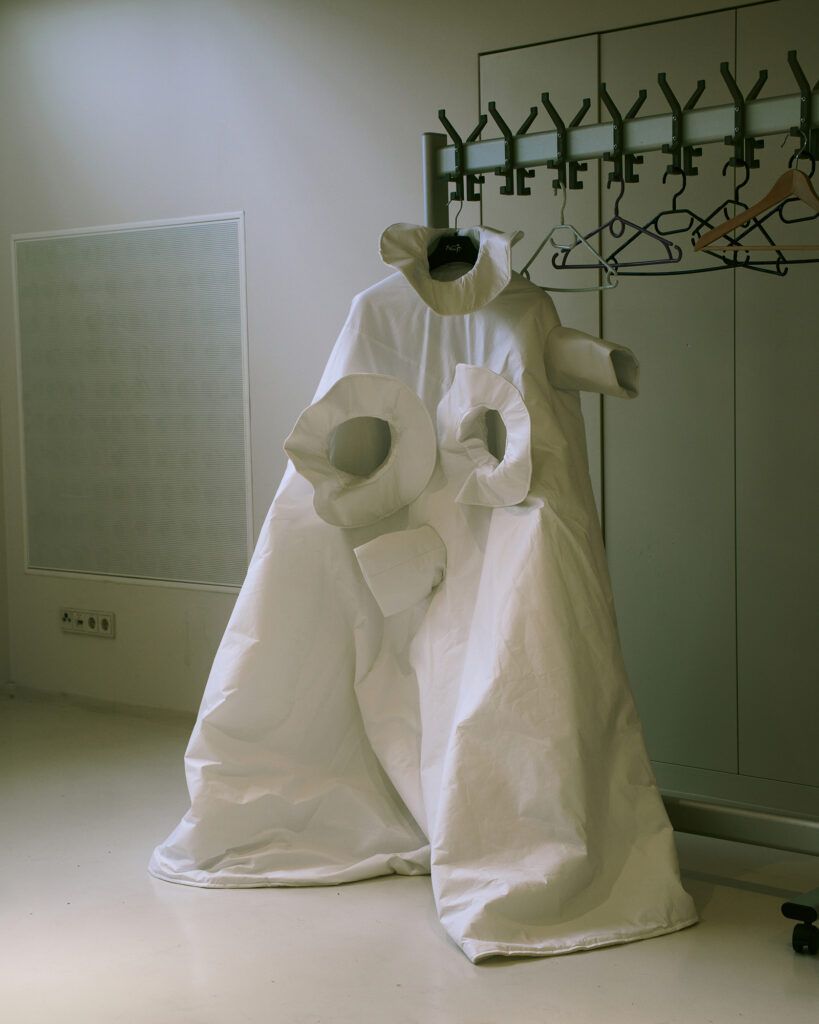
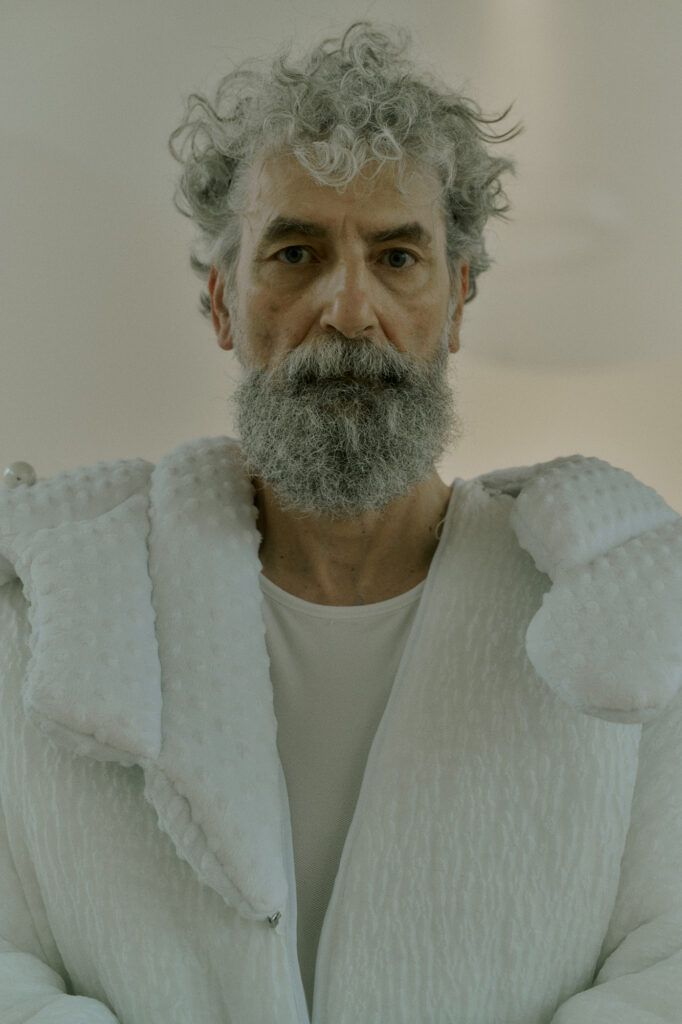
Turning a tablecloth into a cape—what’s the story behind this transformation? Is there a symbolic meaning?
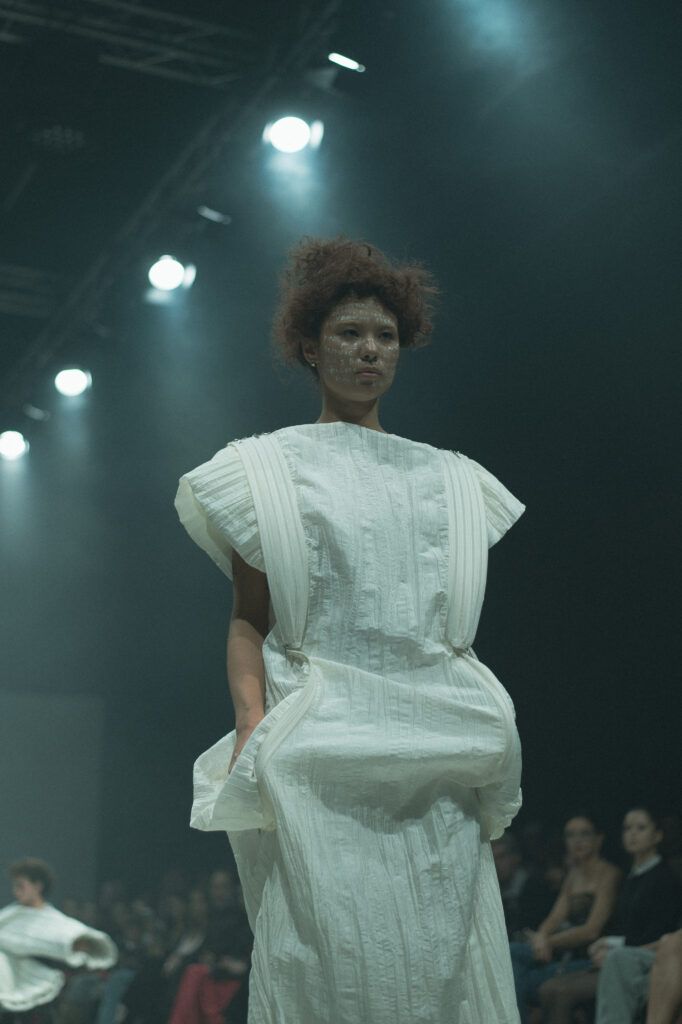
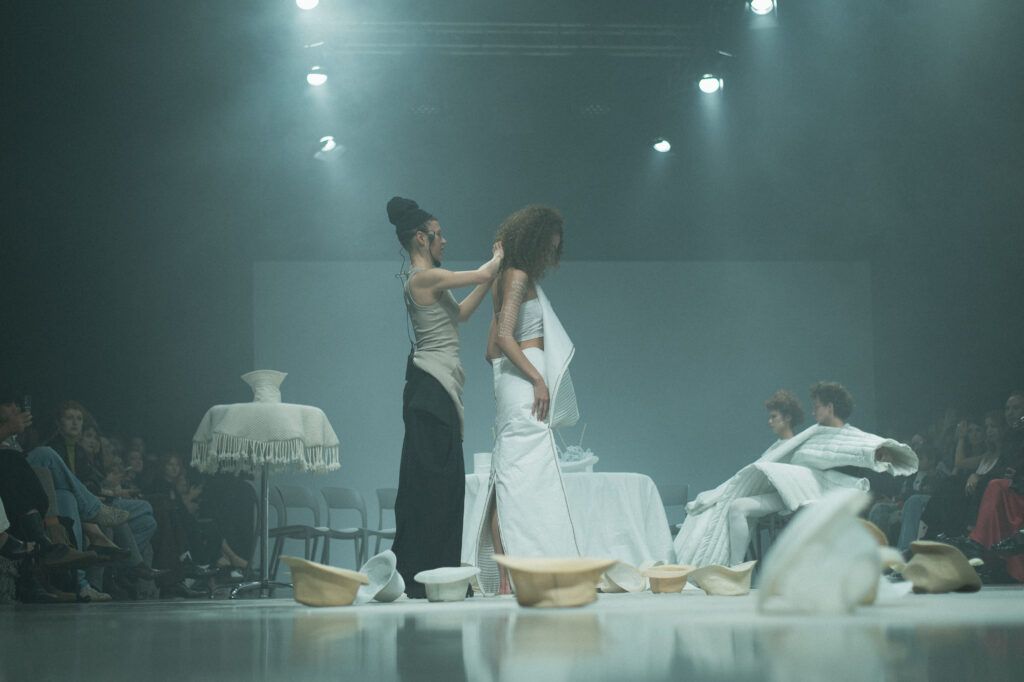
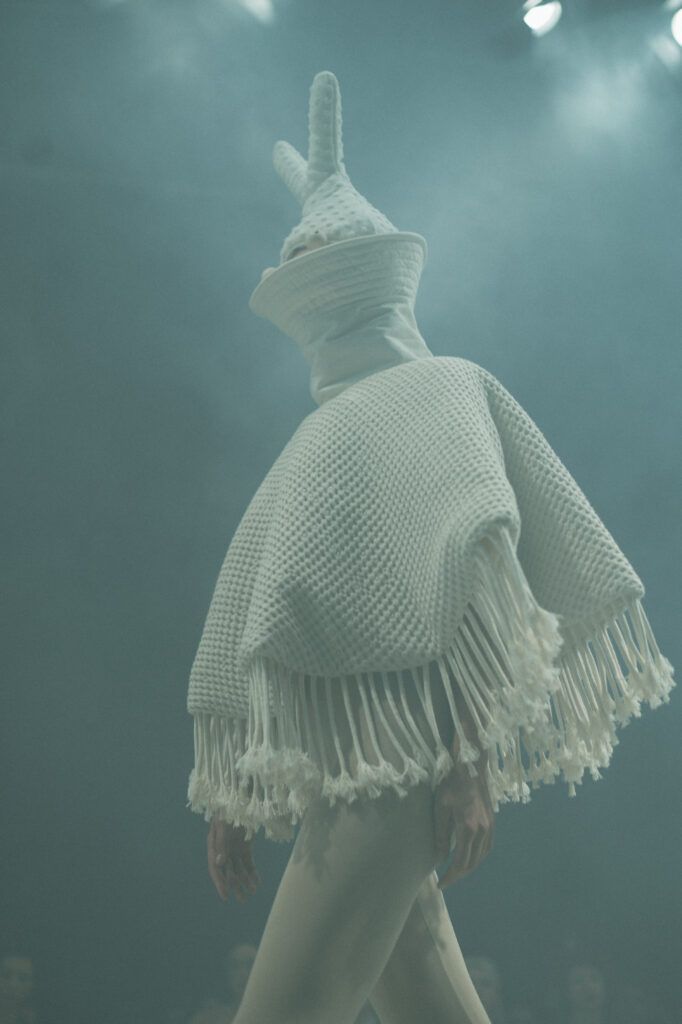
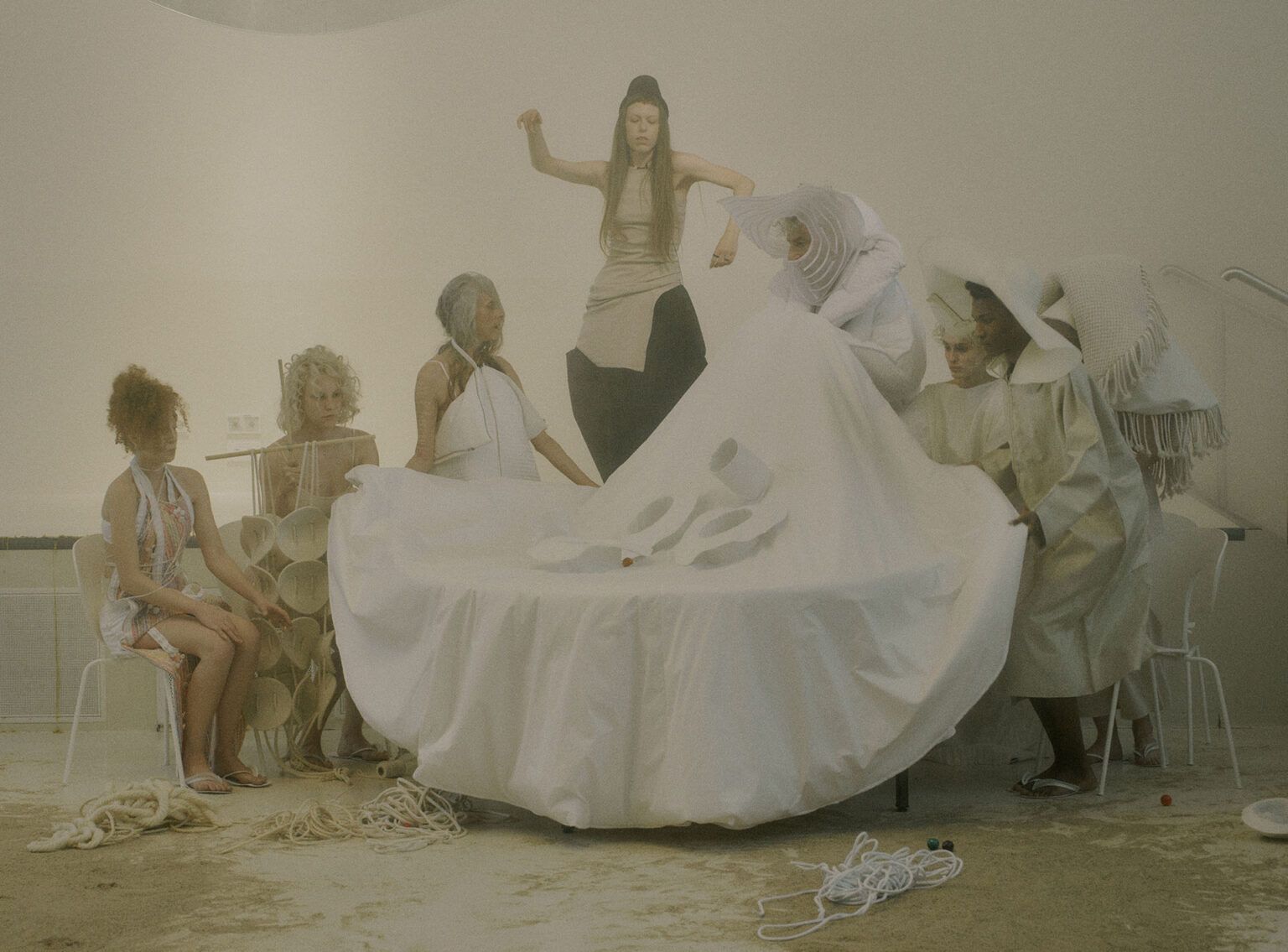
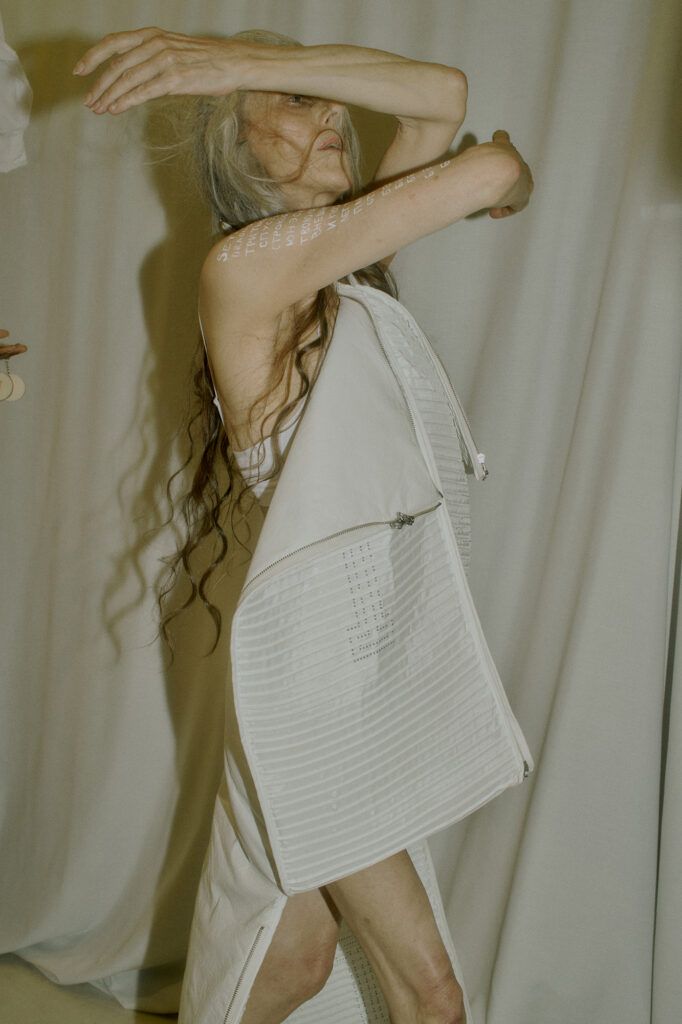
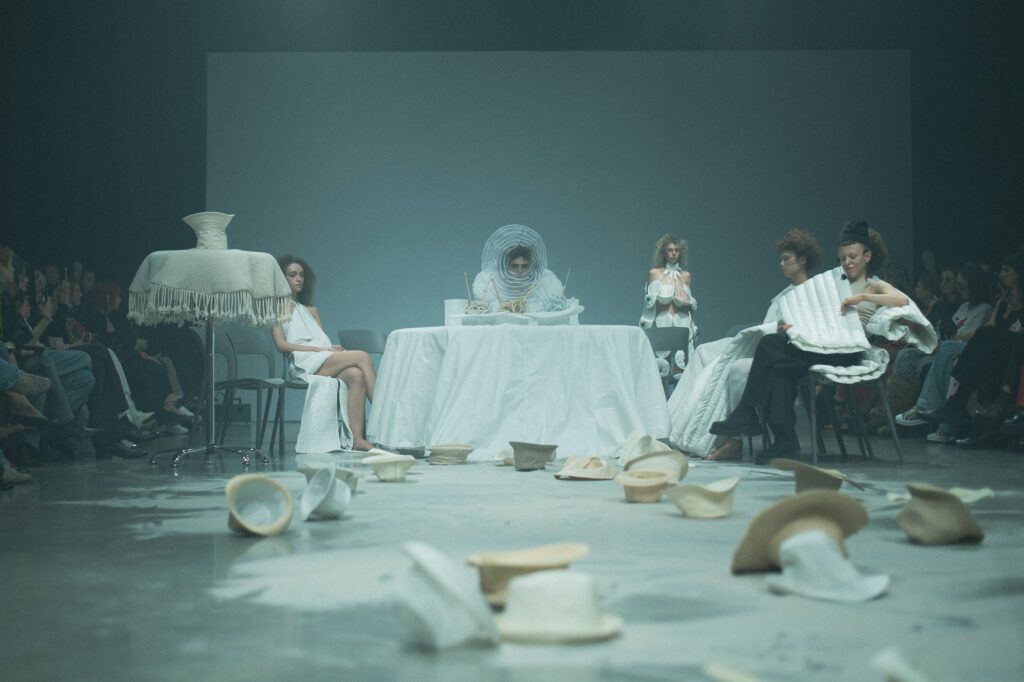
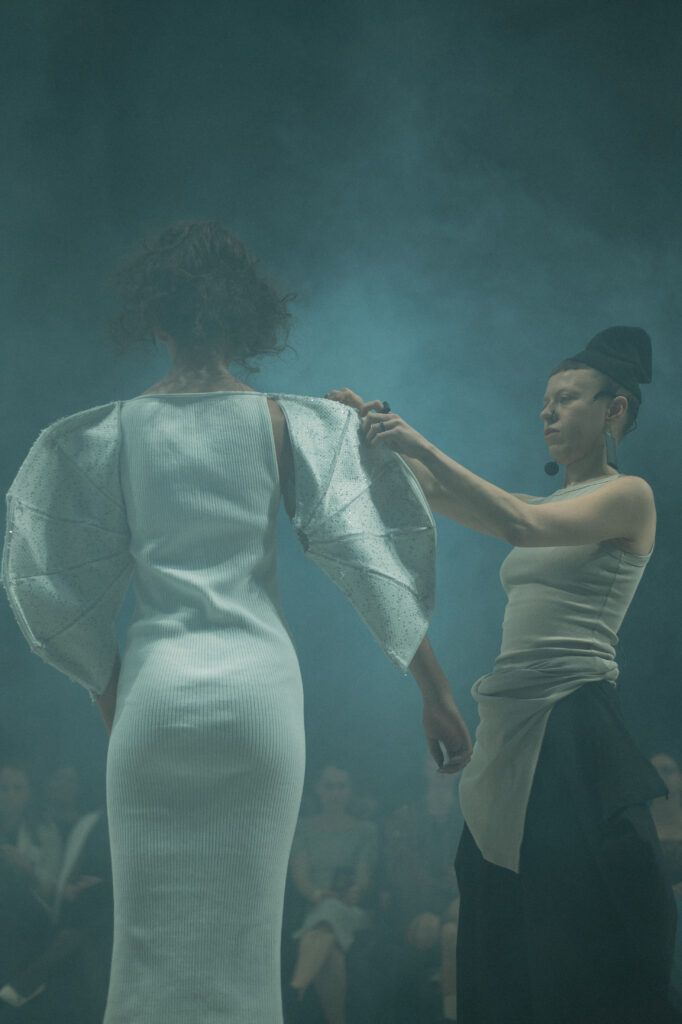
In the SS25 collection, I’ve traced the society’s self-consumerism to gastronomy-related sacraments typical for all the major religions. Thus, a series of ensembles is inspired by ritual table setting. Once, analysing the collected references, I intuitively mirrored the Byzantine Last Supper icon, projecting canonical Orthodox halos onto the extended table. At that point, I’ve experienced a sensation of self-sufficiency within the generated composition. The repetitive pattern modules in the designed outfits hence allude to this ‘autophagia’ phenomenon: a shape coexists with its antipode, a ‘counter-shape’, within a solid entity, as they interact and co-nourish. This ‘object=subject’ speculation inspired me to incorporate wearability into homeware objects.
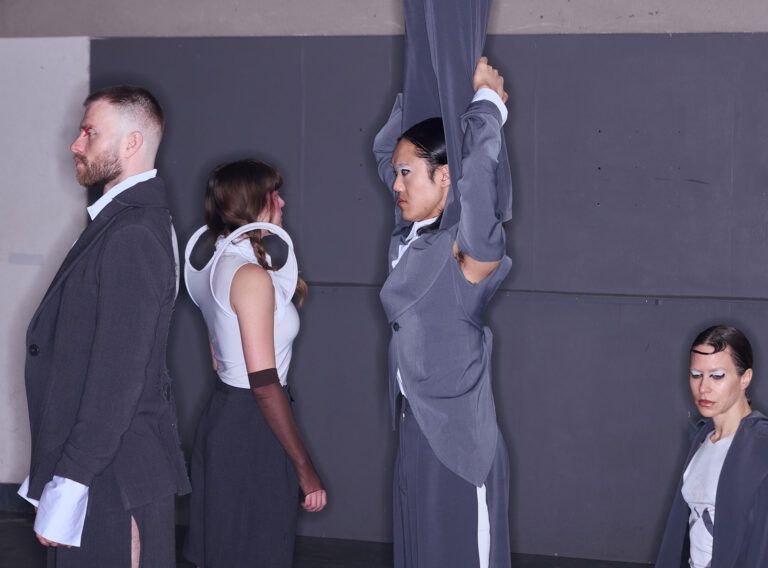
Thus, the “ANTICON” (‘anti-icon’) performance invites us to witness a metamodernist version of the Last Supper mystery with a grotesque finale, in which what looked like a served tablecloth, unexpectedly, serves as a lifesaving trampoline as the performers stretch it under my staggering figure and, eventually, takes a human-like shape, transgressing into an ethereal existence from whose hands I’ve read the ultimate verses of the act.
You’ve performed in Berlin, Prague, and Chisinau. What was it like sharing your work with such different audiences? Did you encounter any memorable reactions?
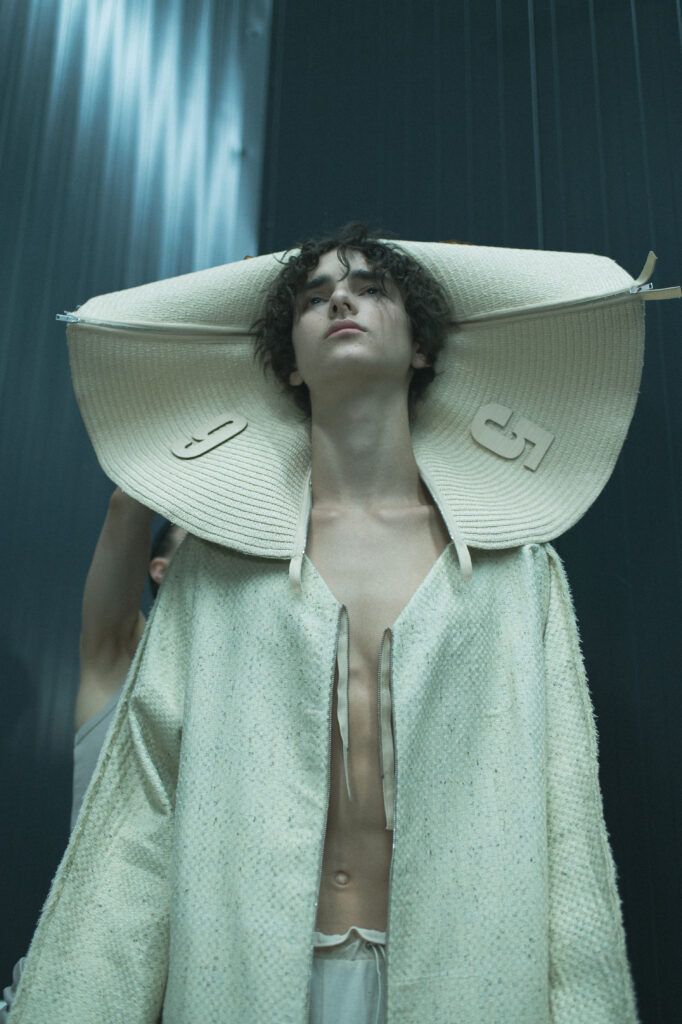
The audience in each city was, indeed, unique. It was a precious experience to look at my own creation through the eyes of different cultural communities, while delivering the message. The reaction varied from confusion (whether the enigmatic narrative is politically correct) to objection (a few models withdrew themselves from the ‘sacrilege), from admiration by the epic phantasmagoria to gratitude for my social contribution, as some felt motivation to heal their own issues via reflective art. For it is hard to surprise the advanced Berlin fashionistas, we had no other choice than do deliver a marvellous performance and seem to have succeeded with our semi-interactive theatrical act at the majestic Kabbalah Centre. Moldovan Brands Runway has impressed me with the outstanding level of the show production: excellent technical organisation and powerful international PR. Our show at Prague Fashion Week took place within the high-end Harper’s Bazaar gala that has gathered the most demanding industry insiders. The more delighted I was with the warm-hearted welcome! I feel so grateful for a chance to partake in each of these fascinating showcases.
Last question: Are there any new themes or collaborations you’d like to explore in future projects?
I’ve just given an interview about the potential incorporation of AI into DZHUS’ production and presentation processes. Despite being a hopeless retrograde myself when it comes to technologies, I realise that not only can artificial intelligence correlate well with my forward-looking brand’s DNA, but also bring vivid practical benefits, from a full 3D database of our multipurpose garments’ transformations (which would have taken weeks at a photo studio) to time-saving digitalisation of the patternmaking routine, including testing a virtual prototype from diverse perspectives. Although I find the brand’s emotional connection with human models irreplaceable, I’m open to collaborations in the technology-oriented vector and wonder what an adventure it would have been to unite the 2 realities under the dome of the DZHUS universe.