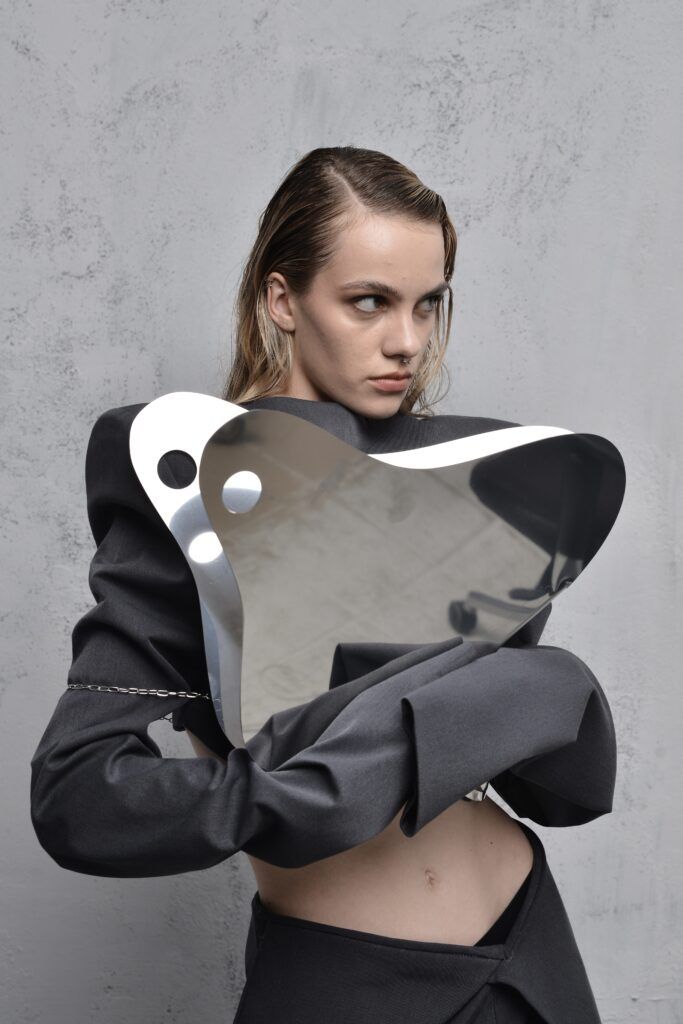
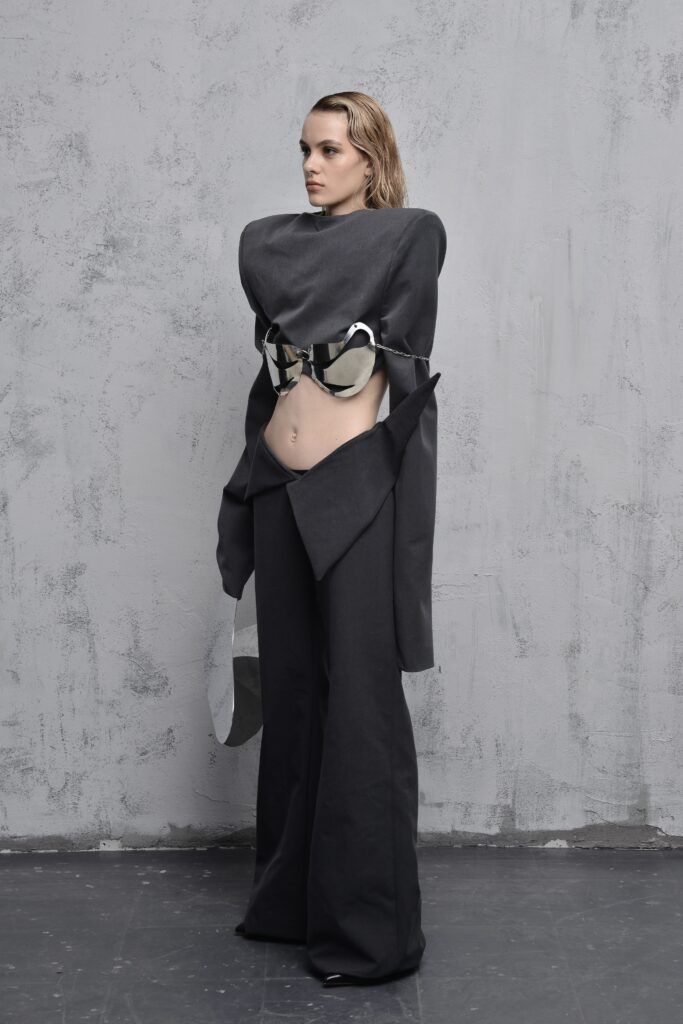
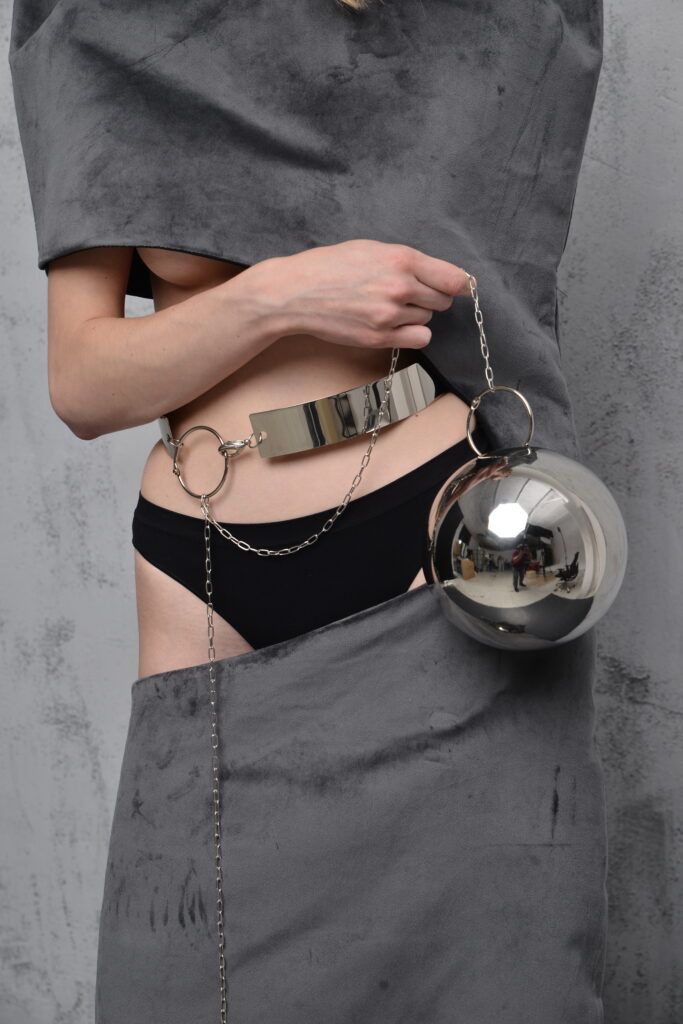
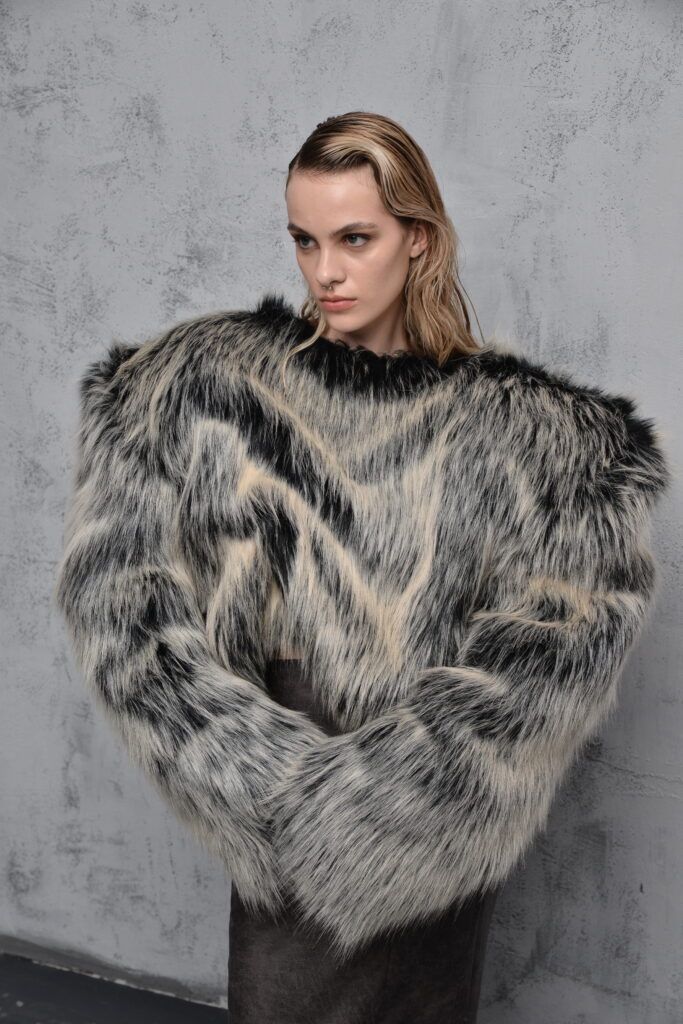
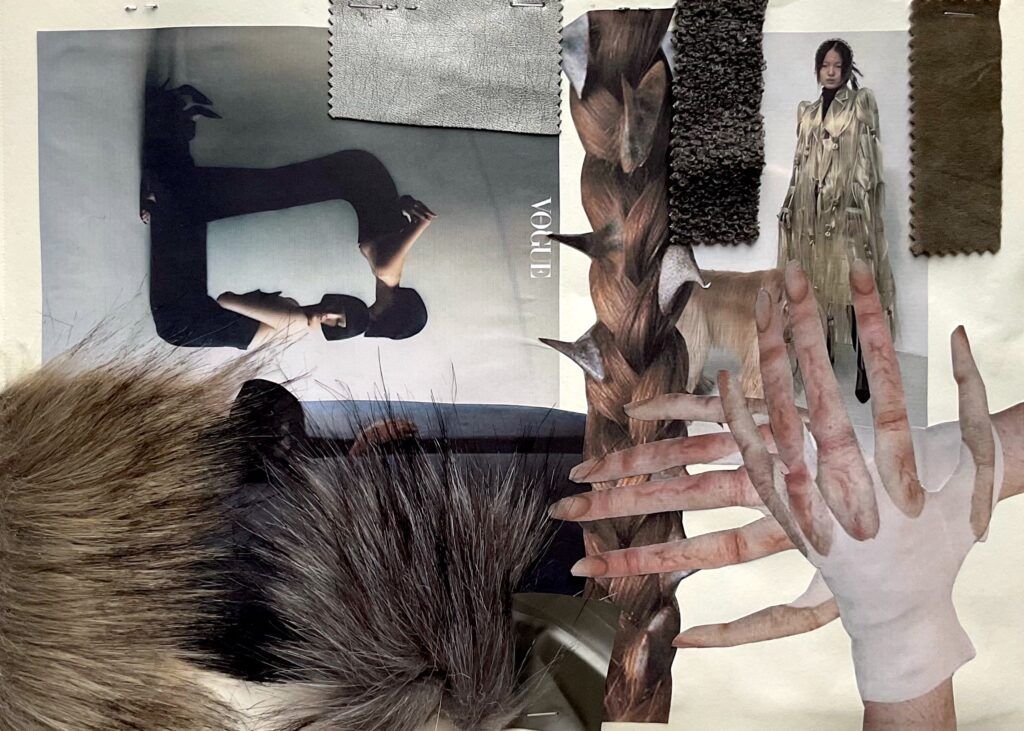
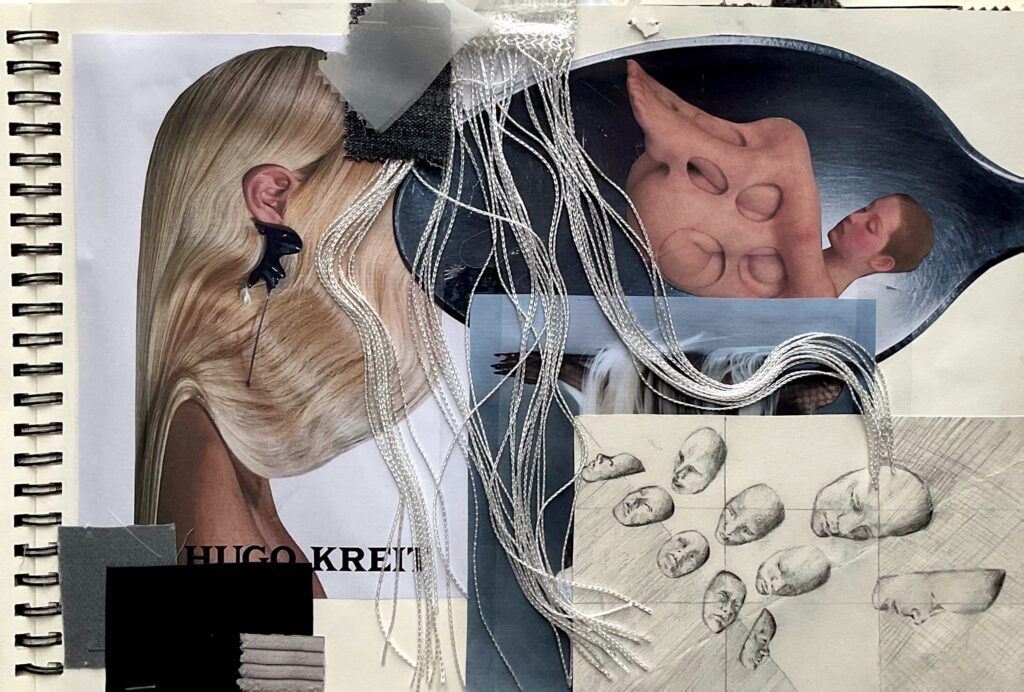
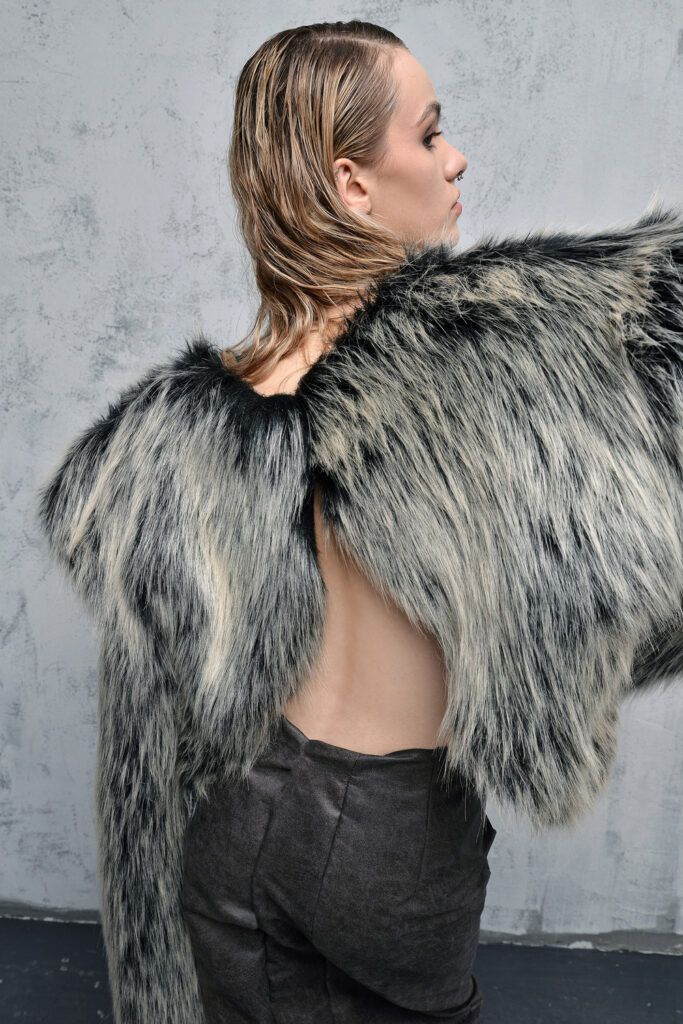
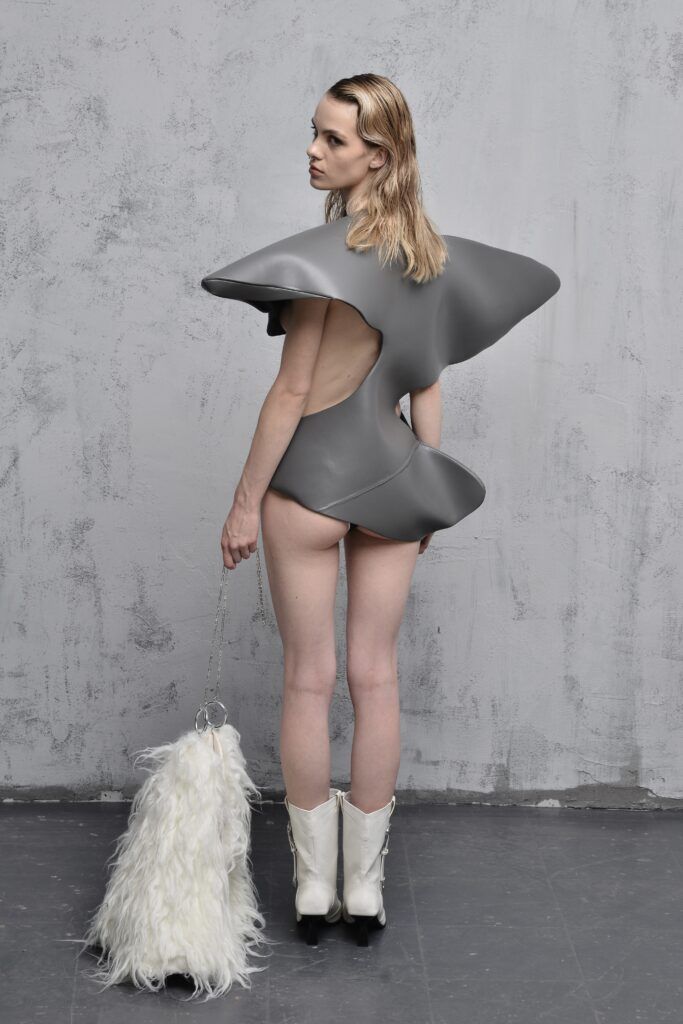
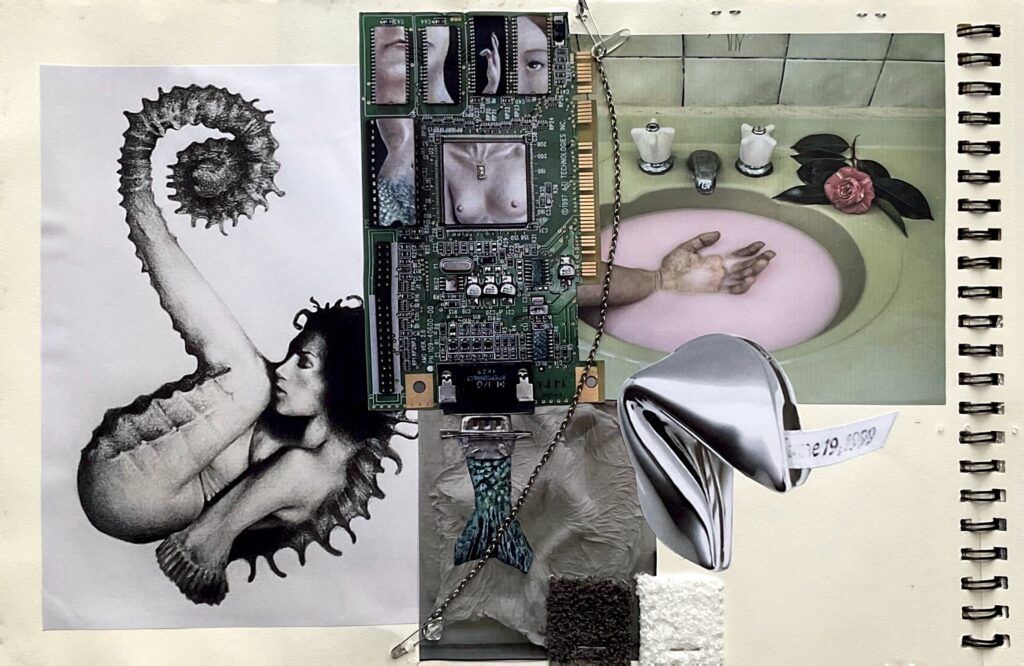
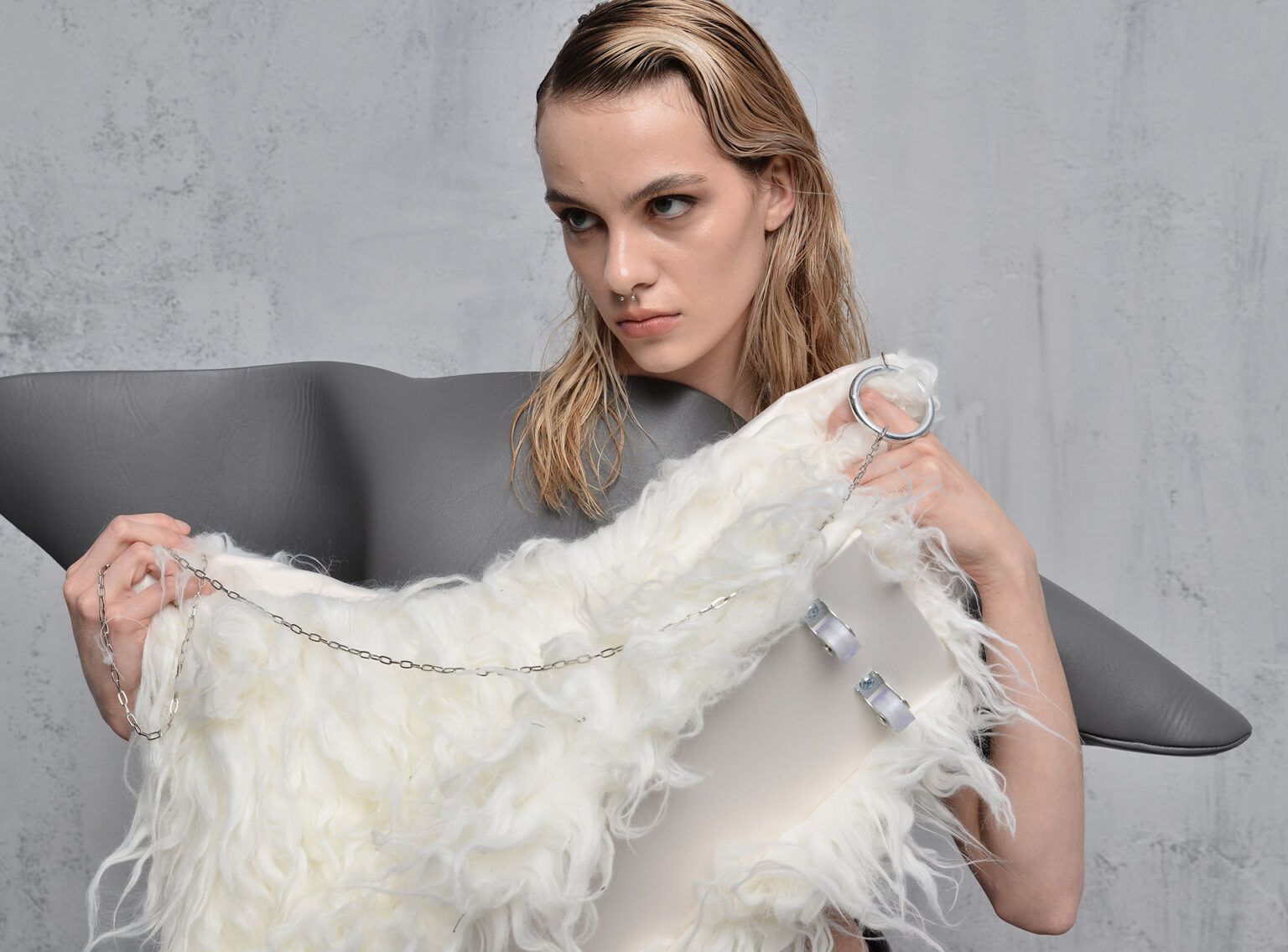
“Woman portrayed as something unreal and unnerving is still very common.” The moodboards of Zuzanna Kordiukiewicz, a Polish fashion designer and jewellery maker, are filled with uncanny and eerie textures and shapes. The collection to which they gave birth, Chimera, is inspired by the fever dreams and rapturous visions of surrealism, often portraying female figures severely distorted and hybridised with other lifeforms. We invite you into her creative process.
Chimera exists at the crossroads of the supernatural and the untamed. What was the initial spark behind this collection?
The subject of surrealism came up during doing my research for my diploma. Most of my inspirations and thoughts while searching for a suitable topic for my collection were directed towards fields of unreality. In previous years, I also often directed my art towards similar themes, combining supernaturalism and strangeness, and I decided to follow this direction in my diploma as well.
The mythological Chimera is an impossible being—a collision of forms, an exquisite anomaly. How does this figure translate into the identity of the modern woman you portray?
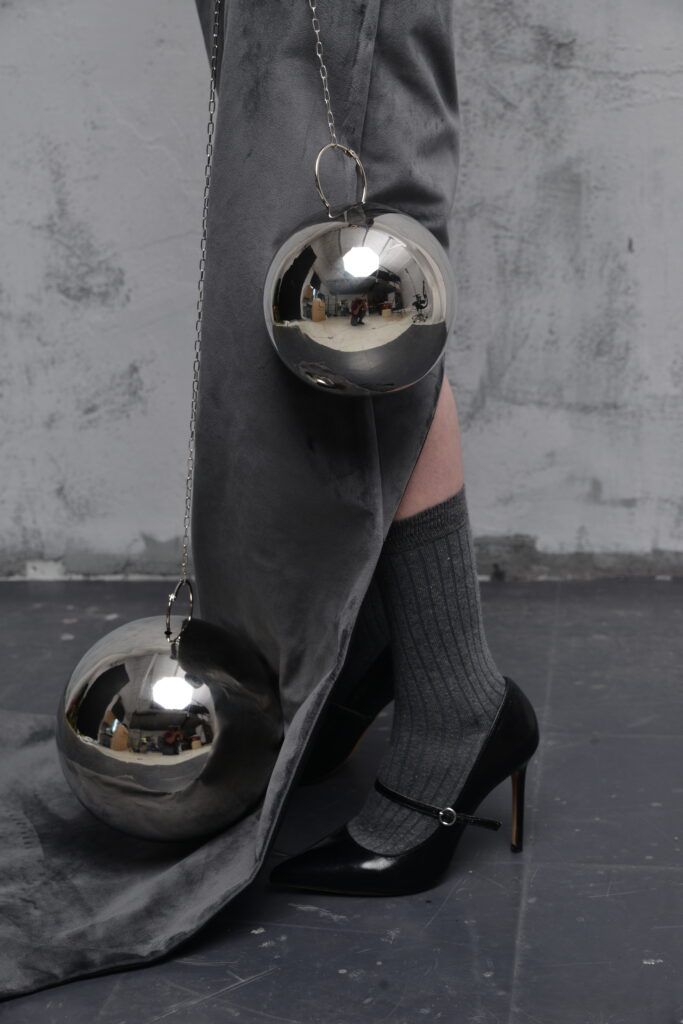
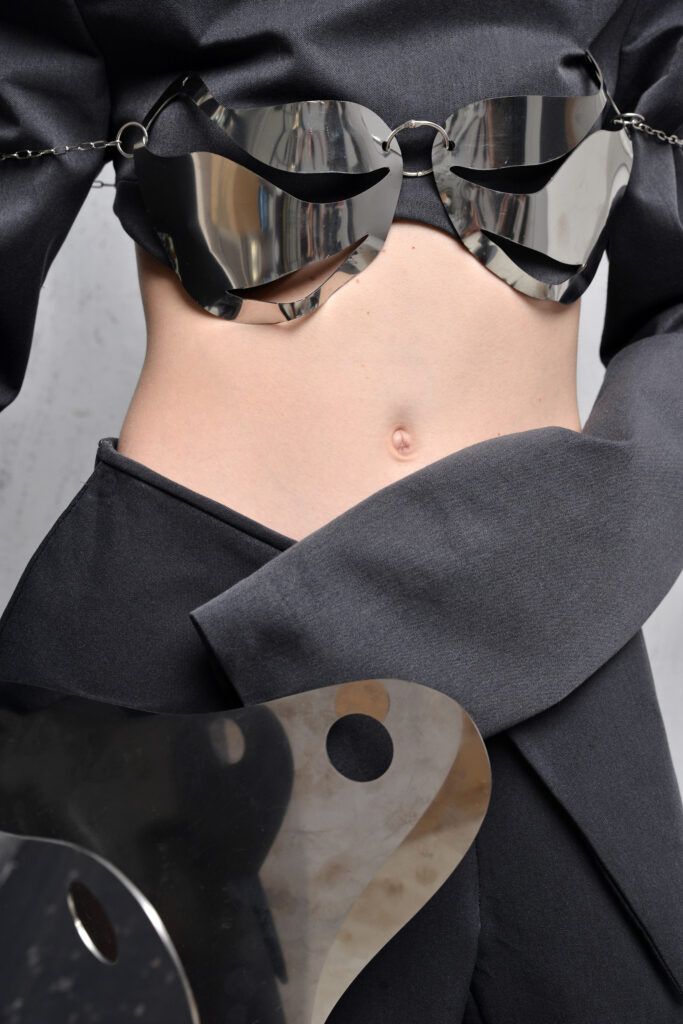
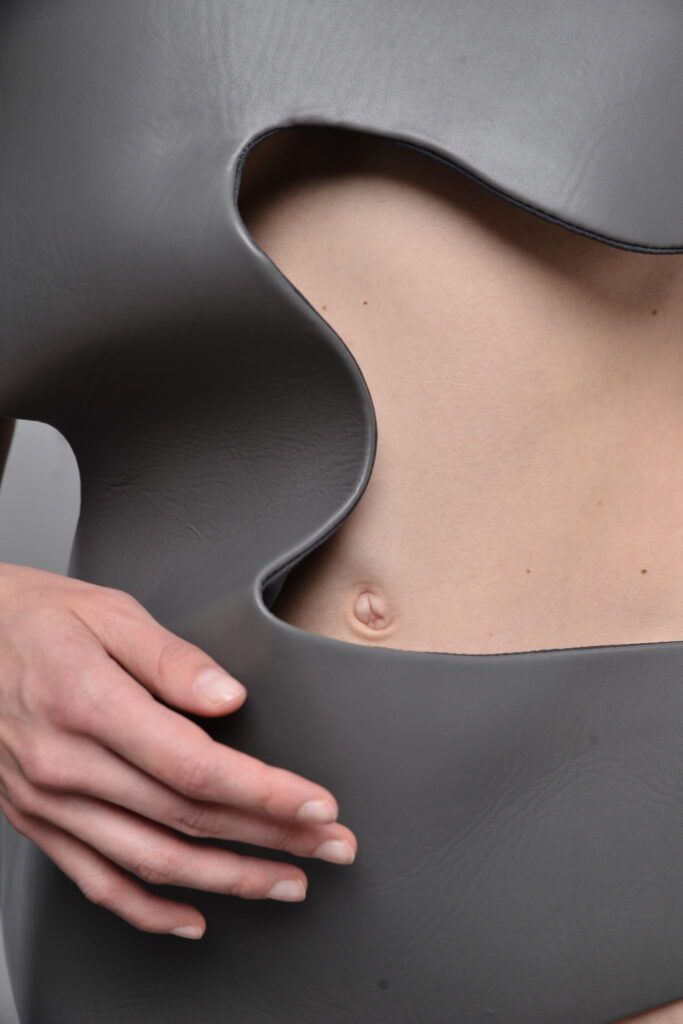
In surrealism, women were often portrayed with disfigured bodies, without heads or other parts of their bodies, resembling creatures from dreams, which connected imagination with reality. It reminded me of mythological creatures, and that’s where I found inspiration for the name of the collection. I wanted to portray the resemblance of mania, dream visions, and irrationality that was often shown in surrealist art. My collection reflects this image by combining unnatural forms with exaggerated accessories, showing the contrast between the restraint and freedom of the female body. I think women, especially their bodies, are still often a part of various strange visions and fetishes in modern times, and the image of a woman portrayed as something unreal and unnerving is still very common.
Surrealism often dissolves the boundaries between the imagined and the real. What were the most significant challenges in designing this dreamlike chaos into the wearable collection?
One of the hardest challenges when creating this collection was finding inspiration in surrealism for every piece I created. I didn’t want to add something irrelevant to my topic, so the research took a very long time. I also think that transferring a vision into reality is always difficult. The implementation of some projects, especially jewellery ones, was really challenging since this was my first time working with some materials and techniques.
Creation is rarely a linear process. Can you share any pivotal moments behind the making of Chimera?
I honestly don’t think there were any pivotal moments. After choosing the topic of surrealism, I conducted thorough research, and then I just noted every idea that came to my mind, even when I was working on something else. Later, I collected all of these thoughts and started to sketch projects referring to them.
Did your fabric choices mutate along the way or were their presence set in stone from the start?
Before choosing the fabrics, I spent a lot of time looking for them and ordering samples. I wanted to stay in the dark palette so the colours could portray a dark, feminine vibe. After deciding on that palette and the way that chosen fabrics should work, I looked for materials that could look the way I wanted them to but also hold or fold the right way. Later, I just ordered a few samples for every piece and decided which ones looked the best for the silhouette and together as a collection.
Did you like it?
Share it with your friends
Bio
Zuzanna Kordiukiewicz is a womenswear and jewellery designer currently studying at the Academy of Fine Arts in Łódź at @instytutubioru. In her projects, she draws attention to femininity by creating bold, exaggerated silhouettes and accessories.
“I crave the complicated because it entertains my brain.” At the 2026 Lunchmeat Festival, nan Cifra (the newest nom de plume of composer and musician Natálie Pleváková) will present her performance Tangled in Narratives, playing material from her debut album.
French and Belgian artist Léa Porré excavates relics of our collective memory, translating her digital worlds into forged steel, jacquard tapestries, and stained glass. In today's interview, discover how the self-described dream archaeologist stepped away from the screen to stage impossible encounters with the past.
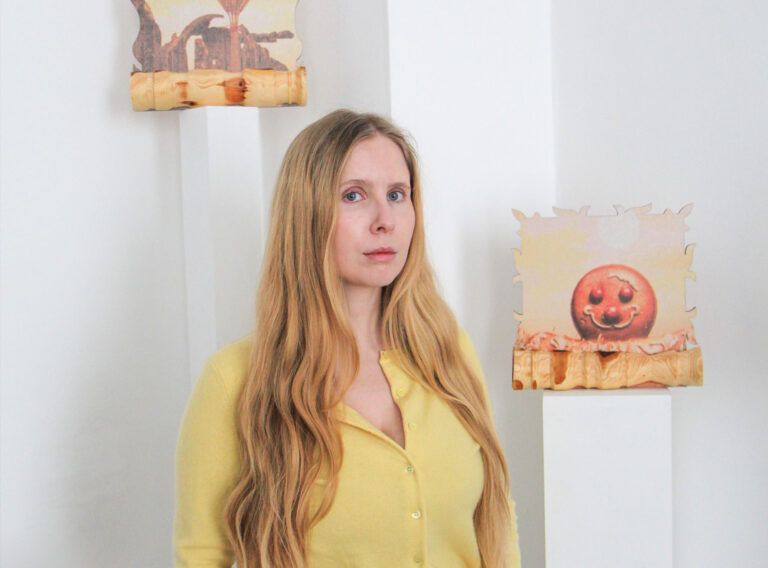
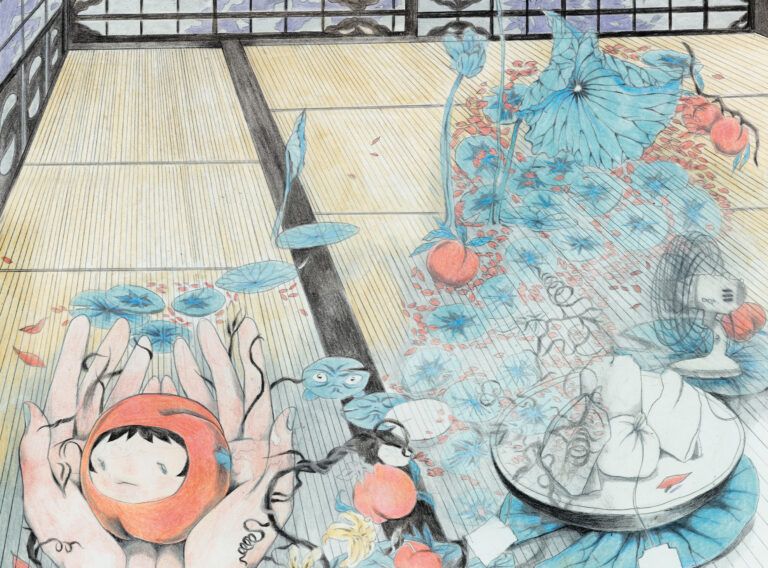
Ema Prosová's work doesn't announce itself loudly. Her drawings and paintings on silk operate in a register that's contemplative, layered, almost whispered: figures emerging from lychee fruits, hospital rooms floating in eerie space, architectural fragments mingling with natural forms. The work comes from years spent moving between cultures and techniques, learning lacquer painting in Vietnam, silk painting in Indonesia, living in Tokyo, and now finishing her degree at the Academy of Fine Arts in Prague.
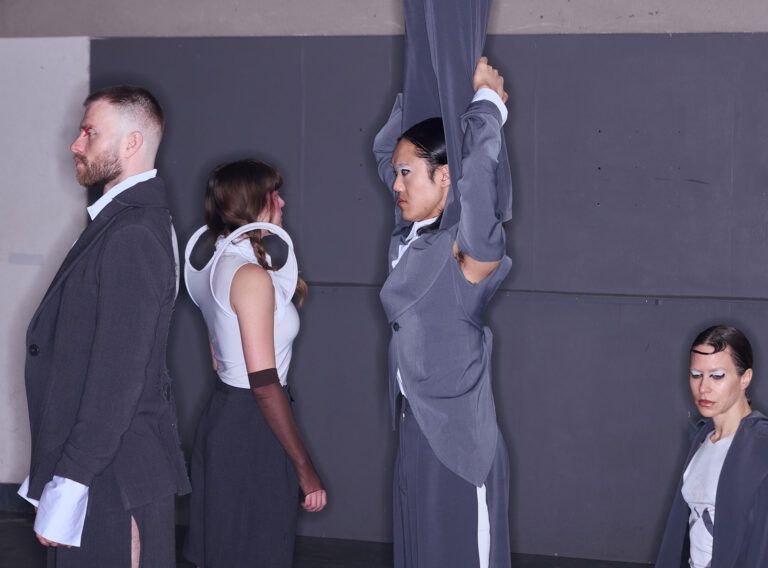
Polish choreographer Iza Szostak’s circus is a philosophical system, a choreography of risk, precarity, and collective survival mirroring the contemporary condition. Discover today how her new performance Trapeze, premiering at Studio Hrdinů in Prague, turns the trapeze bar into a narrator, and the clown into an energy valve for a world on the brink of collapse.
To provide the best experiences, we use technologies like cookies to store and/or access device information. Consenting to these technologies will allow us to process data such as browsing behavior or unique IDs on this site. Not consenting or withdrawing consent, may adversely affect certain features and functions.
Functional
Always active
The technical storage or access is strictly necessary for the legitimate purpose of enabling the use of a specific service explicitly requested by the subscriber or user, or for the sole purpose of carrying out the transmission of a communication over an electronic communications network.
Preferences
The technical storage or access is necessary for the legitimate purpose of storing preferences that are not requested by the subscriber or user.
Statistics
The technical storage or access that is used exclusively for statistical purposes.The technical storage or access that is used exclusively for anonymous statistical purposes. Without a subpoena, voluntary compliance on the part of your Internet Service Provider, or additional records from a third party, information stored or retrieved for this purpose alone cannot usually be used to identify you.
Marketing
The technical storage or access is required to create user profiles to send advertising, or to track the user on a website or across several websites for similar marketing purposes.