CONSTRICTION BEGETS LIBERATION

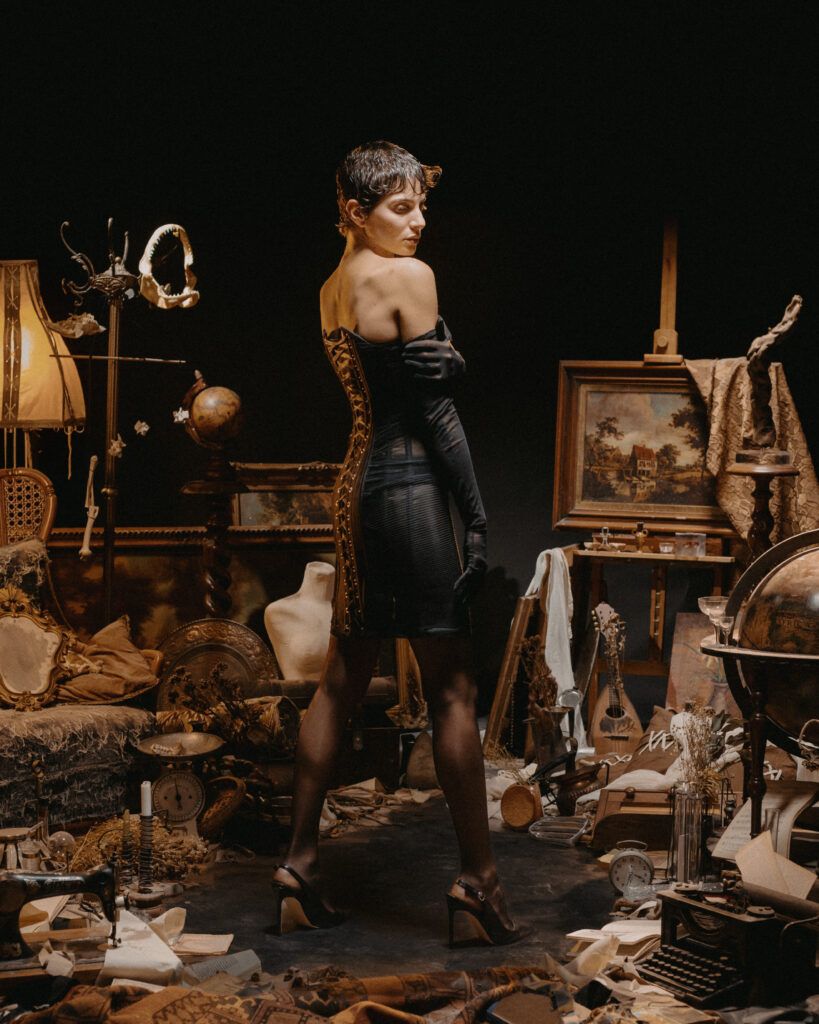
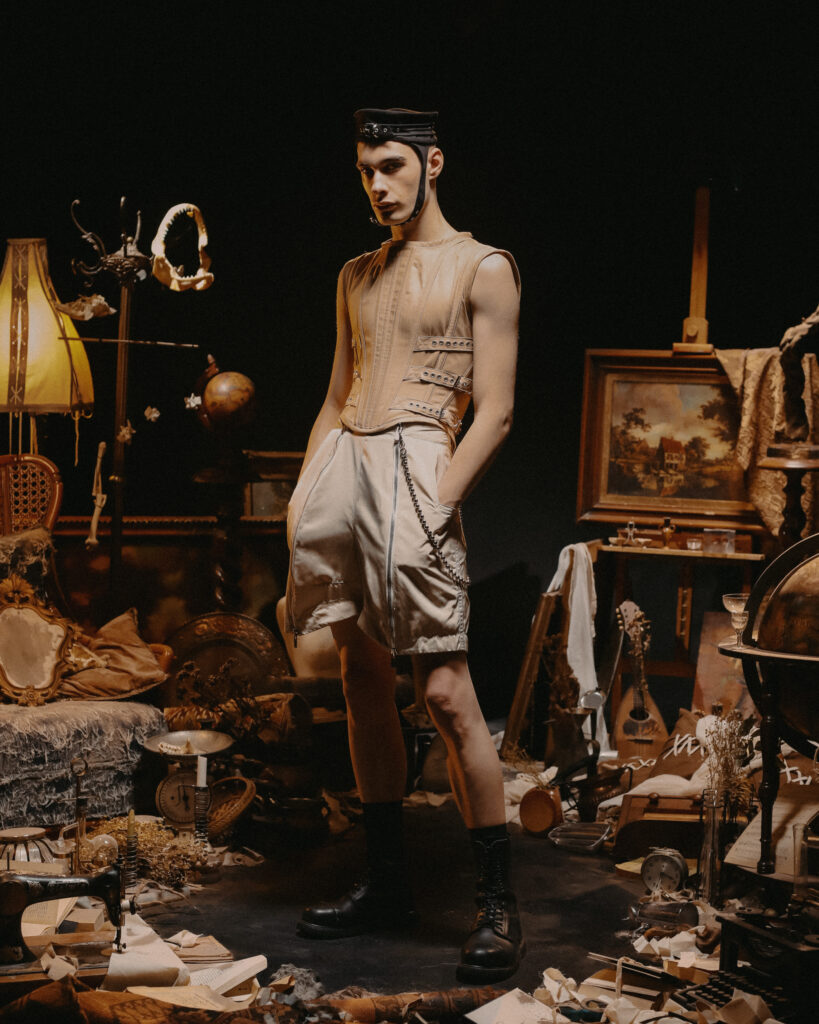
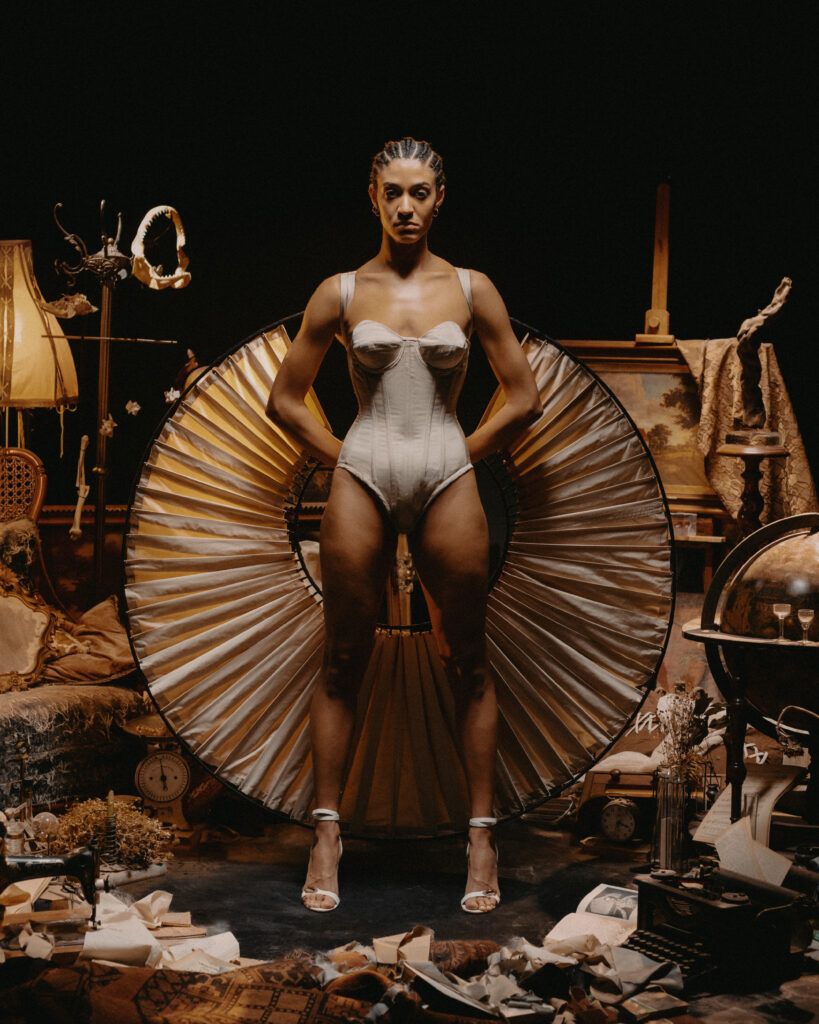
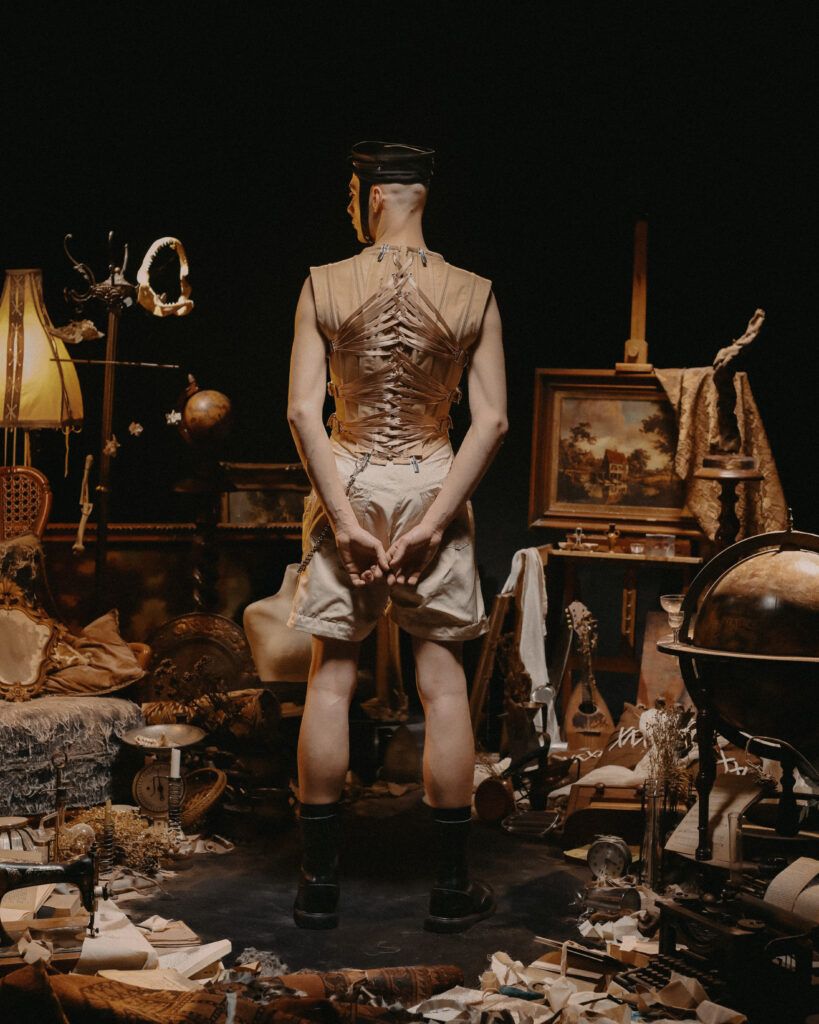
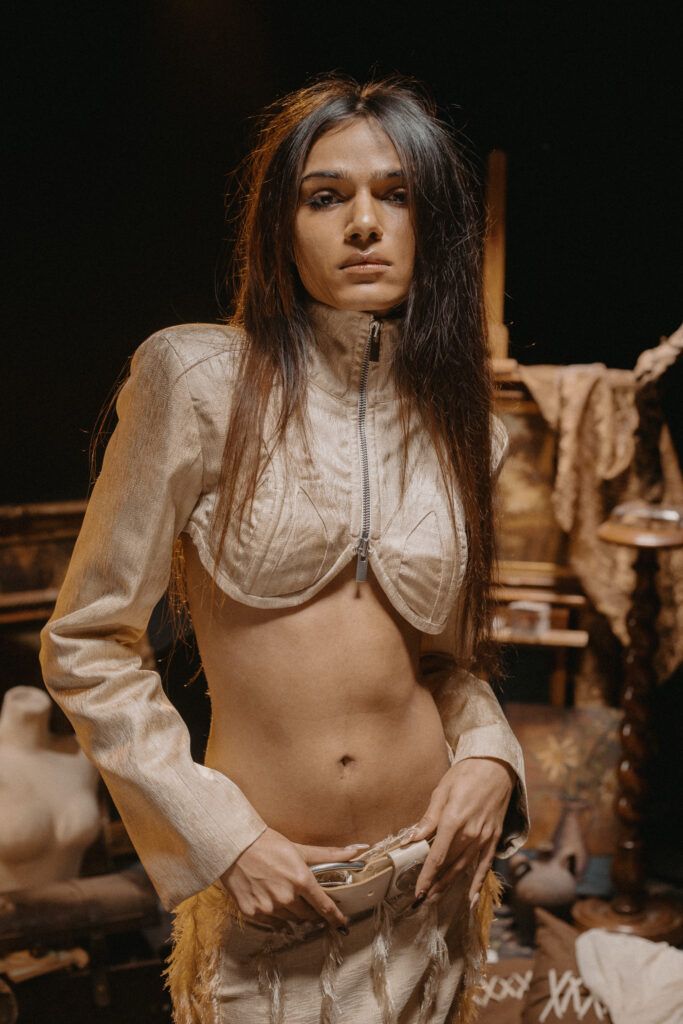
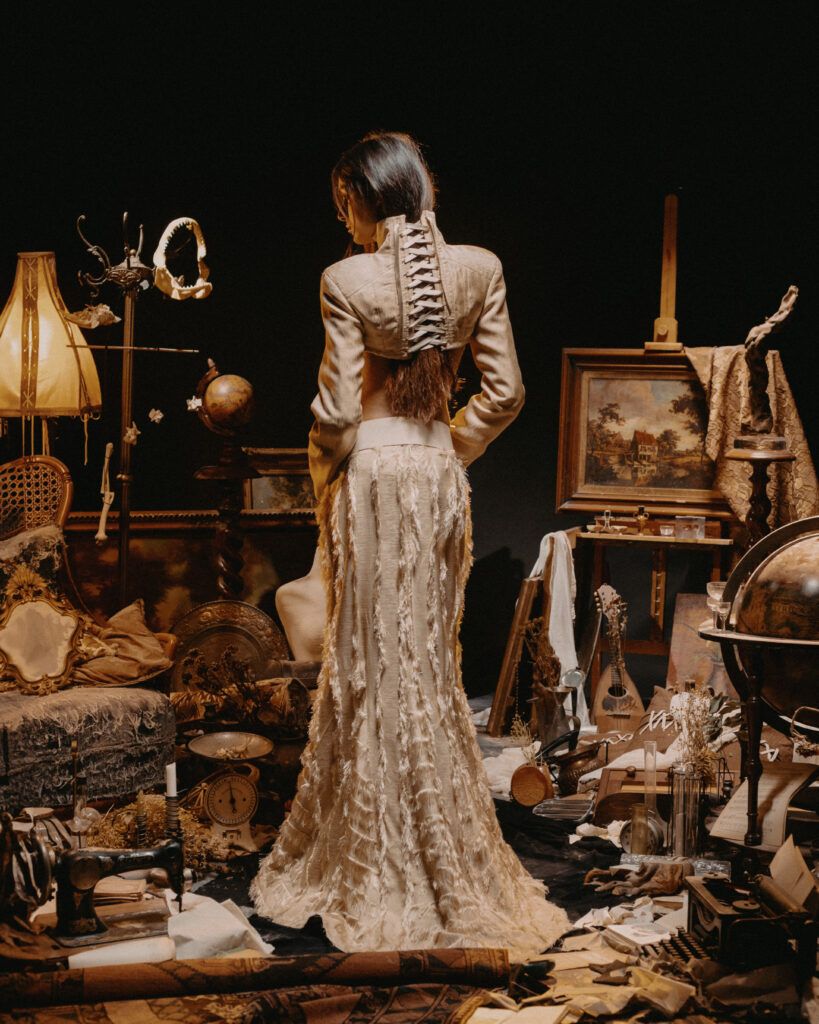
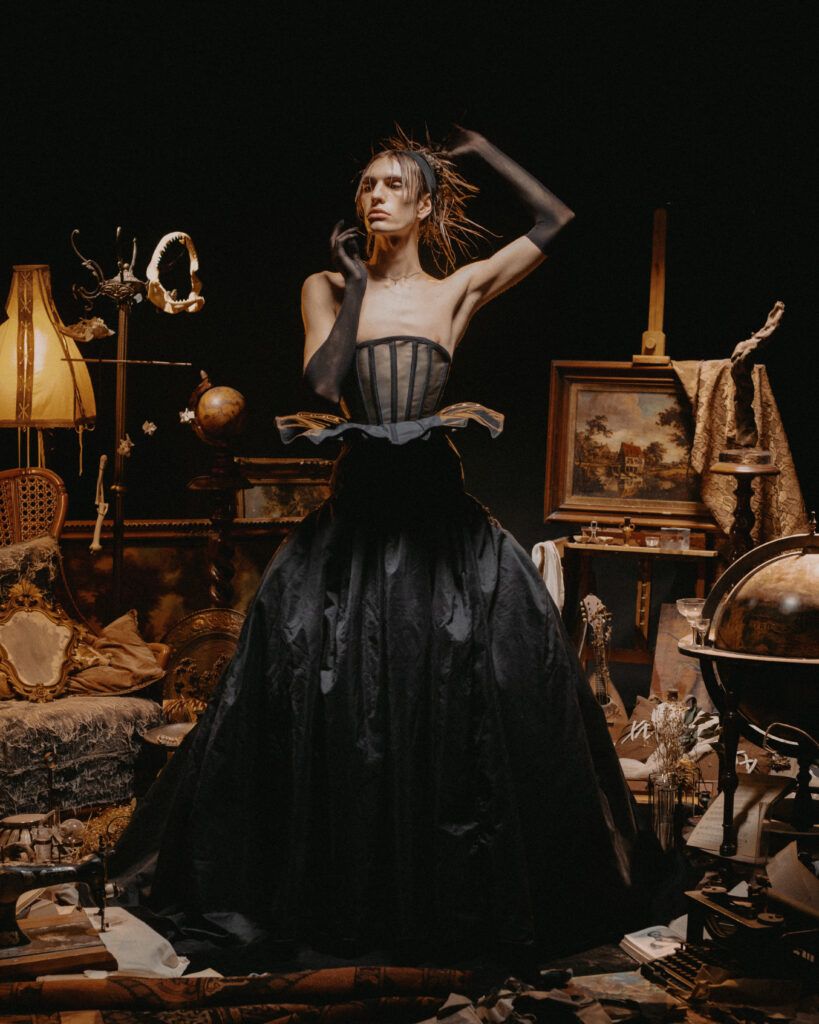
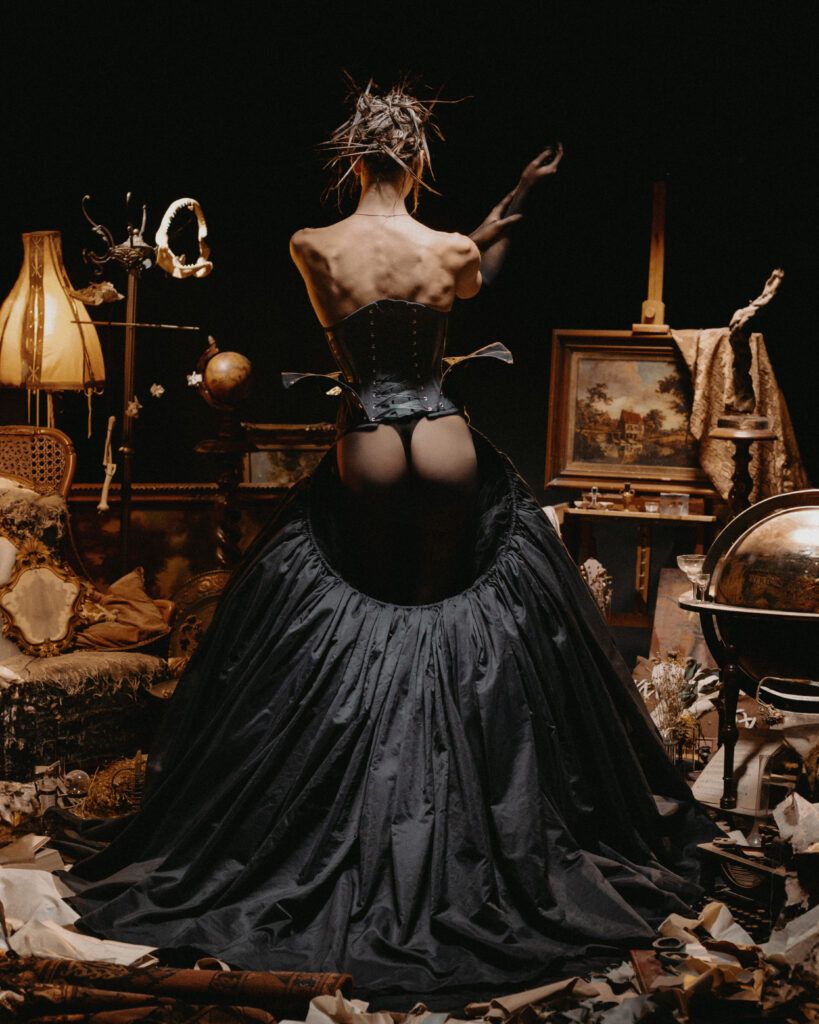
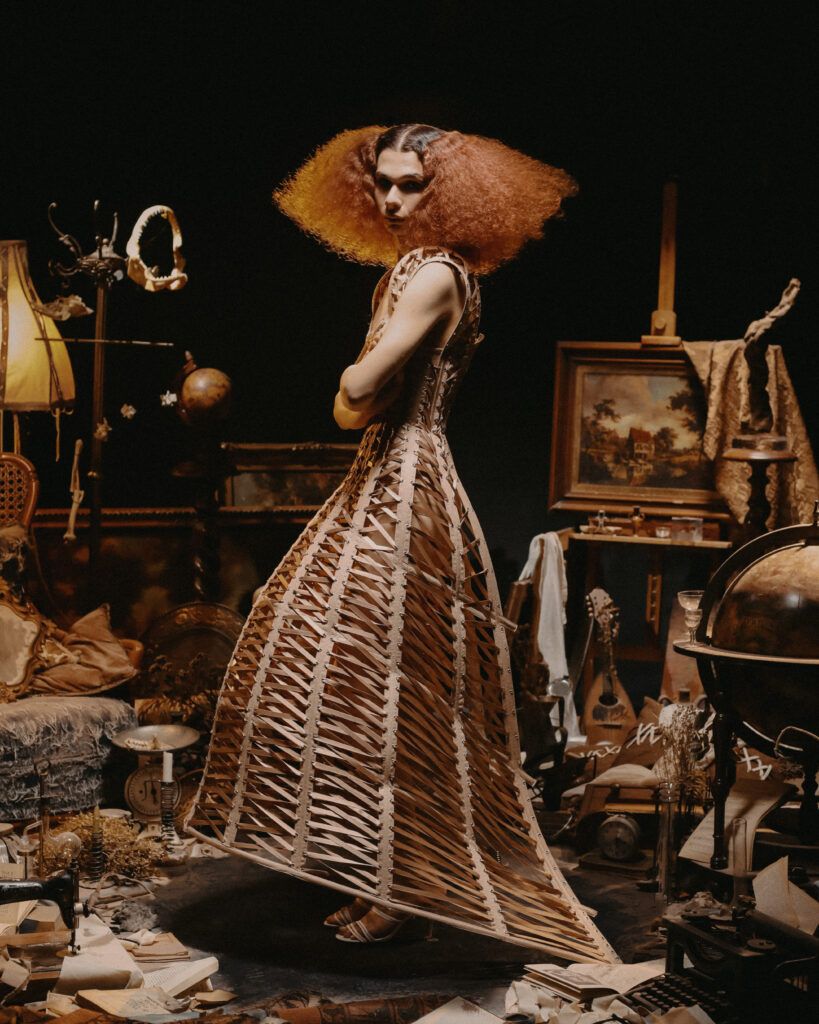
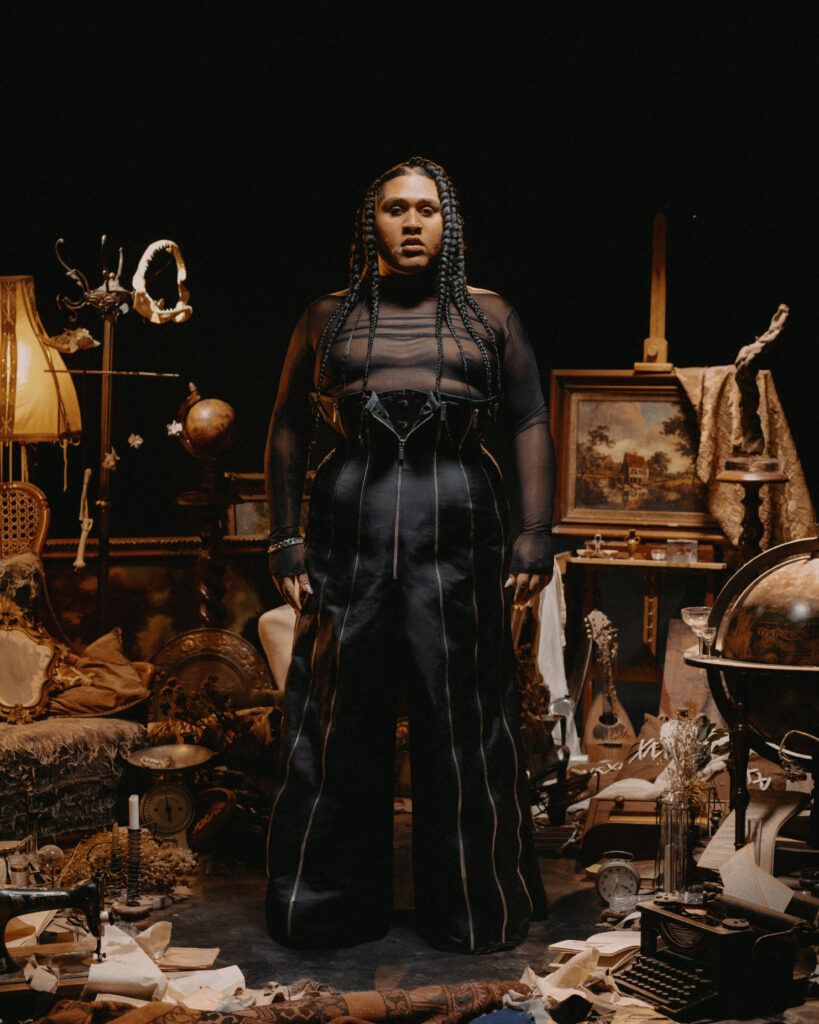
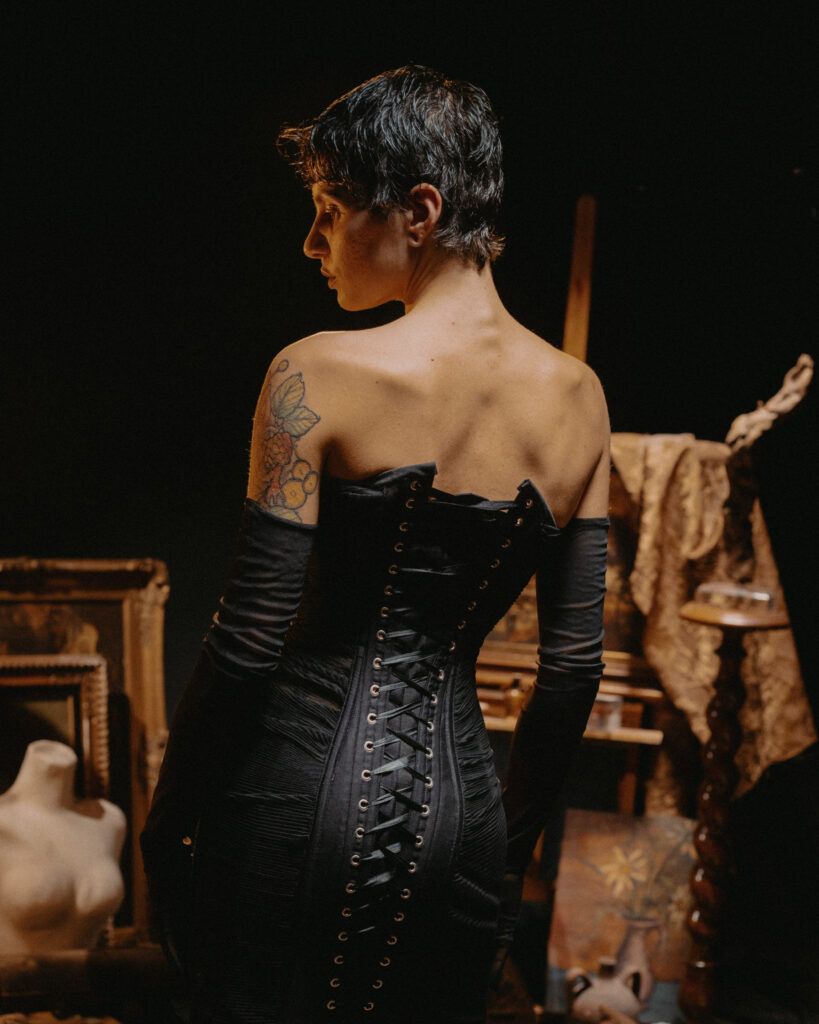
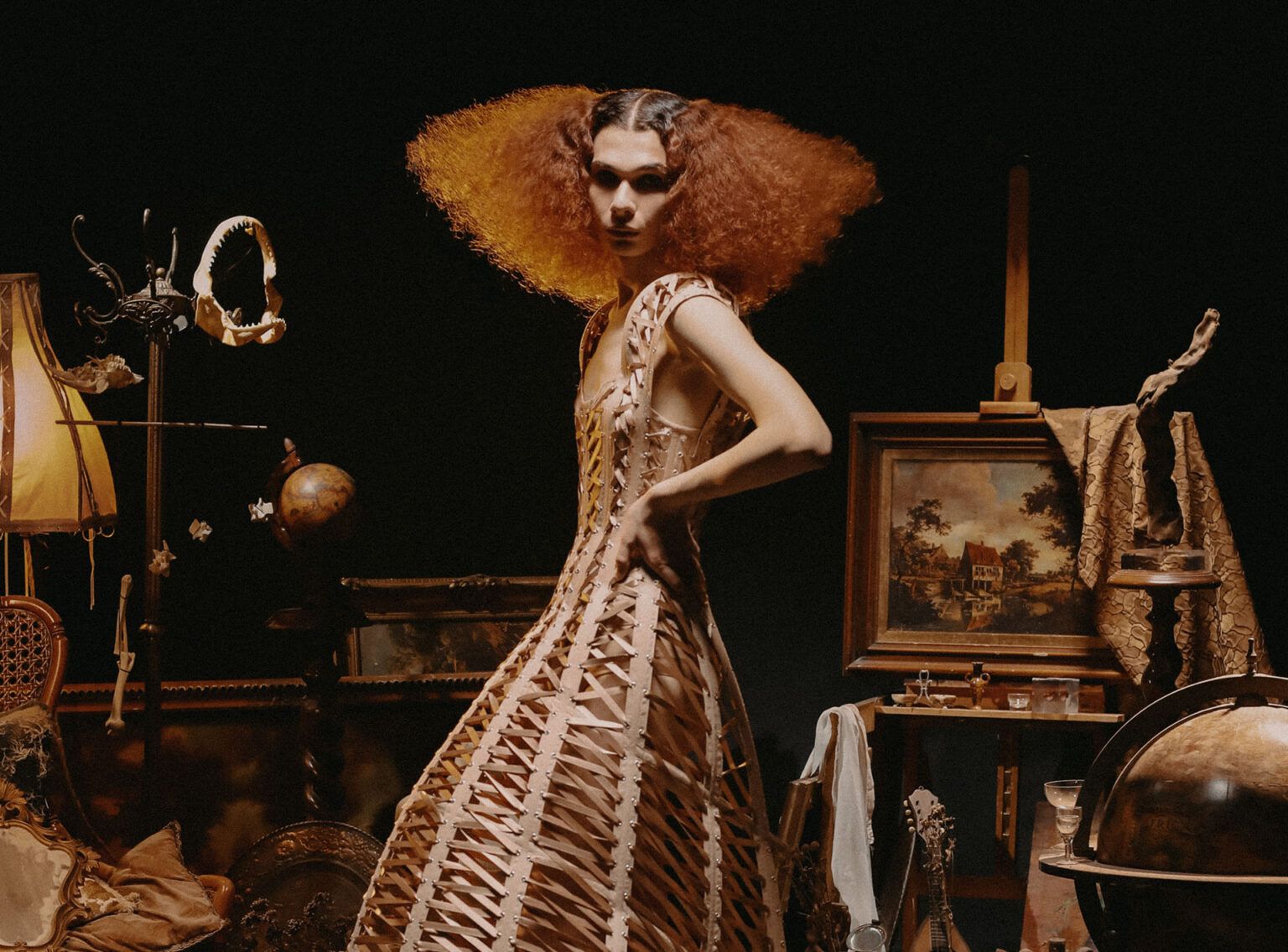
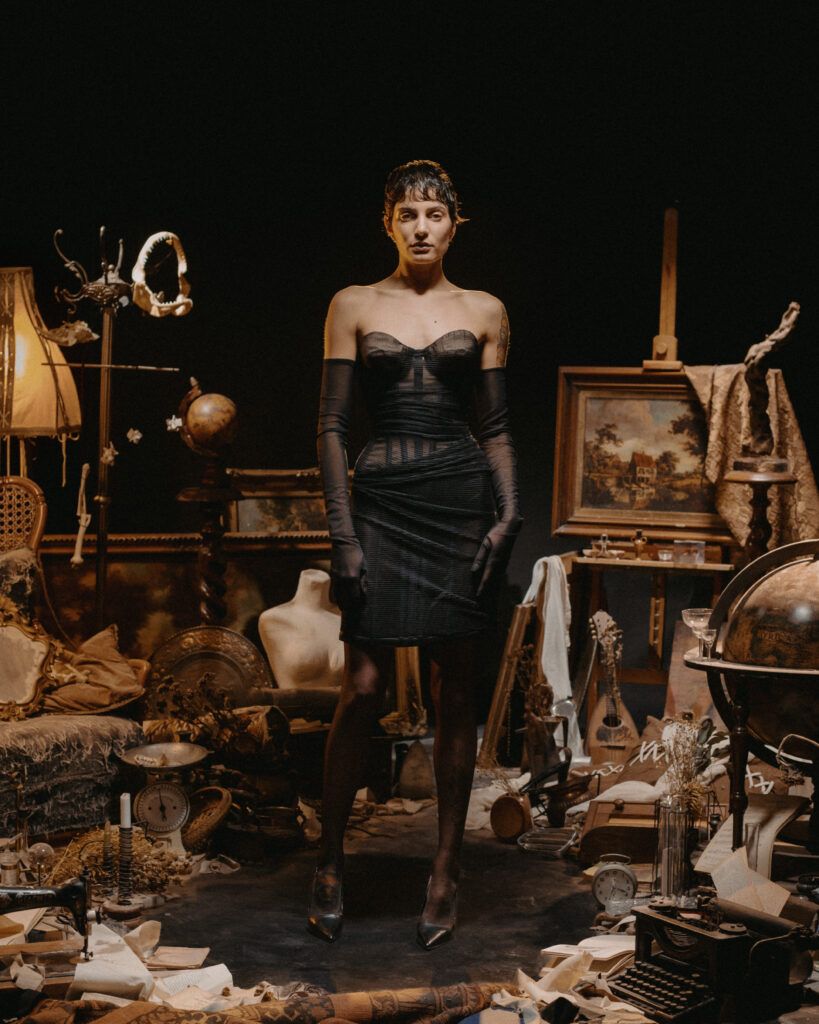
The Epitelio collection by Lorenzo Seghezzi draws inspiration from the sensations of body and gender dysphoria—deeply impactful experiences that shape one’s relationship with their corporeal form. Through bold sartorial storytelling and intricate, haute couture corsetry, the garments explore the altered perception of self and the discomfort many transgender and queer individuals face daily, challenging both aesthetic and gender norms.

A Journey into the Complexities of Body and Identity / A Dialogue Between Oppression and Liberation

With Epitelio, Seghezzi dismantles the boundaries between masculine and feminine, blending them in a dance of subversion and irony. The collection challenges societal expectations of body and gender, delivering a powerful message in alignment with the brand’s vision.

The silhouettes in the collection are deliberately misplaced, distorted as if existing in the “wrong place,” symbolising bodies in search of a form they have yet to find. Garments that stray from the figure evoke a sense of detachment from the body, while understructures and corsets play a pivotal role: at times enhancing the figure, at others constraining it, revealing the tensions of aesthetic and gender conformity.

Each piece—hand-sewn by the designer and their small team—embodies a duality: oppression and liberation, seriousness and parody. Epitelio is not just a collection; it is an open dialogue on the fluidity of being and the freedom of expression.

INTERVIEW WITH LORENZO SEGHEZZI

You taught yourself corset-making during the pandemic, relying on books and blogs and studying existing corsets. What was the most challenging part of this self-education?

The most challenging part was realising that it would be a long process, full of many trials and errors. This was especially true because, unlike other types of clothing, corsets are garments that cannot be tried on directly during the creation process.

Historically, corsets were tools of control, but you transform them into symbols of self-expression. Do objects carry their pasts with them or can they be redefined entirely?

Objects are, after all, just objects. It is people who define their purposes, characteristics, and intentions. While it’s important to recognise the historical influence they carry, nothing prevents us from giving them a new vision, a new meaning.

Does fashion need to be practical? Or should it serve something more profound: fantasy, transformation or rebellion?

The word “fashion” covers a very broad concept with many facets. Personally, I tend to have a more creative and aesthetic approach, focusing on these aspects and sometimes overlooking the more practical ones.

How do you see the future of gender-fluid fashion evolving, and what role do you hope your designs play in it?

I think the development of gender-fluid fashion is also tied to social and cultural evolution, but it’s important to note that, for centuries, fashion has been a creative and artistic force that often preceded and influenced cultural movements. I hope that, in my small way, my work can give voice to and represent the audience I am addressing.

Looking back at your journey from childhood creativity to self-taught craftsmanship and teaching, what has been the most defining moment in your career so far?

It’s a difficult question because my journey as a self-taught designer, including everything related to brand management, is filled with small milestones and daily achievements. These milestones make the work incredibly rewarding.

Did you like it?
Share it with your friends

Bio

Lorenzo Seghezzi is an artisanal clothing brand based in Milan, Italy, dedicated to bridging the gap between traditional Italian craftsmanship and the younger generation’s desire to break free from the confines of capitalism, consumerism, and rigid societal norms like gender binarism, standard sizing, and mass production. Viewed through the lens of the queer community, every collection and project pays homage to this vibrant and diverse culture. At the heart of Lorenzo Seghezzi’s brand is a deep focus on corsetry. Corsets are conceived not as garments of restriction, but as symbols of freedom and empowerment, designed to help you feel fully in control of your body. Each design by Lorenzo Seghezzi is meticulously crafted to fit the individual body of the client, regardless of how they identify. In this brand’s vision, terms like “masculine” or “feminine” have no place; instead, elements of both are playfully blended and presented in unconventional ways that challenge and subvert traditional fashion codes. This made-to-measure approach is fundamental to the brand, not only as a means of reducing waste from overproduction but also as a way to empower individuals with non-standard sizes or non-conforming gender appearances to feel appreciated and seen. The brand’s pieces are designed to be worn by anyone who feels comfortable in them, making a powerful statement rather than offering a permanent definition. Every item is handcrafted from start to finish by Lorenzo and their small team, using premium materials and a blend of traditional and avant-garde techniques.

Credits

Fashion Designer / Lorenzo Seghezzi

http://www.lorenzoseghezzi.com/

https://www.instagram.com/lorenzoseghezzi/

Interview / @khynko

Creative Direction: Lorenzo Seghezzi

Photography: Pietro Agostini

Production & designer’s assistance: Miriam Pellegrin, Lucrezia Savoldi Bellavitis

Photography assistance: Stefano Galli

Models: Liam Paganelli, Tia Quaglia, Silvia Cucchi, Alessandra Vismara, EDAFE,

Marco Vidale, Kay Kamakhya

Styling: Persia

Styling assistance: Tia Quaglia

Set design: Anna Sedino

Set design assistance: Alberto Bonaccorsi, Edoardo Colò

Makeup: Jury Schiavi

Makeup assistance: Giorgia Guzzi

Hairstyling: Jonatan Eric Estrada, Ingrid Ketch

Dressers: Erika Deleo, Nicole Villa

Location: Negus Studio

Textiles: Gruppo Colombo Srl

Zippers: YKK Italia

Ribbons: Nastrificio De Bernardi
You may also like

Ema Prosová's work doesn't announce itself loudly. Her drawings and paintings on silk operate in a register that's contemplative, layered, almost whispered: figures emerging from lychee fruits, hospital rooms floating in eerie space, architectural fragments mingling with natural forms. The work comes from years spent moving between cultures and techniques, learning lacquer painting in Vietnam, silk painting in Indonesia, living in Tokyo, and now finishing her degree at the Academy of Fine Arts in Prague.
Polish choreographer Iza Szostak’s circus is a philosophical system, a choreography of risk, precarity, and collective survival mirroring the contemporary condition. Discover today how her new performance Trapeze, premiering at Studio Hrdinů in Prague, turns the trapeze bar into a narrator, and the clown into an energy valve for a world on the brink of collapse.
“It is a story about a long night, about everything that disappears during the day and only comes out after dusk.” Polish fashion designer Pat Guzik breathes new life into her garments by collaborating with visual artists, such as Aleksandra Waliszewska and Zbiok Czajkowski, whose dreamy and tongue-in-cheek works adorn the skirts, sweatshirts, jackets, and other ready-to-wear pieces by the designer.
French painter and illustrator Sébastien Pastor navigates between naïve figuration and abstract expressionism, building visual worlds where bold color palettes pulse with rhythm and absurdity. Discover how his colorblindness became a creative signature and how he leaves room for the enigmatic in his works.