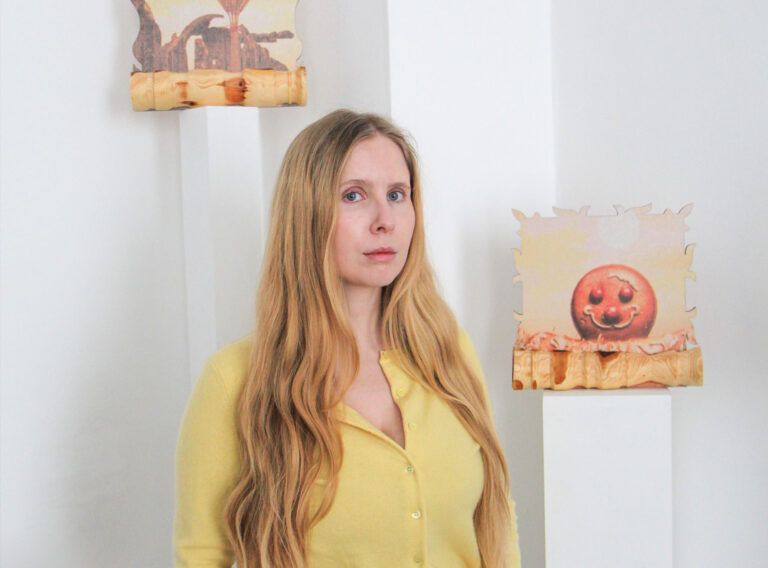
“It's impossible to get bored with ceramics.” Markéta Špundová is a Czech ceramics designer whose whimsical and delightfuly chaotic body of work overflows with cheeky humour and unexpected references. With the artist, we talked the malleable and mirroring nature of ceramics, balancing practicality and storytelling, jolting awake with sour candy, and more.
Can you share a memory or experience that inspired your career as a ceramics designer?
Because I have done ceramics from an early age, I cannot pinpoint a certain moment where I became aware that ceramic design was my calling. It was just always there with me. After almost two decades of getting to know ceramics, it is still impossible to get bored with it. Ceramics is shapeable and exciting, and working with it can sometimes be upsetting. It resembles so much of human nature and mirrors our doing – that’s why I still choose it. Even when I am trying new materials, clay will still be my safety net where I feel most confident.
How do you infuse your ceramic design with wit without compromising functionality over aesthetics?
It’s actually due to my impatience with doing something that is just purely decorative. I want to tell stories but remain at least a bit practical. Also, after so many years of practice, I don’t want to bore myself so I try to have as much fun with it as it can handle.
Do you draw upon any particular cultural references when incorporating humour into your designs?
I come from a traditional religious family and I am now an atheist feminist. A lot of healing of my religious trauma is done through humour. Accepting my past and using it for my growth is quite a liberating process and I am glad I am able to communicate that through my designs without it being too heavy and full of fun instead.
Of all the projects in your portfolio, which one do you feel particularly proud of and why?
My favourite must be Beránky (loosely translated as Lambkins), a collaborative work with Viktorie Macánová. It started back in Easter 2021 when the Vatican ruled that the churches will not give blessings to same-sex couples. And from there, this project became a protest against church hypocrisies and also sexism in Czech traditions. While upset, we made the most enjoyable new tradition that I am always looking forward to. Now we have our own unique drag Easter lamb, not symbolising sacrifice but instead celebrating how colorful life can be.
At SWARM Mag, we are now focusing on the theme of SUGAR RUSH. Is there a particular candy that helps keep you energised while working?
I always need to have sour candy, it kicks me awake. It was also proven that it helps reduce anxiety, which is a very welcome side effect while working. I am a Primavera Haribo girl for life!
Did you like it?
Share it with your friends
Bio
Markéta Špundová is currently finishing her master’s degree at Prague’s Academy of Arts, Architecture and Design at the Ceramics and Porcelain studio. Through ceramics, she reflects on current social and feminist themes. While ceramics is her main medium to work with, it doesn’t limit her in doing complex work installations and combinations of materials.
“I crave the complicated because it entertains my brain.” At the 2026 Lunchmeat Festival, nan Cifra (the newest nom de plume of composer and musician Natálie Pleváková) will present her performance Tangled in Narratives, playing material from her debut album.
French and Belgian artist Léa Porré excavates relics of our collective memory, translating her digital worlds into forged steel, jacquard tapestries, and stained glass. In today's interview, discover how the self-described dream archaeologist stepped away from the screen to stage impossible encounters with the past.
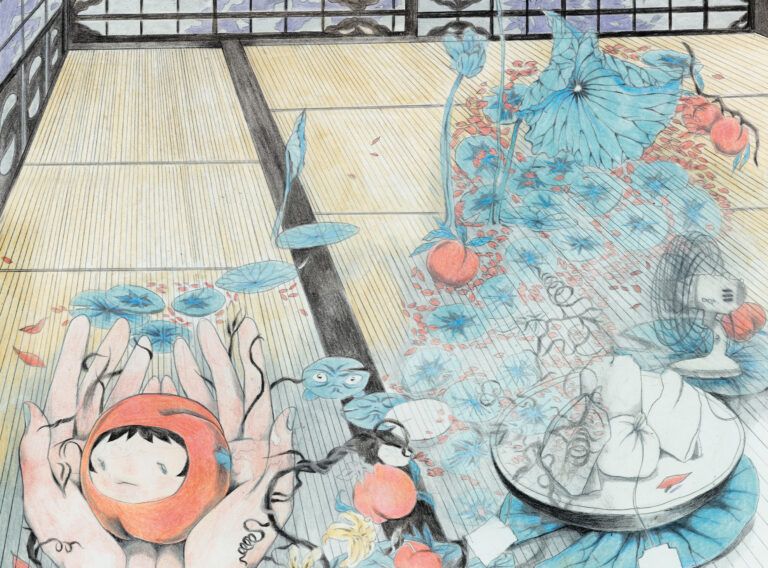
Ema Prosová's work doesn't announce itself loudly. Her drawings and paintings on silk operate in a register that's contemplative, layered, almost whispered: figures emerging from lychee fruits, hospital rooms floating in eerie space, architectural fragments mingling with natural forms. The work comes from years spent moving between cultures and techniques, learning lacquer painting in Vietnam, silk painting in Indonesia, living in Tokyo, and now finishing her degree at the Academy of Fine Arts in Prague.
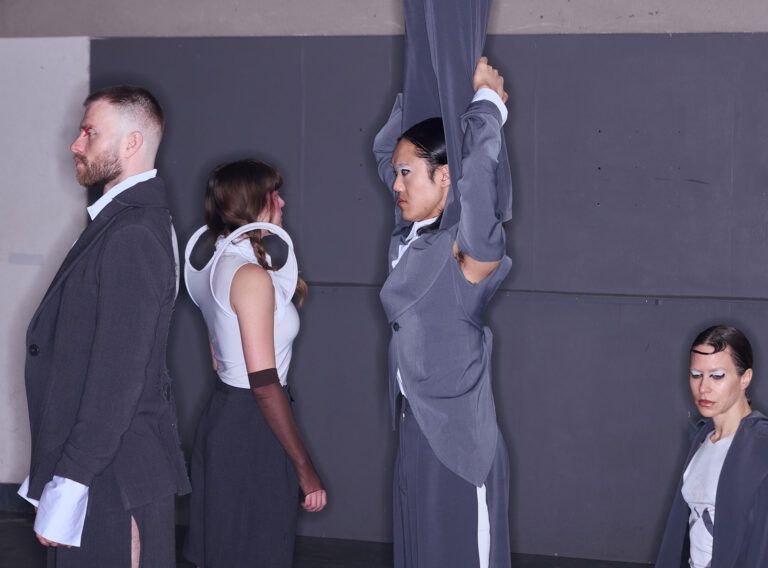
Polish choreographer Iza Szostak’s circus is a philosophical system, a choreography of risk, precarity, and collective survival mirroring the contemporary condition. Discover today how her new performance Trapeze, premiering at Studio Hrdinů in Prague, turns the trapeze bar into a narrator, and the clown into an energy valve for a world on the brink of collapse.
To provide the best experiences, we use technologies like cookies to store and/or access device information. Consenting to these technologies will allow us to process data such as browsing behavior or unique IDs on this site. Not consenting or withdrawing consent, may adversely affect certain features and functions.
Functional
Always active
The technical storage or access is strictly necessary for the legitimate purpose of enabling the use of a specific service explicitly requested by the subscriber or user, or for the sole purpose of carrying out the transmission of a communication over an electronic communications network.
Preferences
The technical storage or access is necessary for the legitimate purpose of storing preferences that are not requested by the subscriber or user.
Statistics
The technical storage or access that is used exclusively for statistical purposes.The technical storage or access that is used exclusively for anonymous statistical purposes. Without a subpoena, voluntary compliance on the part of your Internet Service Provider, or additional records from a third party, information stored or retrieved for this purpose alone cannot usually be used to identify you.
Marketing
The technical storage or access is required to create user profiles to send advertising, or to track the user on a website or across several websites for similar marketing purposes.