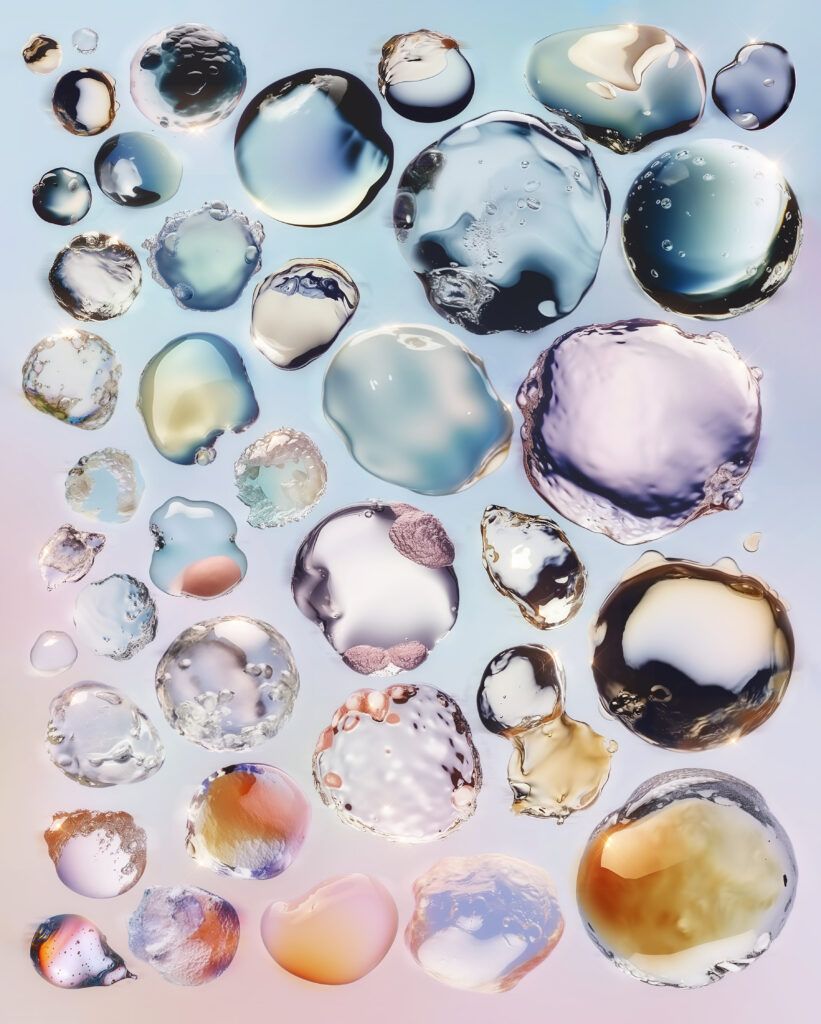
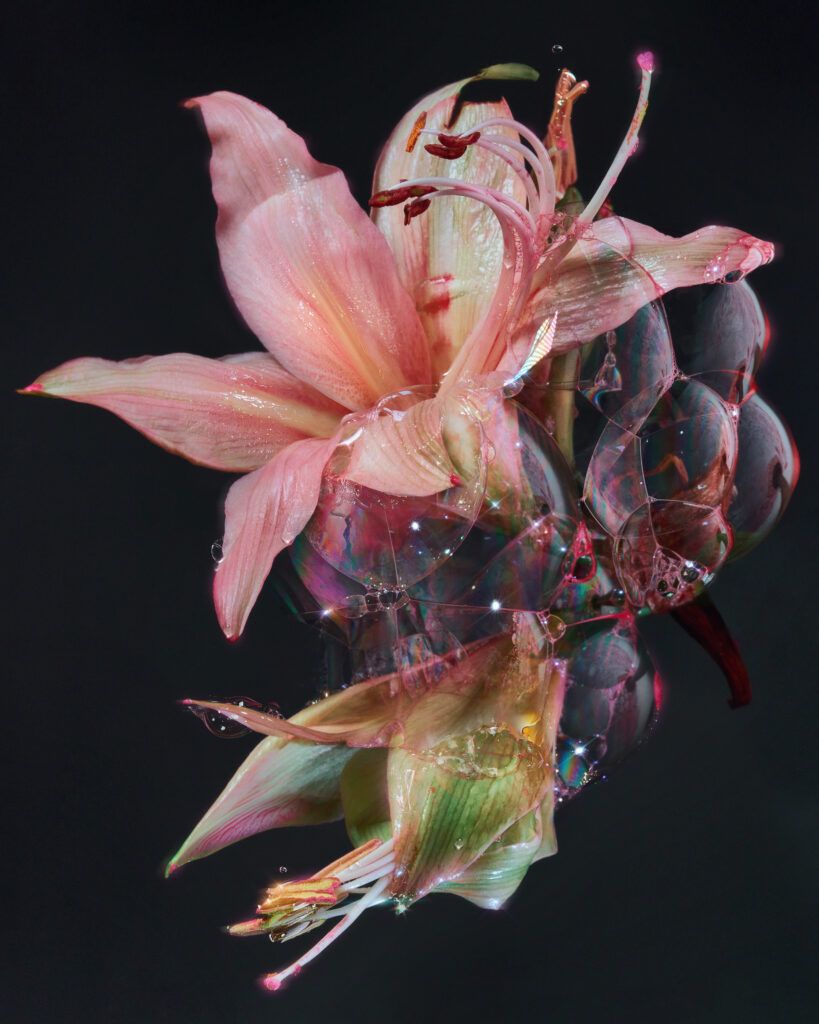
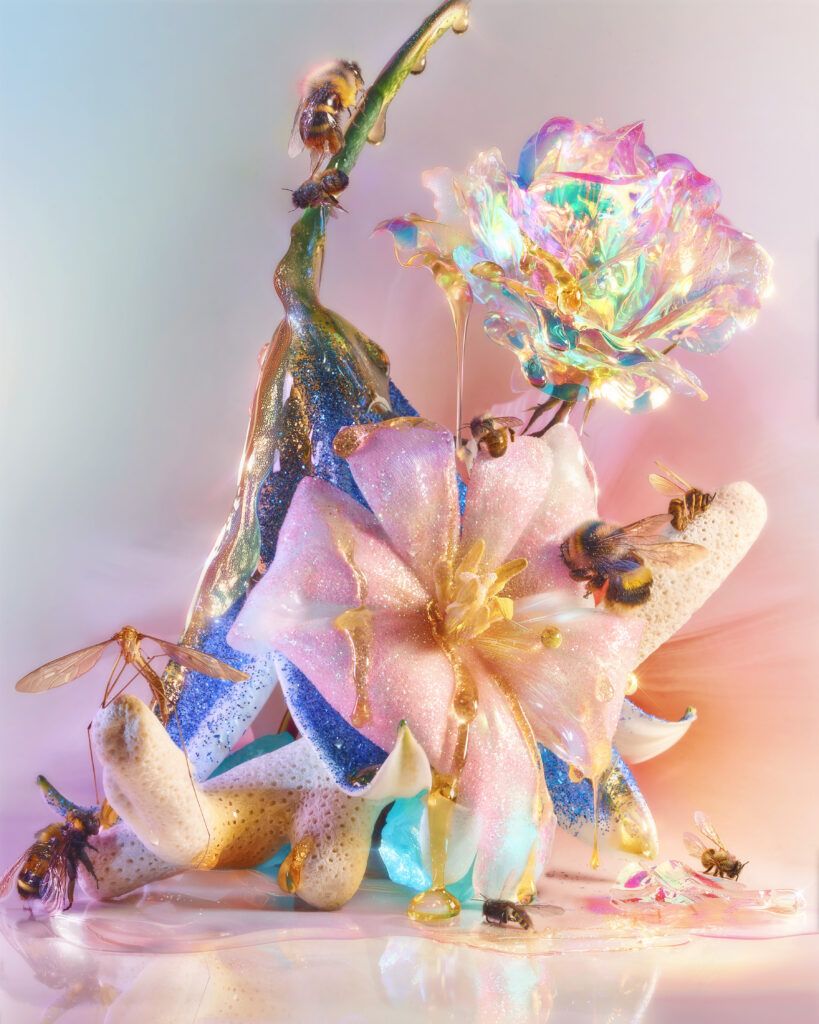
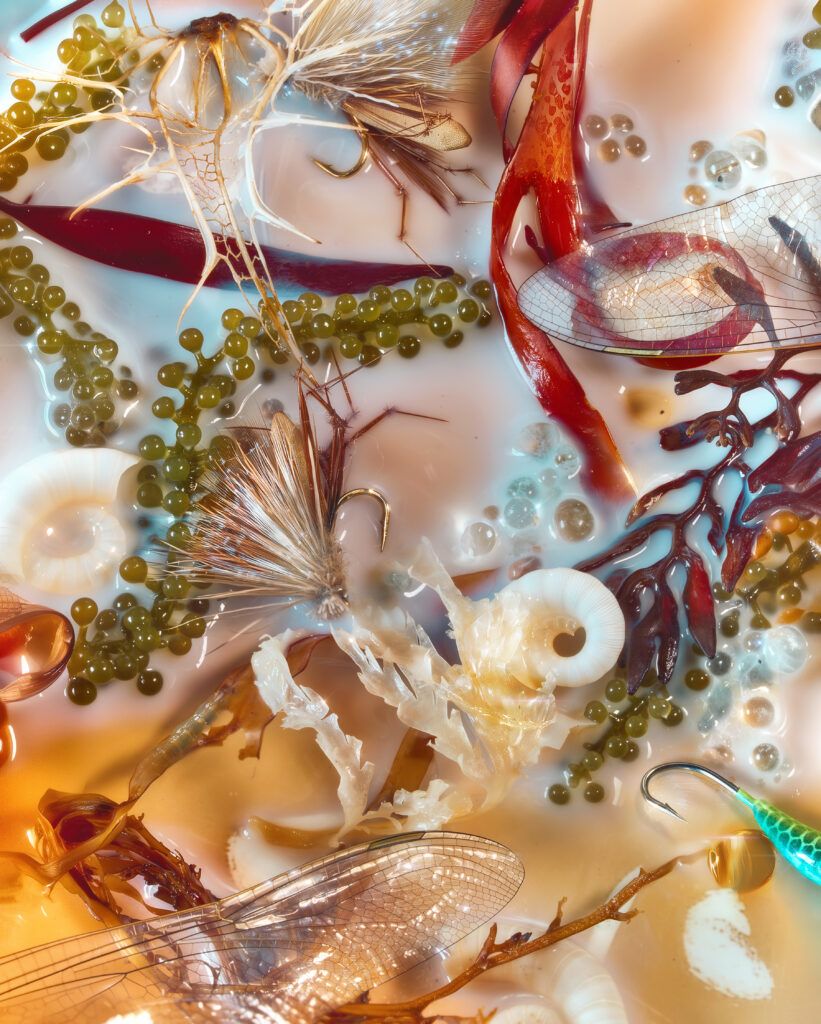
You’ve spoken in other media about your love for observation of water, of nature, of quiet details. How does stillness or slowness influence your creative rhythm?
It’s essential for me to take moments to decompress. I live a quite packed life but the empty moments feel very empty. Sometimes I don’t leave the house for days without even realizing it, especially when I’m immersed in personal projects, where I can manage the flow myself, the bursts of energy, and the moments of release. I believe letting things settle is fundamental these days, in a world of constant tasks and checklists. Sometimes I go days without listening to music, because then when I do come back to it, everything sounds more beautiful and I enjoy every detail so much more. It all hits me more deeply.
There’s something delightfully contradictory in your practice: deeply digital, yet also soft, intimate, and tender. How do you keep your digital process human?
I think it’s because I use digital media only as simple tools, not as ends in themselves. I grew up in a time when, if you wanted to express something creatively you still had to learn to use an analog tool, whether it was a piano, a tape recorder, a camera or a pencil. That’s where my relationship with creativity comes from: the goal is to bring closer, not to go far. It’s about trying to send out little telepathic messages. That said I’m not immune to the lure of the tools themselves, I sometimes find myself caught up in style for style’s sake. So maybe the contrast comes from that, me trying to resist the tools and in a way myself.
You describe your creative timeline as shaped by pencils, wood, Photoshop, old magazines, and watching water. Is your art a kind of personal archaeology?
I’d never really thought about it, and probably yes. I tend to follow what fascinates me, like chasing clues or little breadcrumbs that lead me here and there. There is a path but I can’t predict it. Most of the time I’m navigating by sight, and my only compass is whatever sparks my curiosity or wonder, my one real sixth sense, even though it’s always shifting. But as long as something leaves a mark on me and makes a question grow inside, that’s usually a sign I need to follow that direction.
Many of your pieces seem to dissolve the line between flora and code, or dreams and UI. Do you consciously look for this hybrid space, or does it find you?
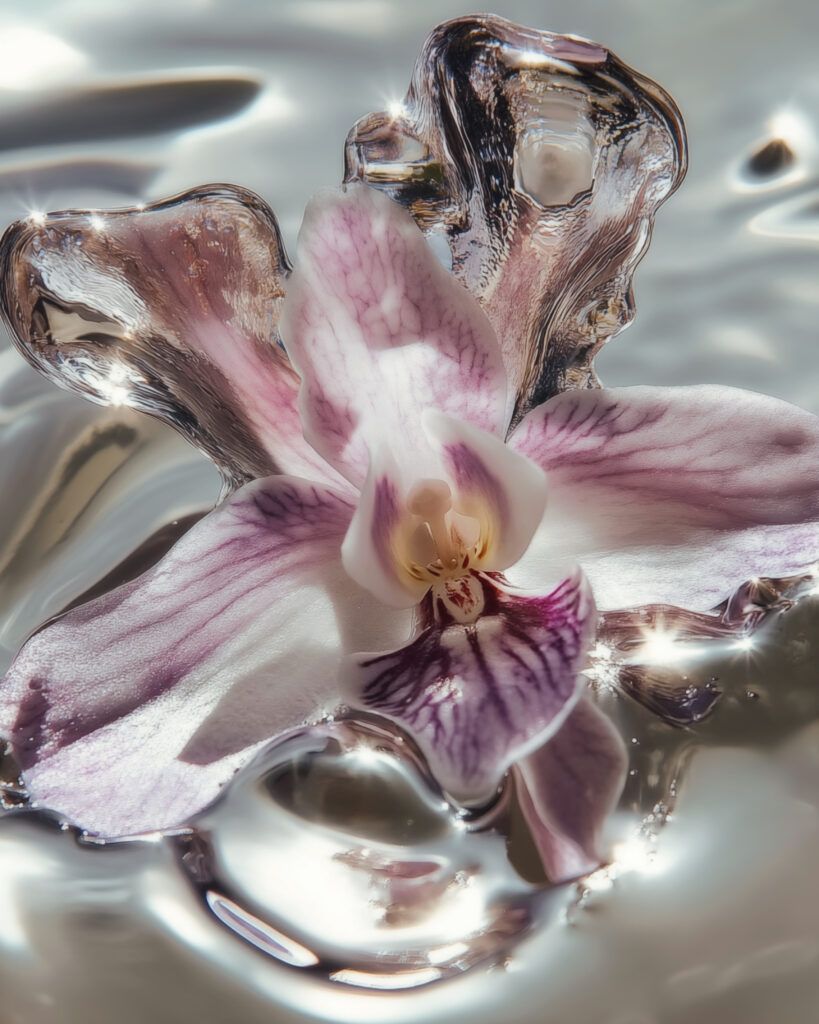
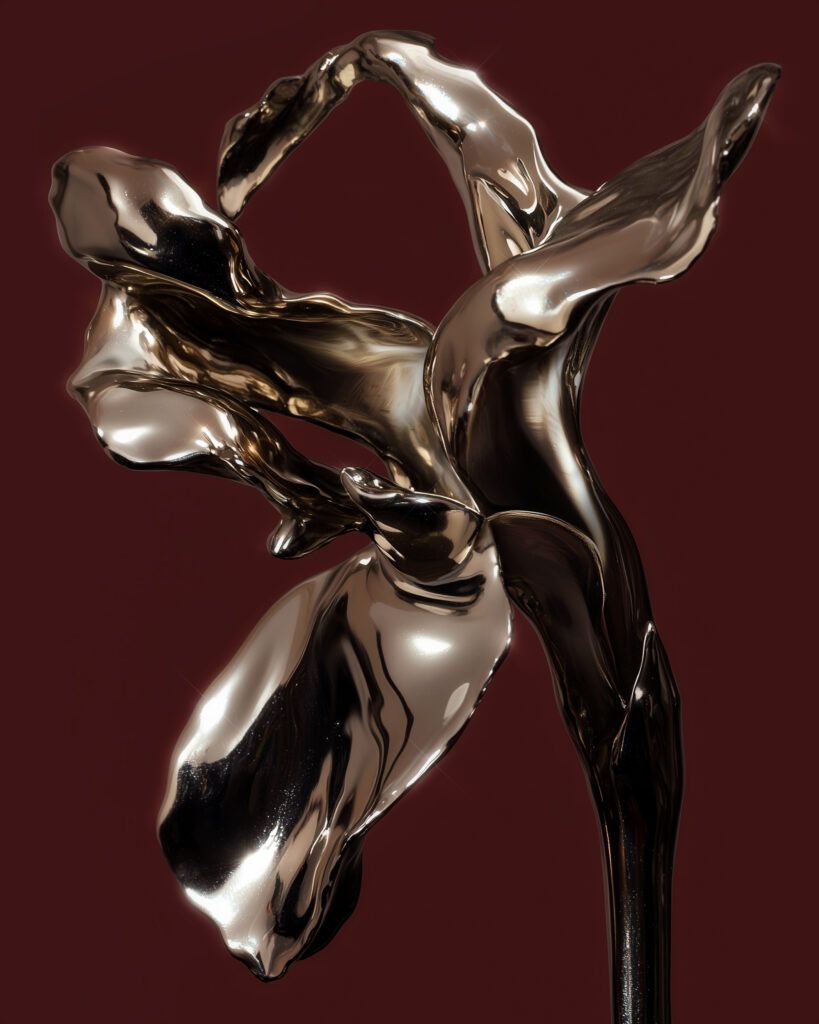
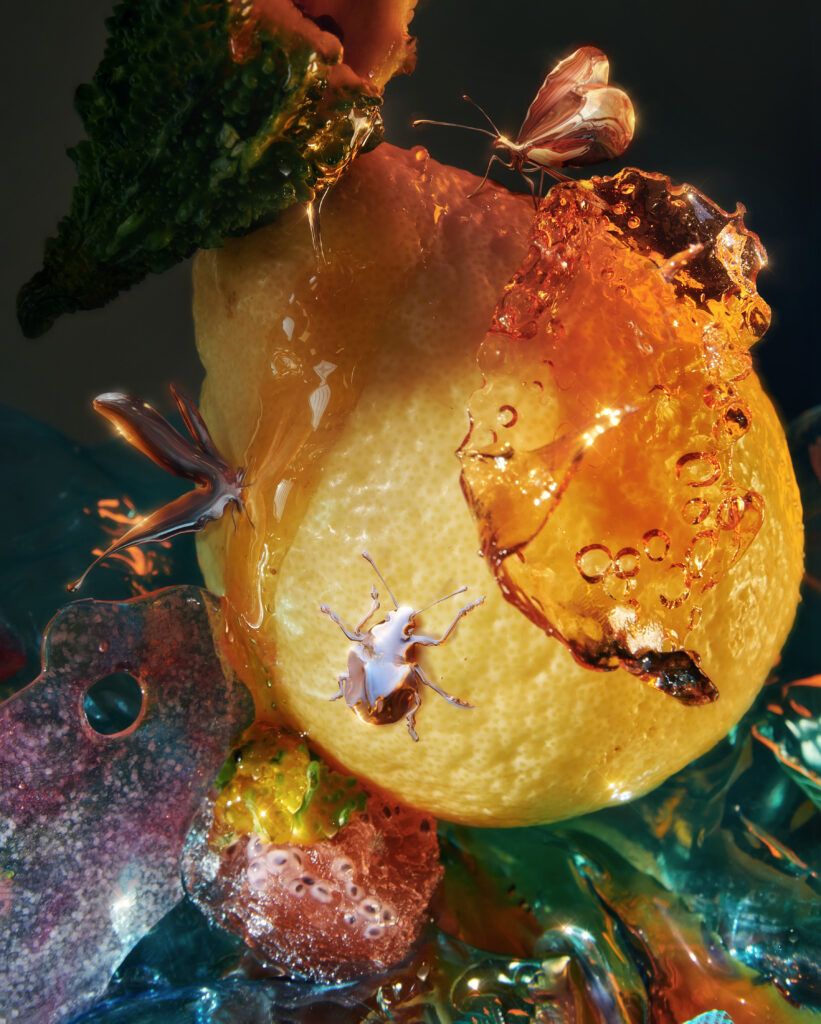
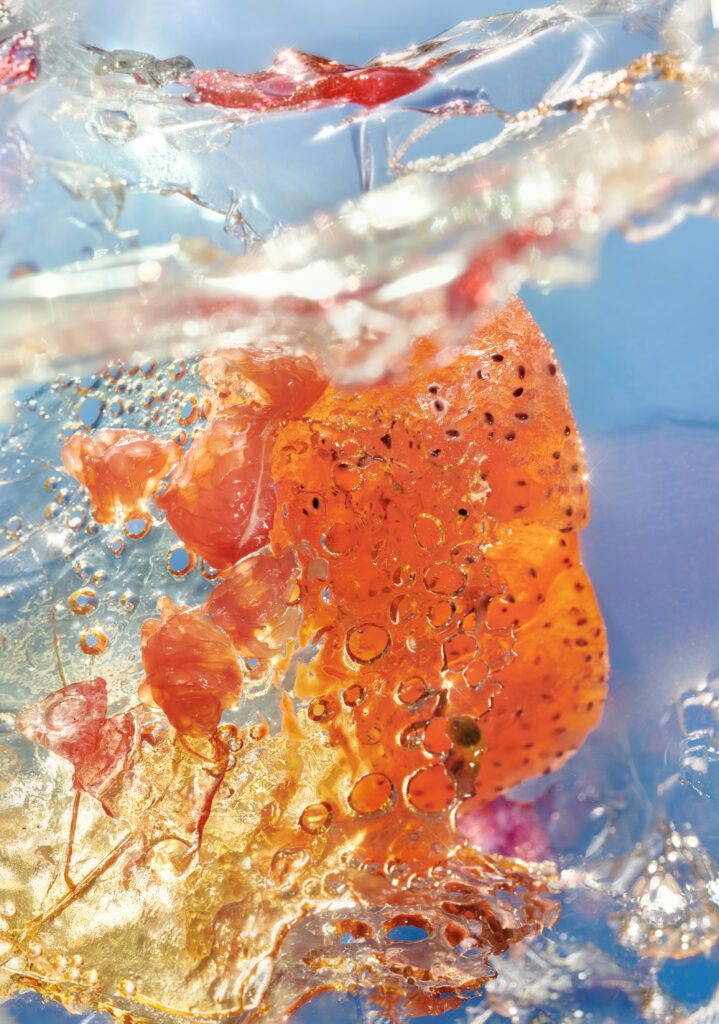
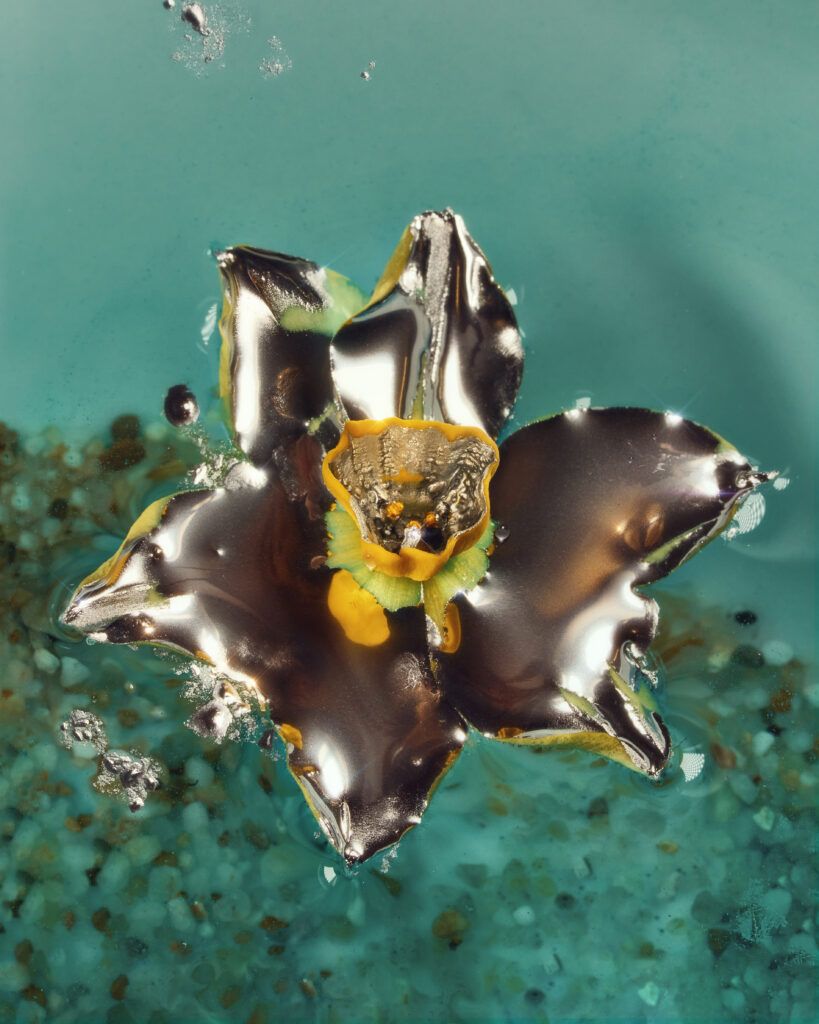
I’d say it usually finds me. I’m naturally drawn to those in-between places, where you can’t quite tell where one thing ends and another begins. That’s part of why I enjoy mixing so many different techniques, especially when I can use them to fool myself in the process. There’s a saying: no surprise for the writer, no surprise for the reader. That’s why I try to create things that at least during the process aim to surprise me first. I love obsessing over recreating 3D scenes from photographs, making CGI environments feel like real photos, or blending hand-drawn elements with AI. It’s in that hybrid, in that uncertainty, where unexpected things sometimes happen.
Liquidity for you isn’t just a style, it’s an attitude. What does fluidity feel like when you’re making something?
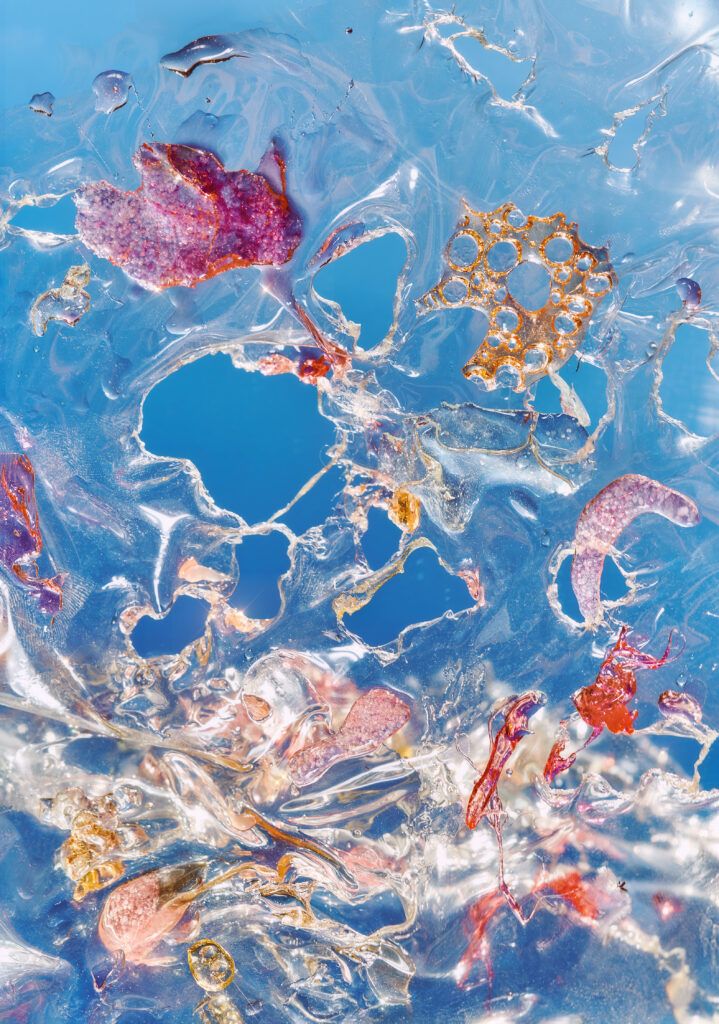
People often say that, and while I understand why it resonates, it’s funny because personally I actually don’t feel as fluid as it might seem. But I like this contrast. There’s something comforting about it. There are many things one can aspire to, and having the same attitude as water seems like a good thing to have.
Patterns and repetition appear often in your works. Is this linked to obsession or meditation, or something else?
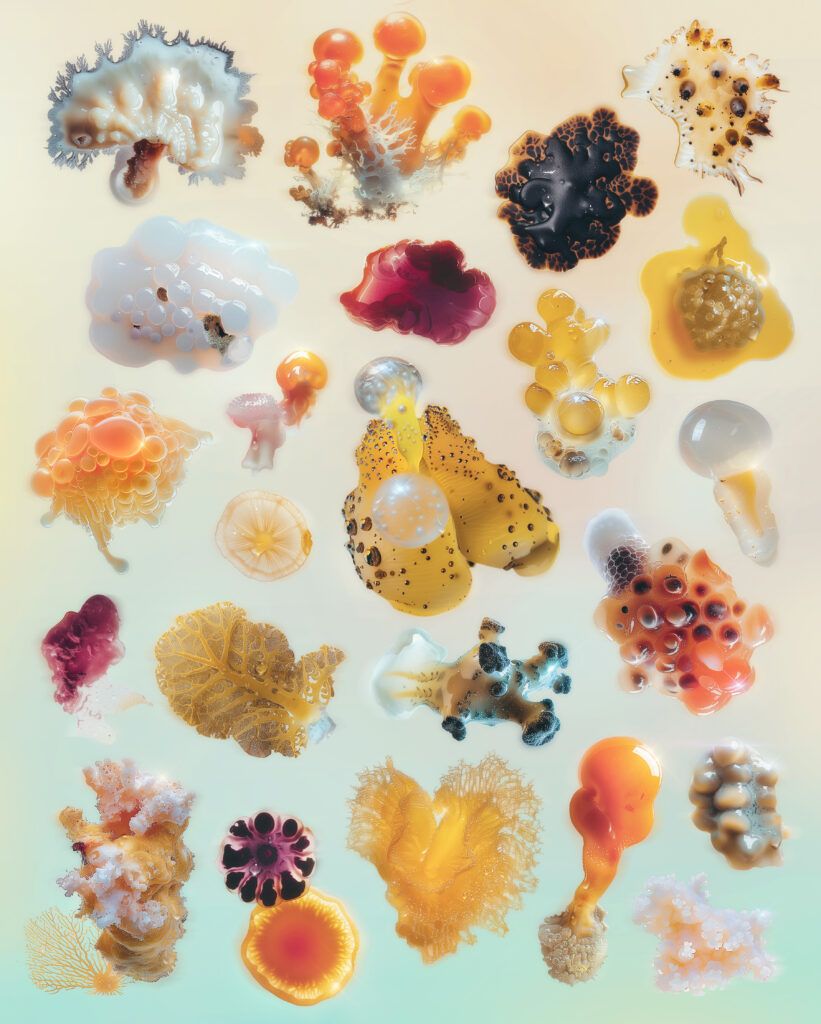
Probably more obsession than meditation. I know for many people, getting lost in crafting intricate details is a form of meditation and it definitely works that way, but for me it’s more of an obsession I’ve had for as long as I can remember. It’s so present in my creative process that I sometimes worry I’ll overdo it, that I’ll ruin a piece by focusing too much on the beauty of the patterns and lose sight of the bigger picture.
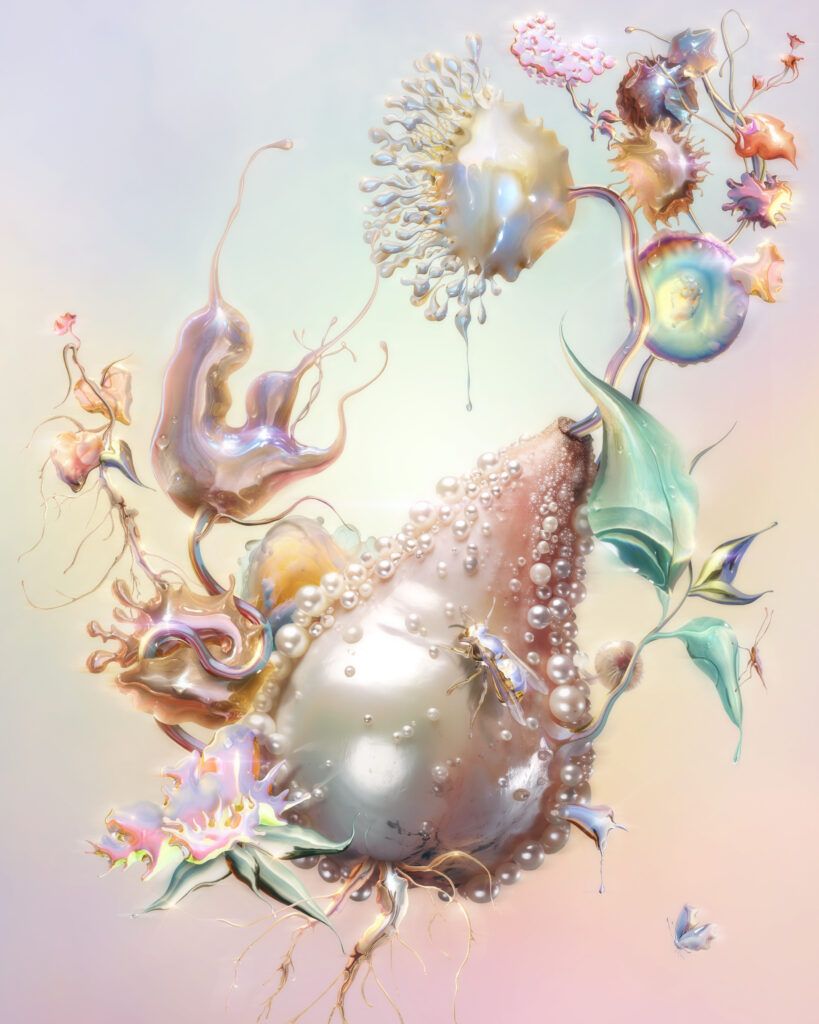
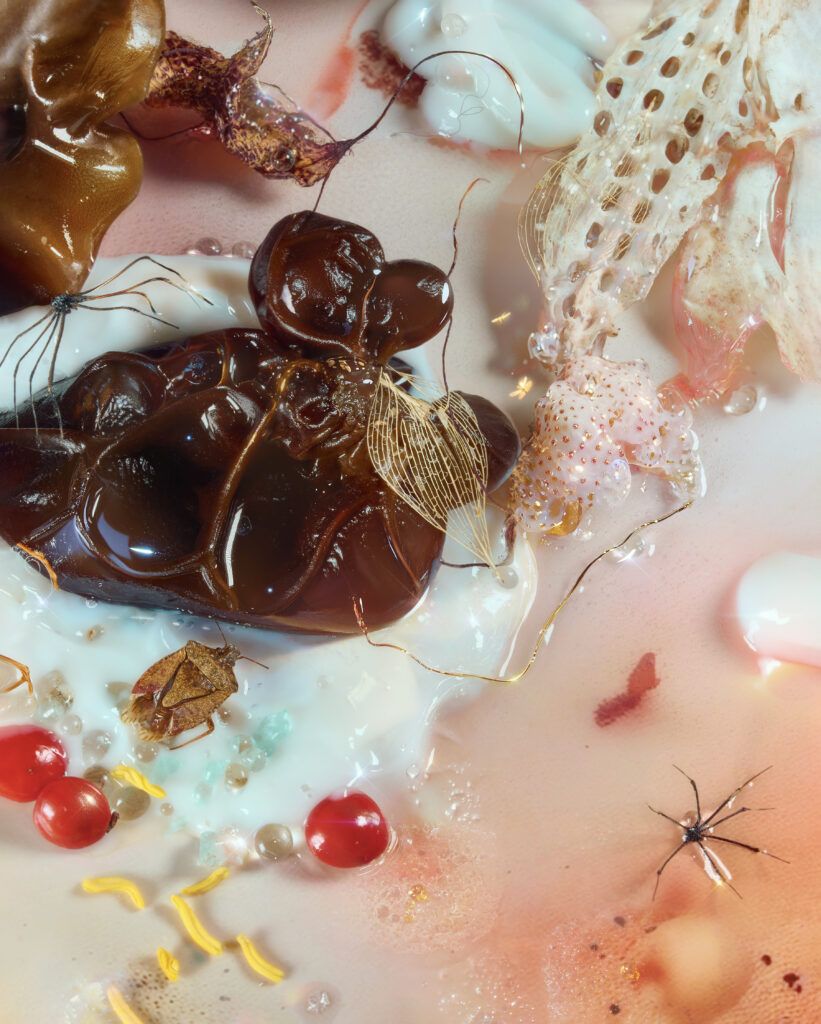
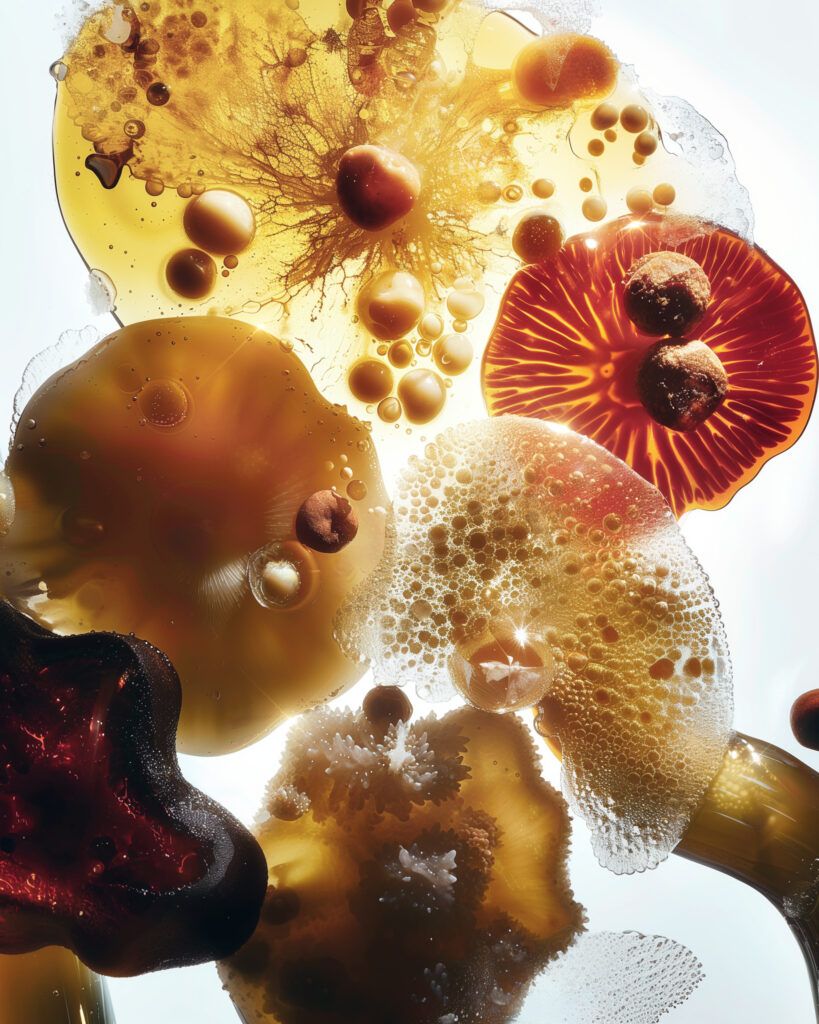
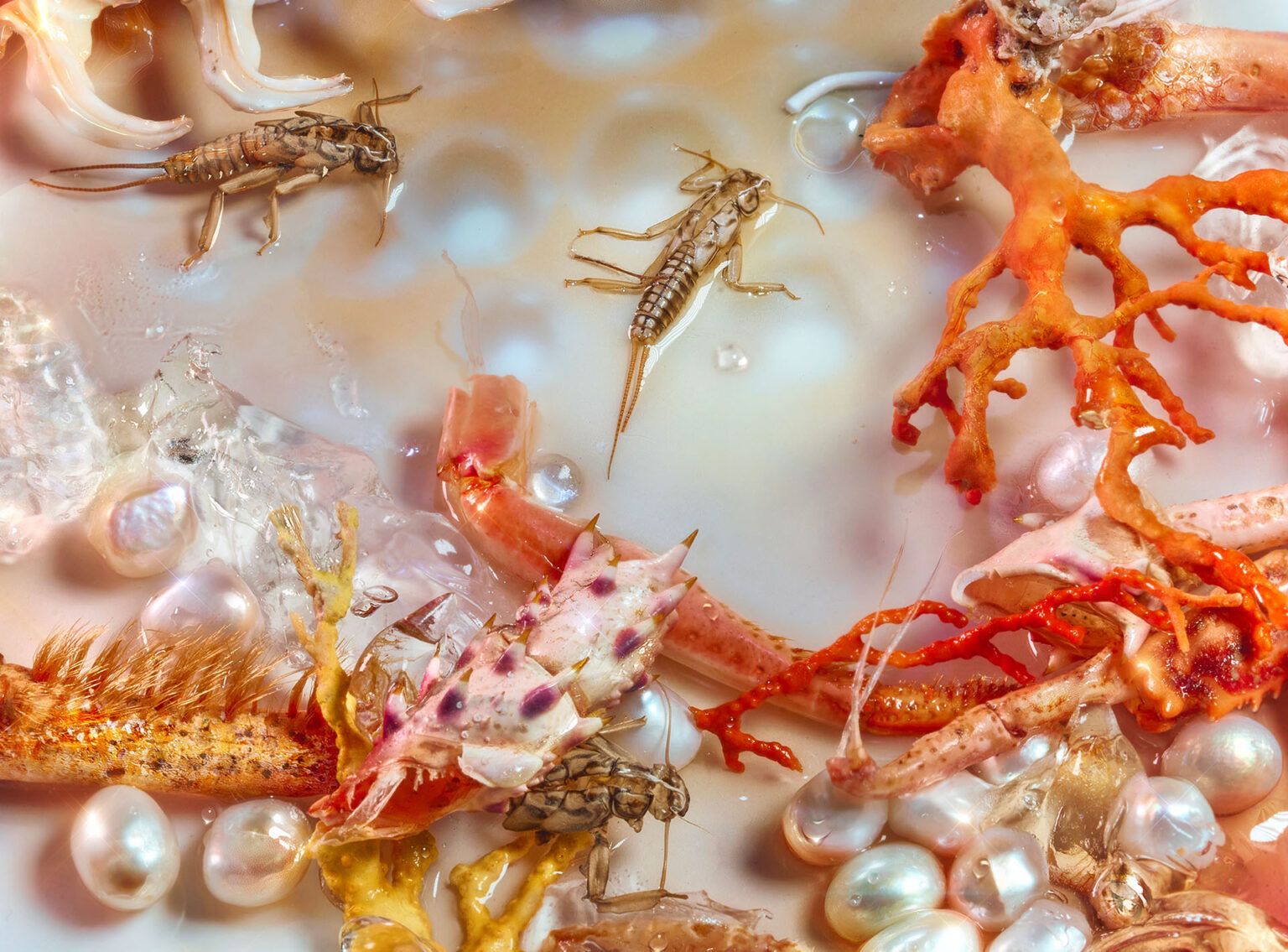
But I think this tendency comes from my deep love for nature and probably also from growing up in Italy. That’s why I titled my first solo show “Baroque Biology.” It reflects the essence of where my fascination comes from.
You call your aesthetic “nature-driven” and “naive.” How do you preserve that sense of innocence or spontaneity in a medium that’s often technical and controlled?
It’s not easy, and I don’t always succeed. Usually the best results come from things I didn’t overthink, the ones that come more from urgency than from planning. But when you do this work professionally, you end up spending more time making plans than letting yourself go. I’m trying to find a way to keep my spontaneity even while planning.
The good thing is, whenever I feel drained, just spending some time around trees and water and animals helps me reset and everything starts to regain its flavor.
If your universe were a garden, what kind of creatures or sensations would live there? What would someone experience walking through it?
That’s a tough one. If I already knew every character and scent in my universe, I’d have figured it all out by now and probably gotten bored. I’m still discovering it, sometimes finding interesting smells and creatures, other times just pointless dark spots.
If it were a garden probably I’d let wild herbs and field flowers take up a lot of space. It wouldn’t be very neat, instead it would be a bit untamed, with invasive plants growing freely. And plenty of animals lurking here and there.