BORN 2 BE BORN AGAIN

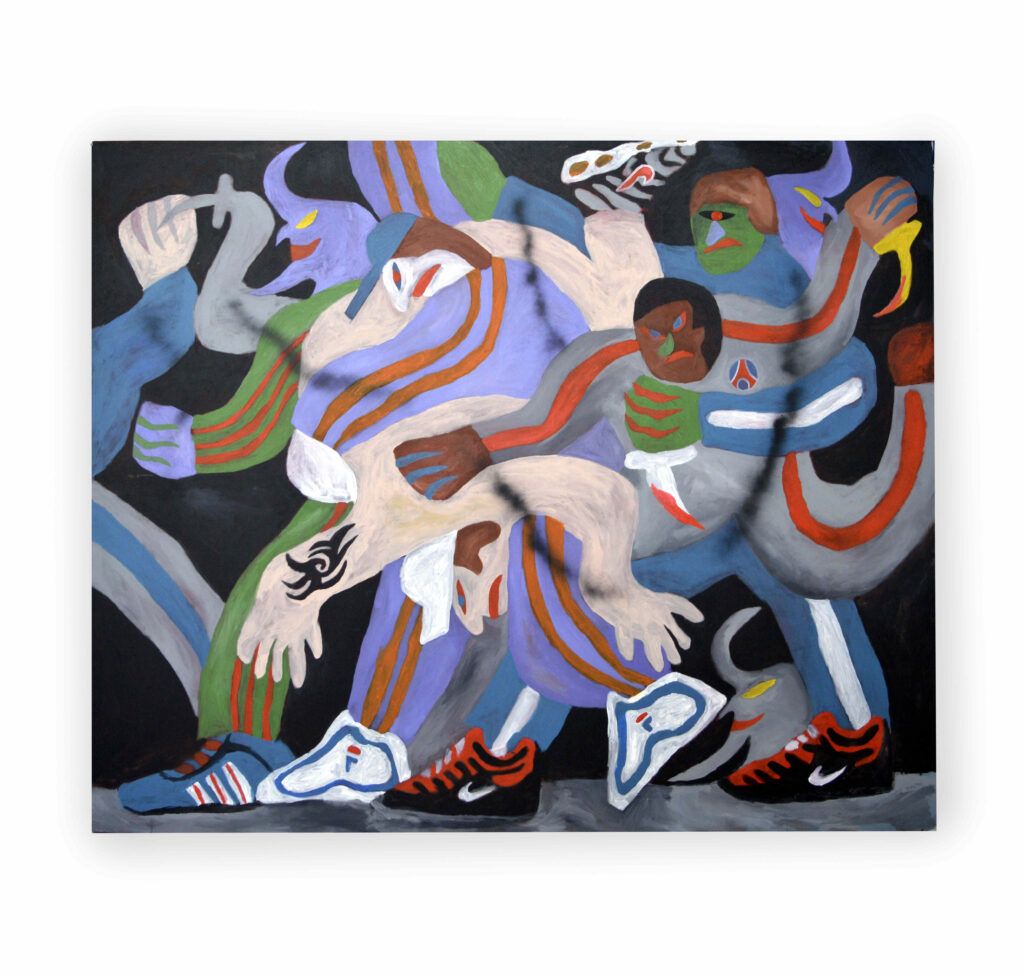
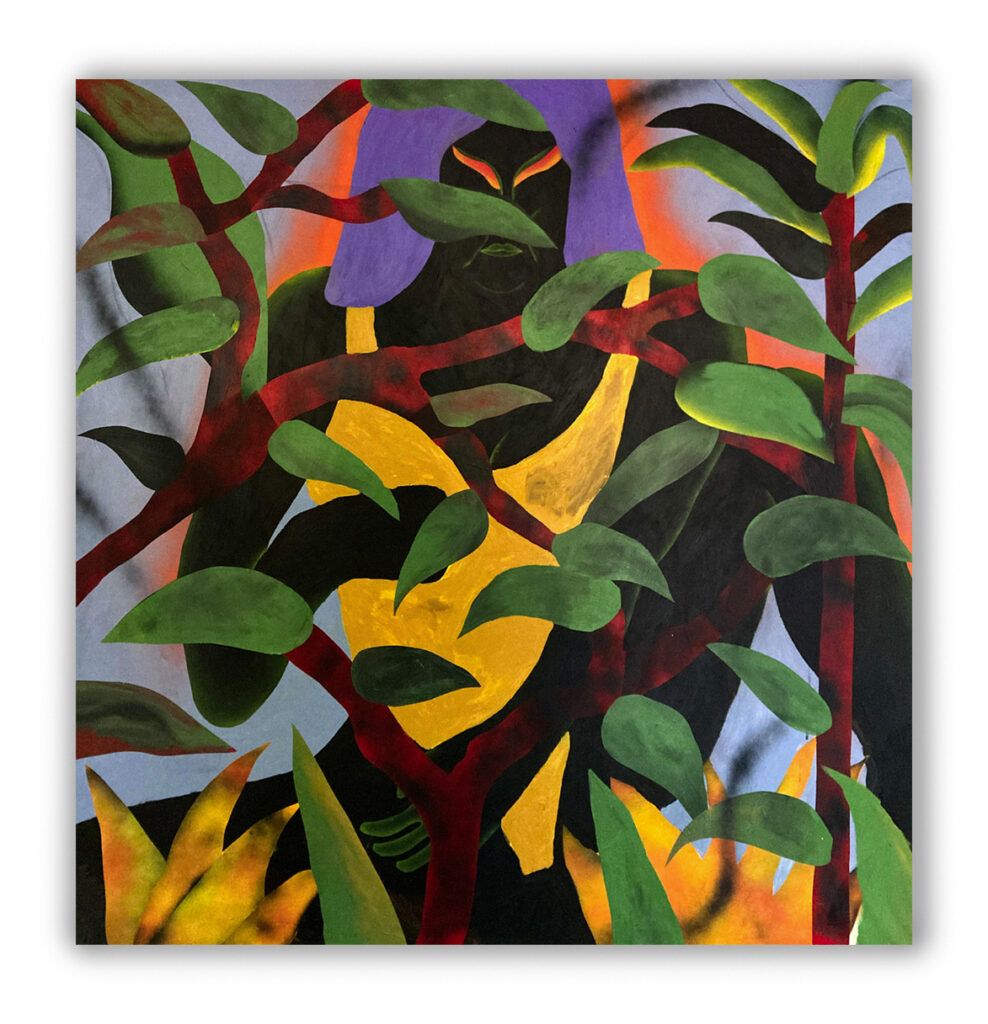
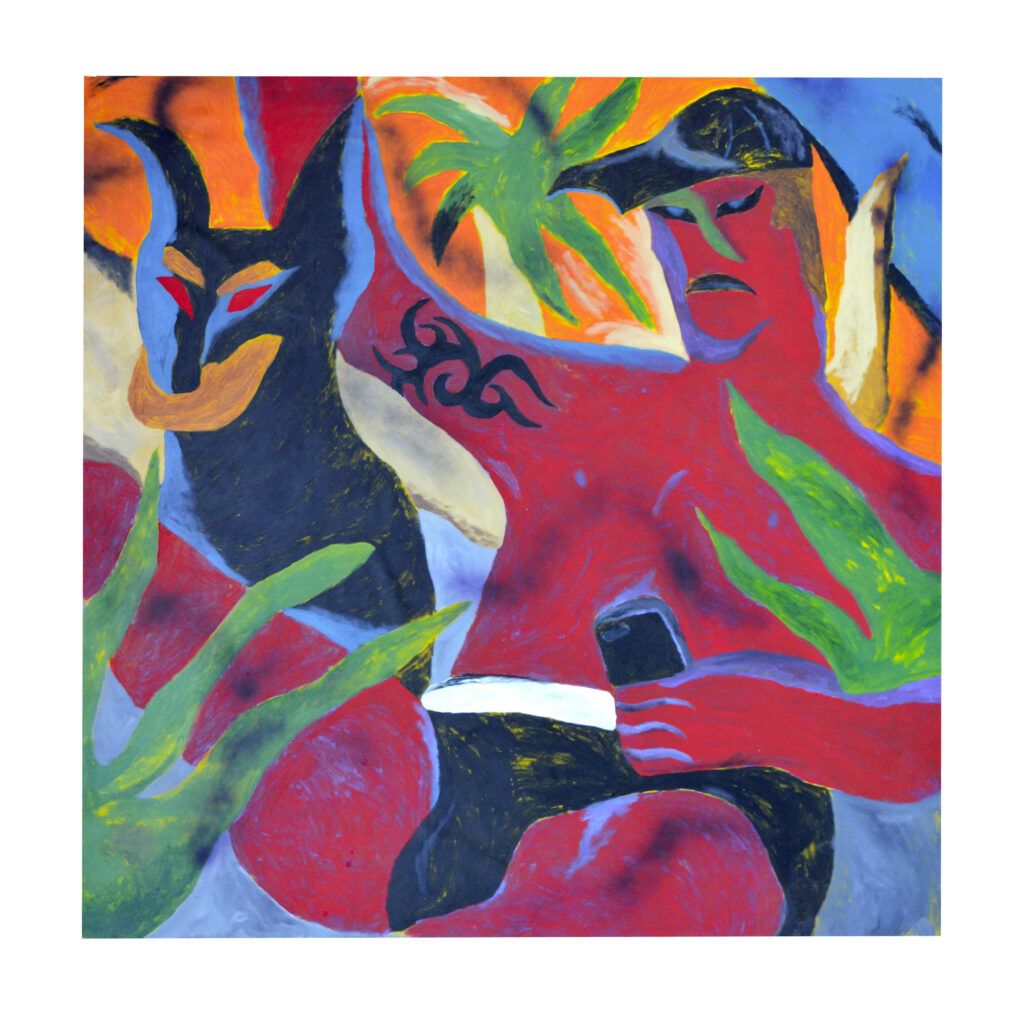
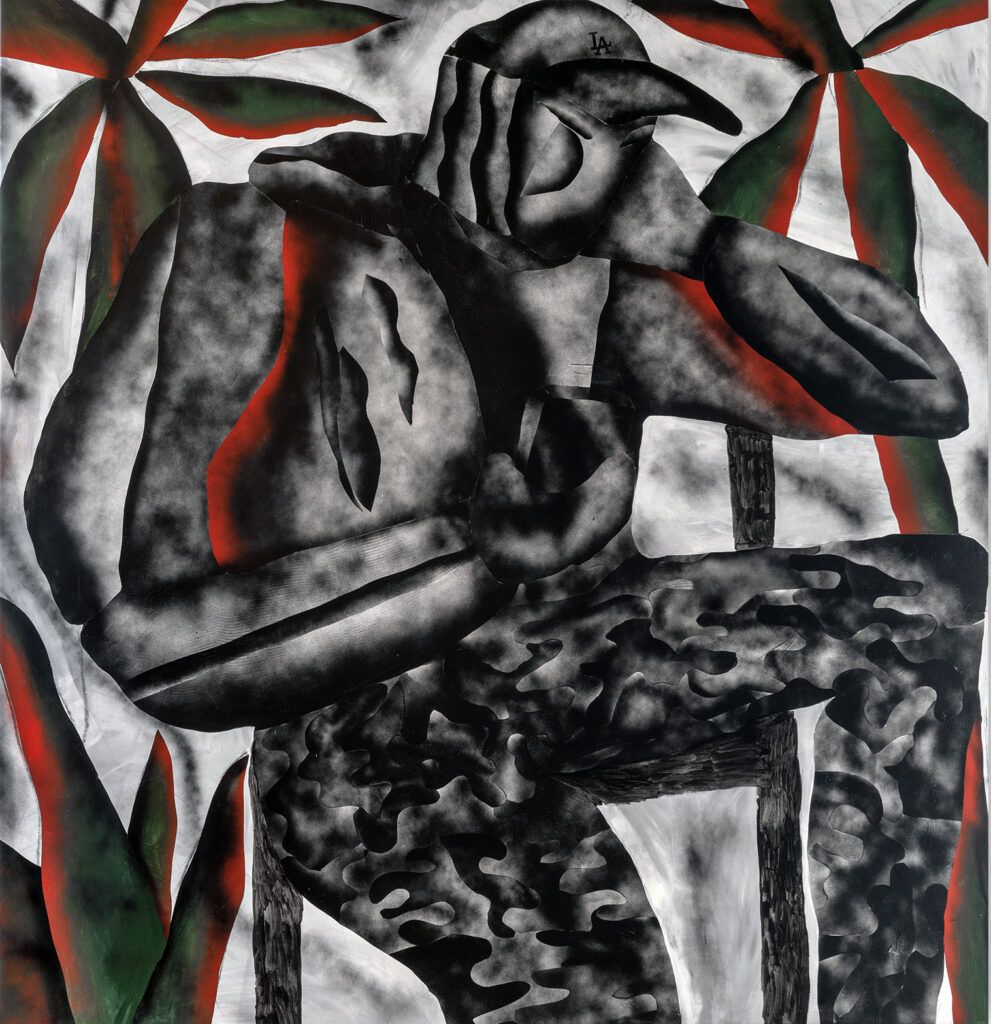
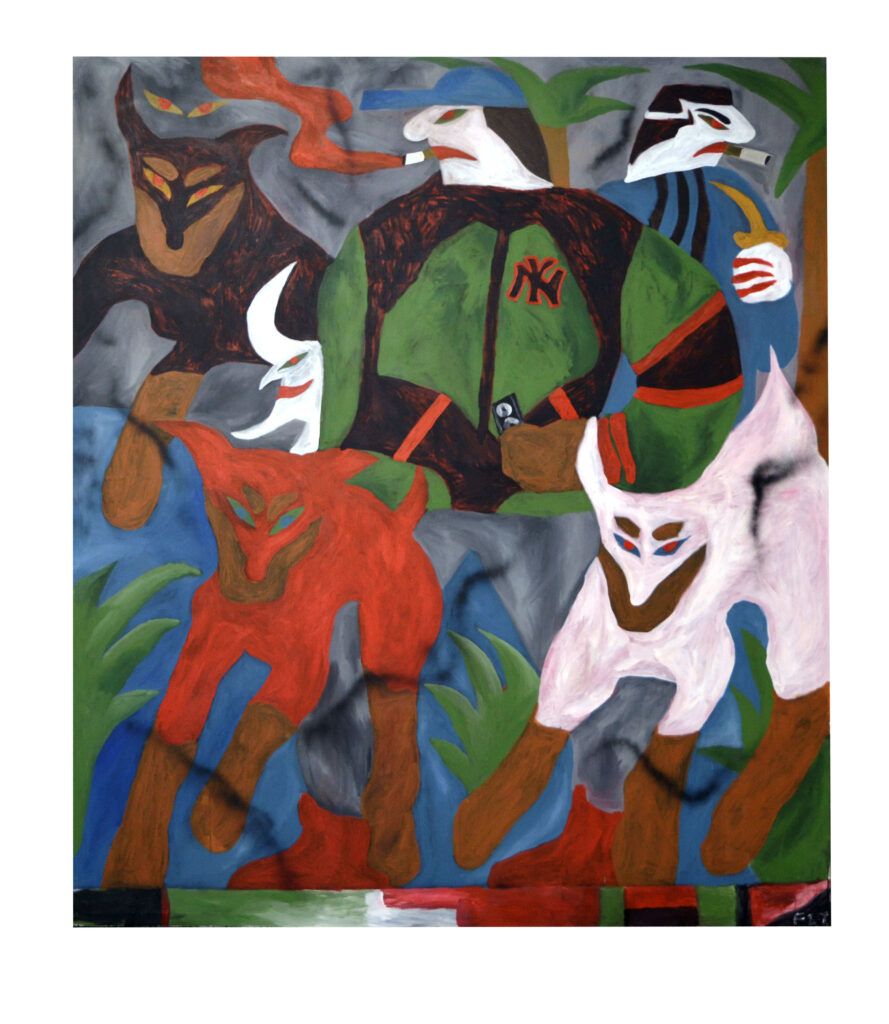
François Thevenet moves between media as smoothly as he combines colors in his vivid paintings. Having recently discovered the joy of oil painting, his new oeuvre shows a new break in his artistic career. Read today’s interview with the acclaimed artist to learn about his influences, why he is inspired by martial arts, and how the environment informs his creativity.

Your artistic journey began in the French Pyrenean mountains and later evolved during your six years in Buenos Aires. How did these vastly different landscapes shape your approach to painting?

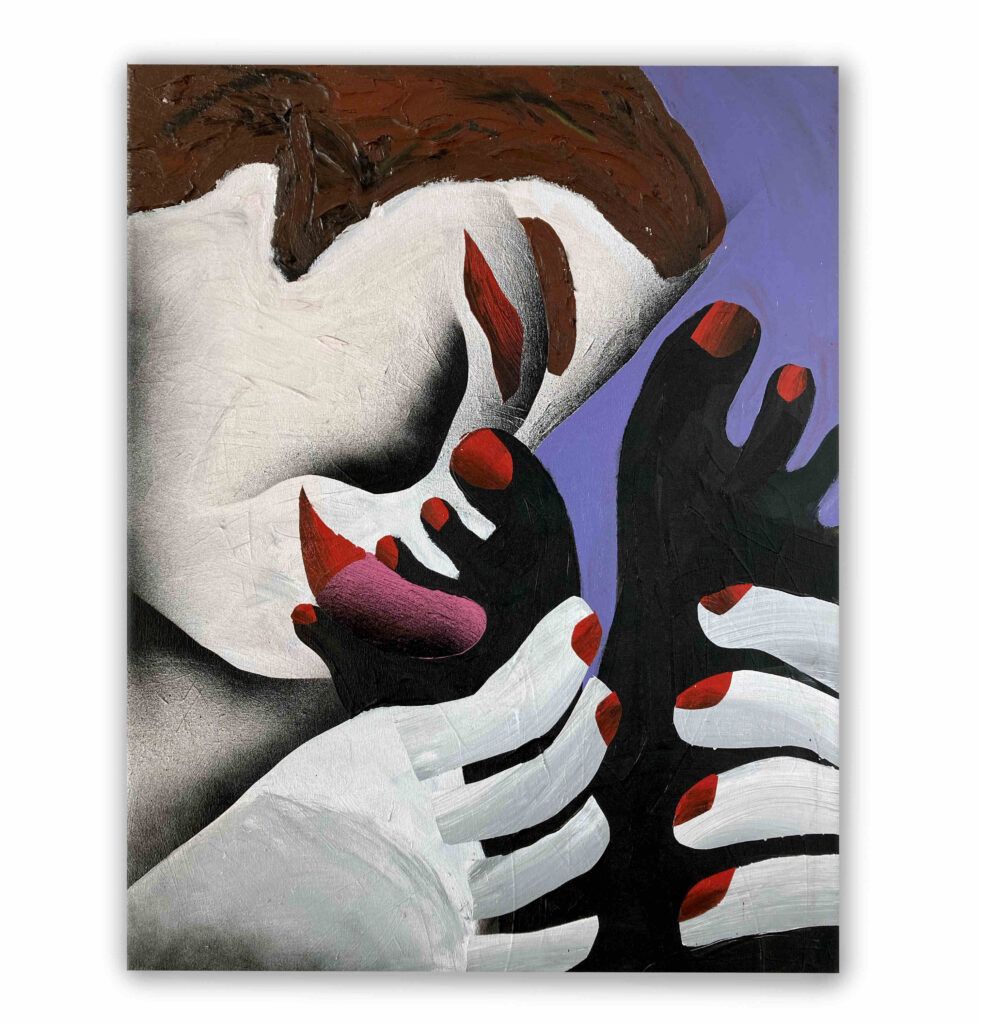
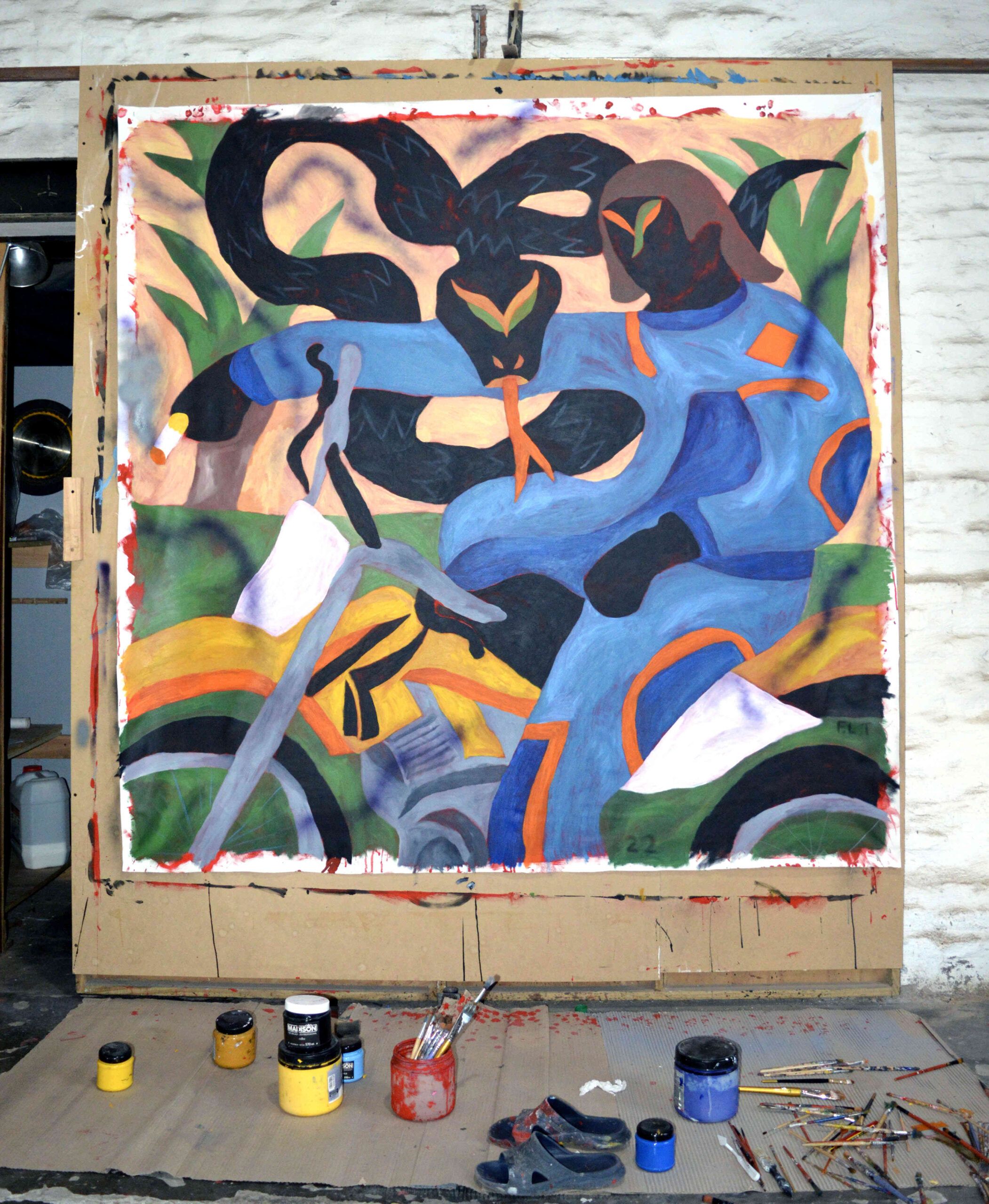
I think my surroundings always influence my paintings. Elements I see in real life stimulate my creativity. In Buenos Aires, I was more into city and urban things, inspired by this beautiful chaos that the city can provide. Now that I got back in the mountains, I don’t paint the same things, or the same way. I am more inspired by what I can find here. I have been drawing and painting skiers lately. It’s an interesting topic I guess, not much seen either. There is some kind of abstraction of the body when they jump, they twist it in many different ways, they fall or fly and that is what I want to explore lately.

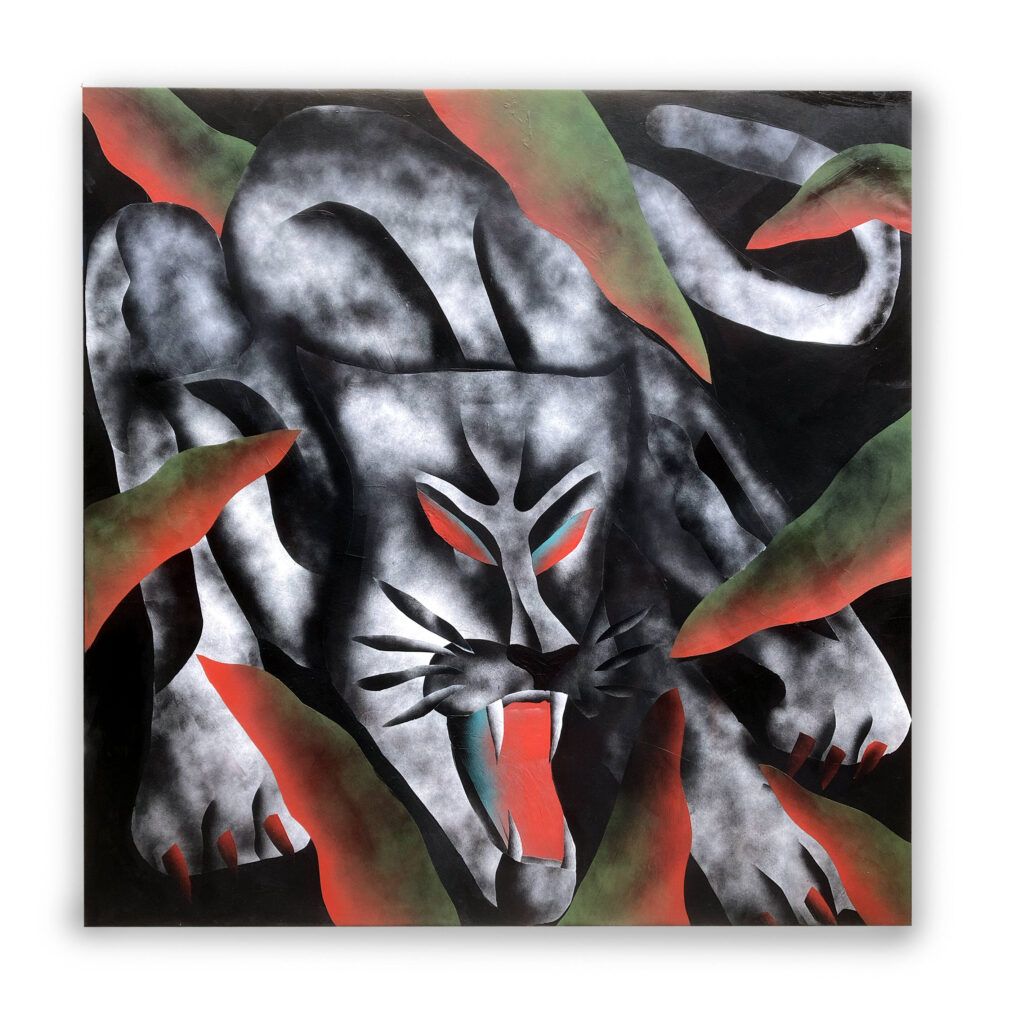
You’ve experimented with various media, from coloured paper to acrylics, spray paint, and now oil. Do you approach a painting differently when using a different medium? How does each material contribute to the energy and contrasts in your work?

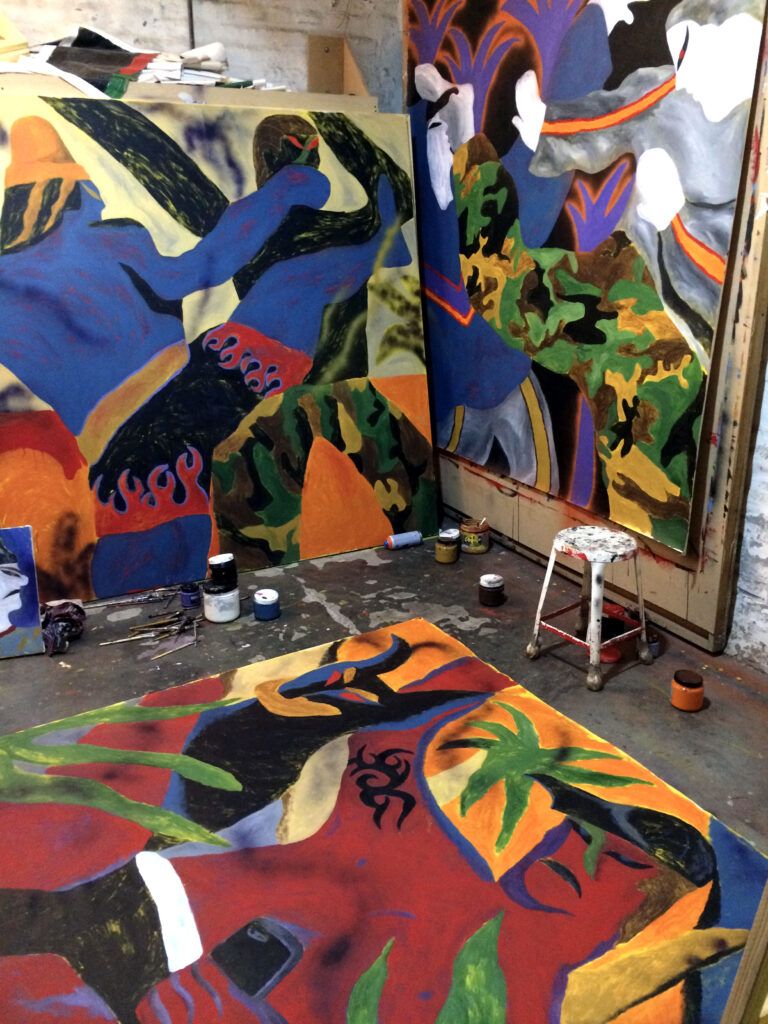
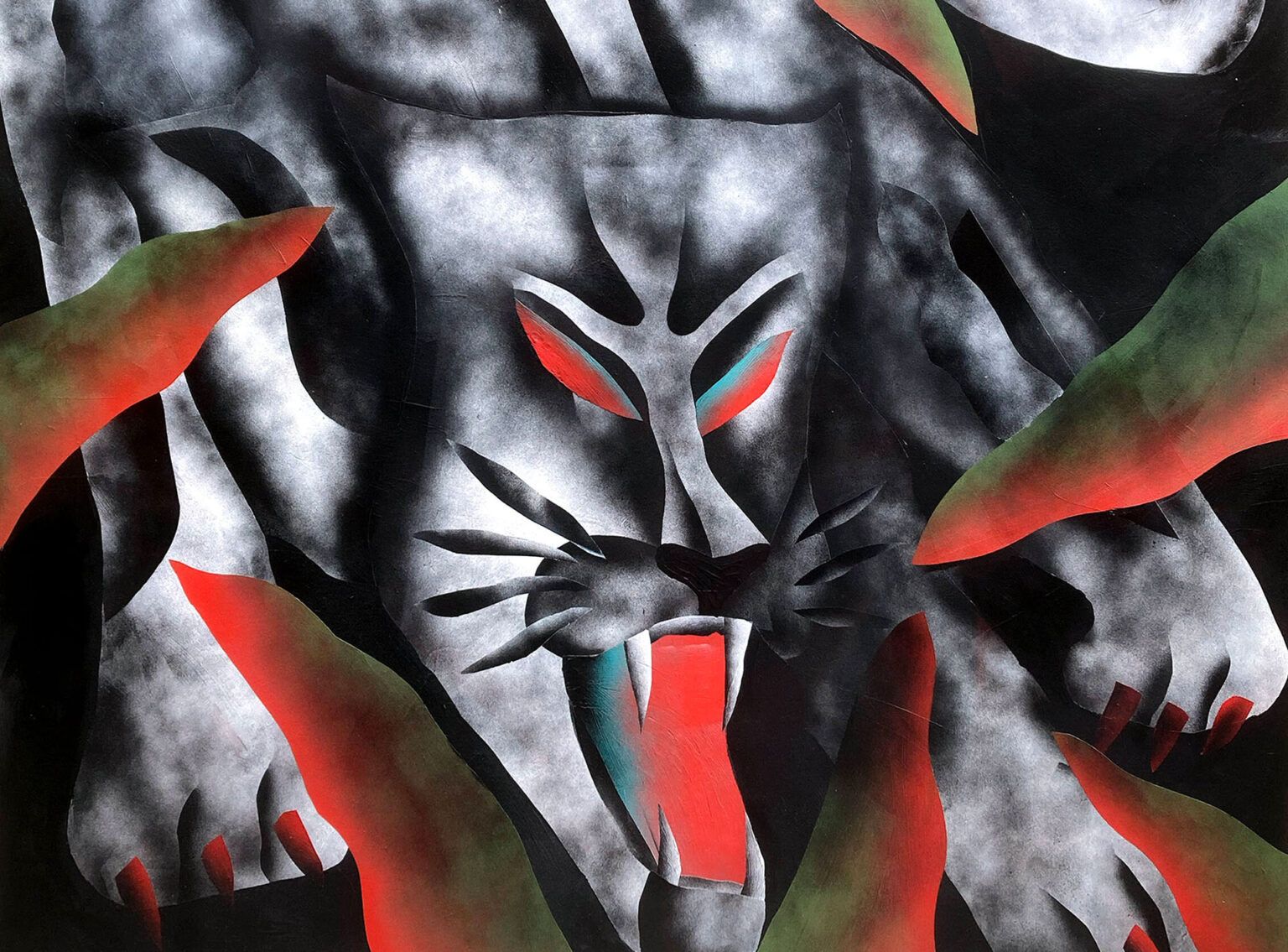
I am not stuck on one medium or technique. I like to try new things. I think the medium partially defines how I do things, and I like to explore what characteristics it can offer. I don’t have the same expression in painting, cutting papers, or drawing on the computer, but there is a common root to it all.

Looking at your body of work, where do you see your artistic style evolving? Are there any new techniques or themes you are excited to explore in the future?

it’s always changing while keeping an essence. I am very interested in the abstract, but don’t know yet how to do it in a way that the final work would satisfy me. But I am trying to find some kind of freedom by just focusing on the medium itself. As in putting a painting on the canvas without overthinking and hoping something good appearr – it’s not as easy as it seems, believe me. I’d like to do more sculptures, ceramics, and perhaps try to carve some wood with a chainsaw. I got really interested in that lately.

If you could collaborate with any artist, living or from the past, who would it be and why?

I like when people from different fields collaborate. I would really enjoy doing something with a clothes designer, or an object designer. 

What do you hope people take away from your work? Are there specific feelings or thoughts you want to evoke in your audience?

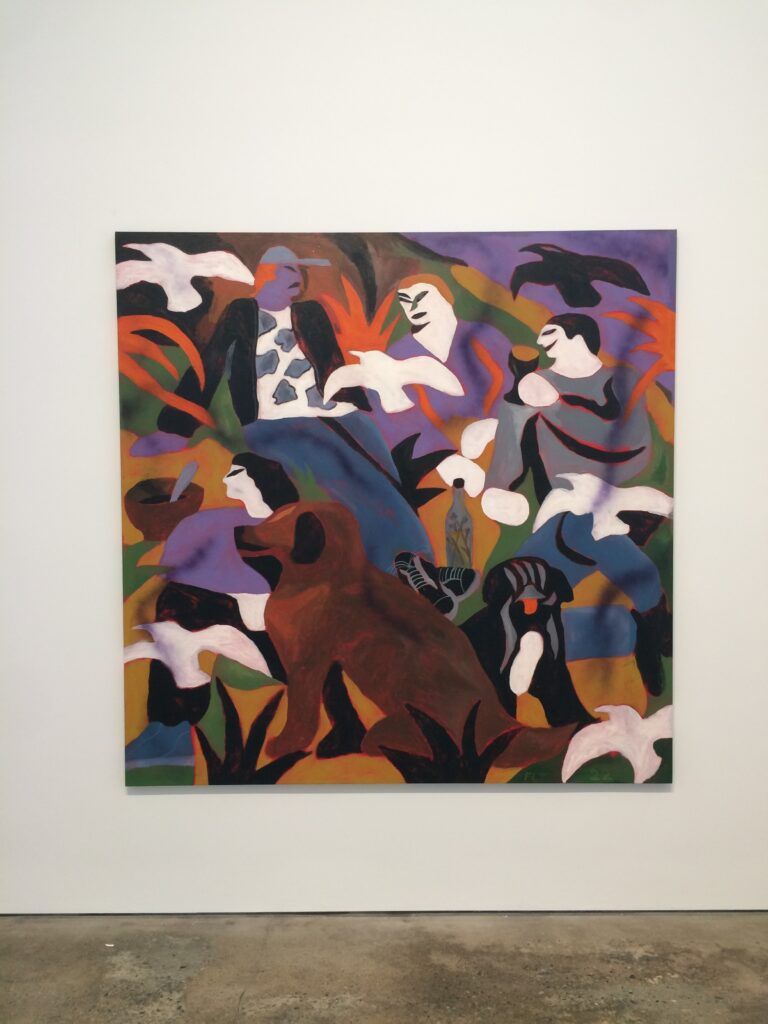
I don’t really think about that in general. I am really doing it for myself and I want to be satisfied with the painting, that’s my main purpose. I like it when the work is not very clear, a bit confused, as much in the narrative as in the overall visual aspect. Like when it generates more of a general sensation, than a narrow narrative that you can not change.

That’s even more true these days, as I got back to the Pyrenees and live in a small village in the mountains with very few people in the area. This means I don’t have the opportunity to show or even talk about my work. This loneliness is a bit tough to handle sometimes.

Your paintings are known for their striking colour contrasts and unsettling urban scenes. How do you choose your color palettes, and what role does color play in setting the mood of your work?

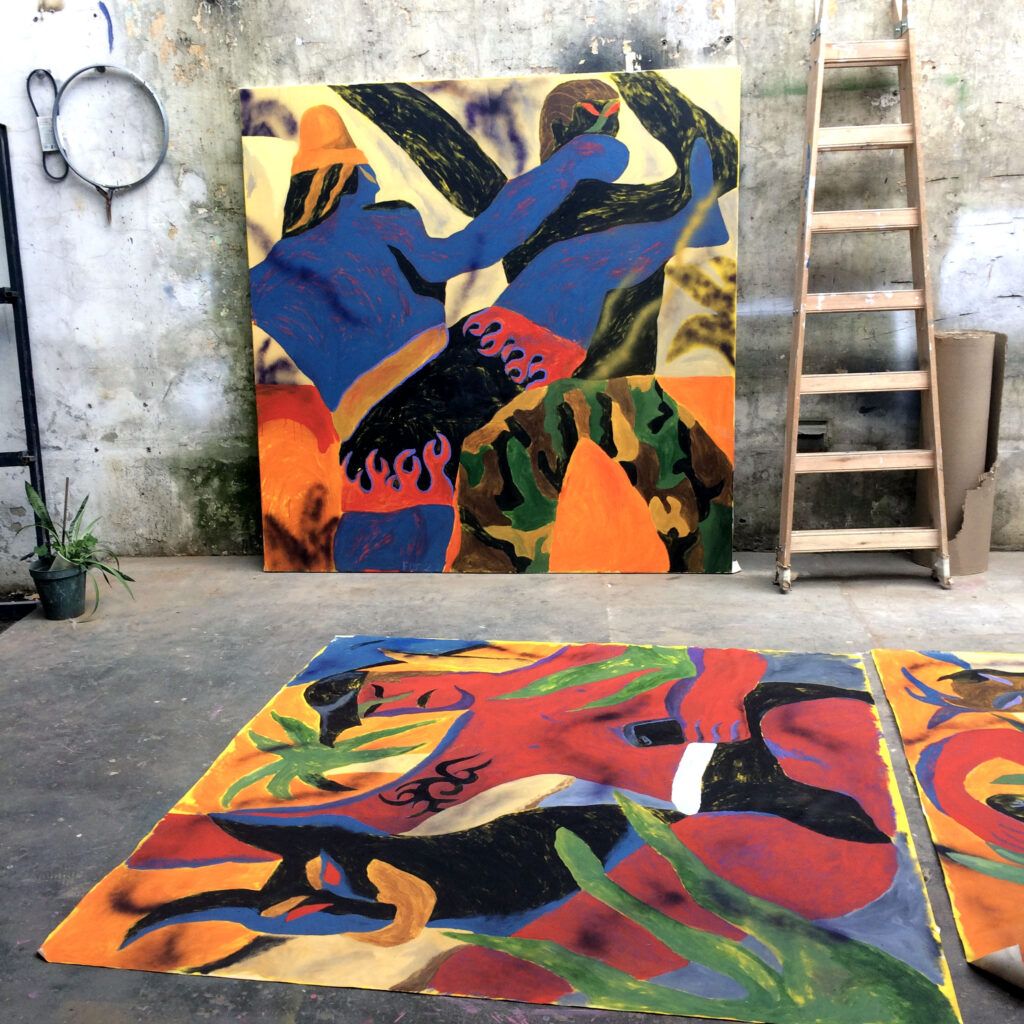
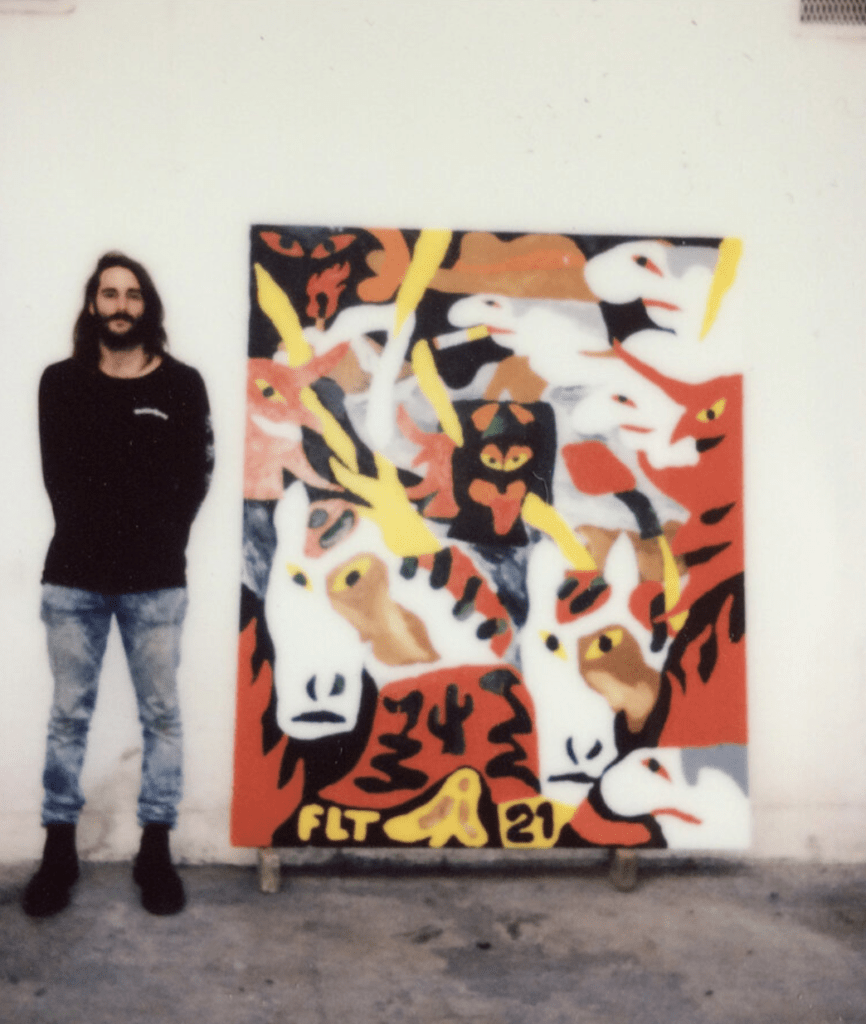
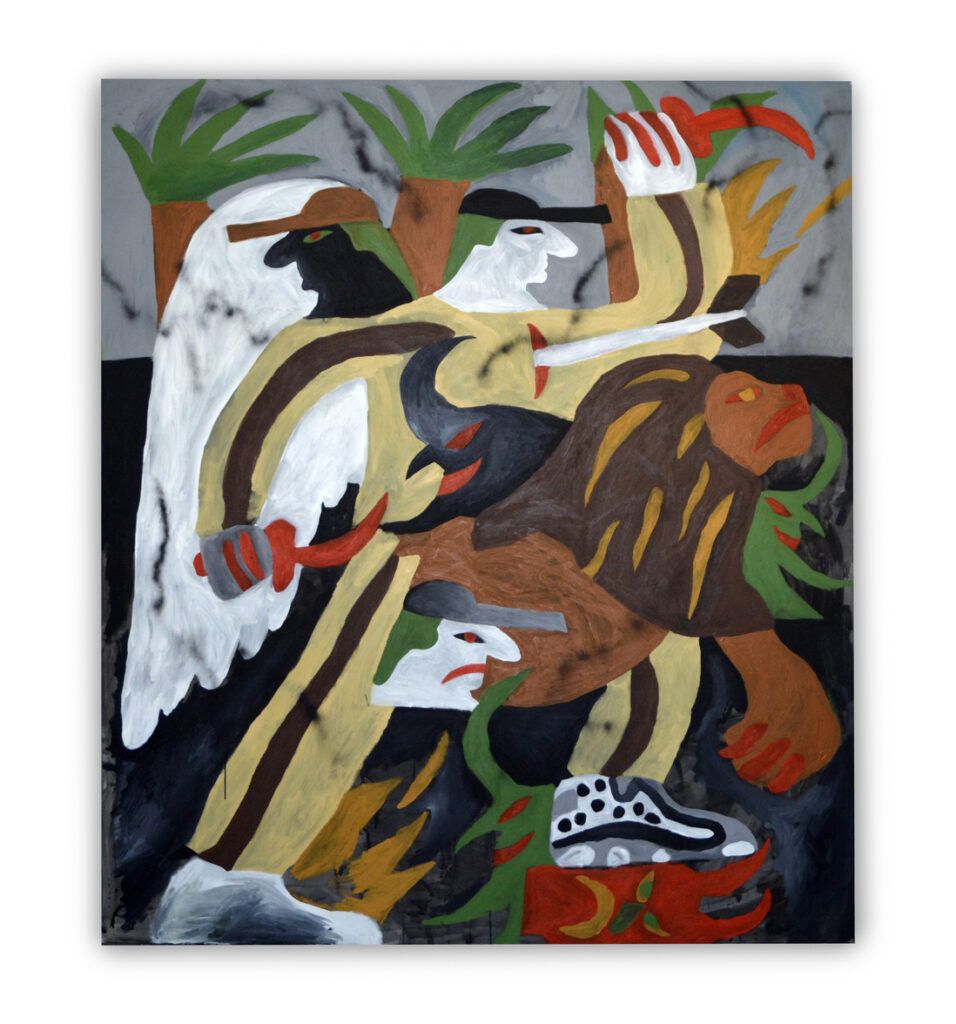
For the draft, I usually first work on the computer, or cut paper, in a very intuitive process, not thinking much, just seeing what works and what doesn’t. Colours may be the most important component of my work – if I don’t see a colour match in the painting, I probably won’t like the whole thing. It’s very important to me to find the right balance.

You’ve mentioned drawing inspiration from mythological imagery, boxing, and personal photographs. How do these elements come together in your paintings, and what emotions or narratives do you hope to convey?

I believe mythological imagery plays an important role in how I compose my drawings and paintings. It is usually flat, so I don’t search for any kind of perspective. I am inspired by very diverse fields, like yes, boxing, skiing, or urban scenes. I like action pictures where you see strong movement energy, like stopped in time. All these different fields get mixed together and then something a bit anachronistic happens. I want people to be confused, to stop by the painting and try to really understand it, using colours and movement as a tool to slow down the understanding of the picture.

But, inspiration changes with time as well, and I have been less interested in images lately. I’m now trying to get closer to something more abstract. Not completely, but with the figurative part a little more dissimulated, focusing more on the colour and medium itself, being more expressive and more tolerant with accidents that could happen on the canvas. I have been experimenting a lot like this in the past months.

Did you like it?
Share it with your friends

Bio

François Thevenet, originally from the French Pyrenees mountains, discovered his passion for painting during his six years in Buenos Aires. His work, infused with vibrant energy, portrays unsettling and intriguing urban scenes, marked by striking color contrasts. His art has been exhibited in Los Angeles, Miami, Berlin, Buenos Aires, and Strasbourg.
Credits

Artist/ François Thevenet

https://francois-thevenet.com/

Interview / Markéta Kosinová

You may also like

Ema Prosová's work doesn't announce itself loudly. Her drawings and paintings on silk operate in a register that's contemplative, layered, almost whispered: figures emerging from lychee fruits, hospital rooms floating in eerie space, architectural fragments mingling with natural forms. The work comes from years spent moving between cultures and techniques, learning lacquer painting in Vietnam, silk painting in Indonesia, living in Tokyo, and now finishing her degree at the Academy of Fine Arts in Prague.
Polish choreographer Iza Szostak’s circus is a philosophical system, a choreography of risk, precarity, and collective survival mirroring the contemporary condition. Discover today how her new performance Trapeze, premiering at Studio Hrdinů in Prague, turns the trapeze bar into a narrator, and the clown into an energy valve for a world on the brink of collapse.
“It is a story about a long night, about everything that disappears during the day and only comes out after dusk.” Polish fashion designer Pat Guzik breathes new life into her garments by collaborating with visual artists, such as Aleksandra Waliszewska and Zbiok Czajkowski, whose dreamy and tongue-in-cheek works adorn the skirts, sweatshirts, jackets, and other ready-to-wear pieces by the designer.
French painter and illustrator Sébastien Pastor navigates between naïve figuration and abstract expressionism, building visual worlds where bold color palettes pulse with rhythm and absurdity. Discover how his colorblindness became a creative signature and how he leaves room for the enigmatic in his works.