
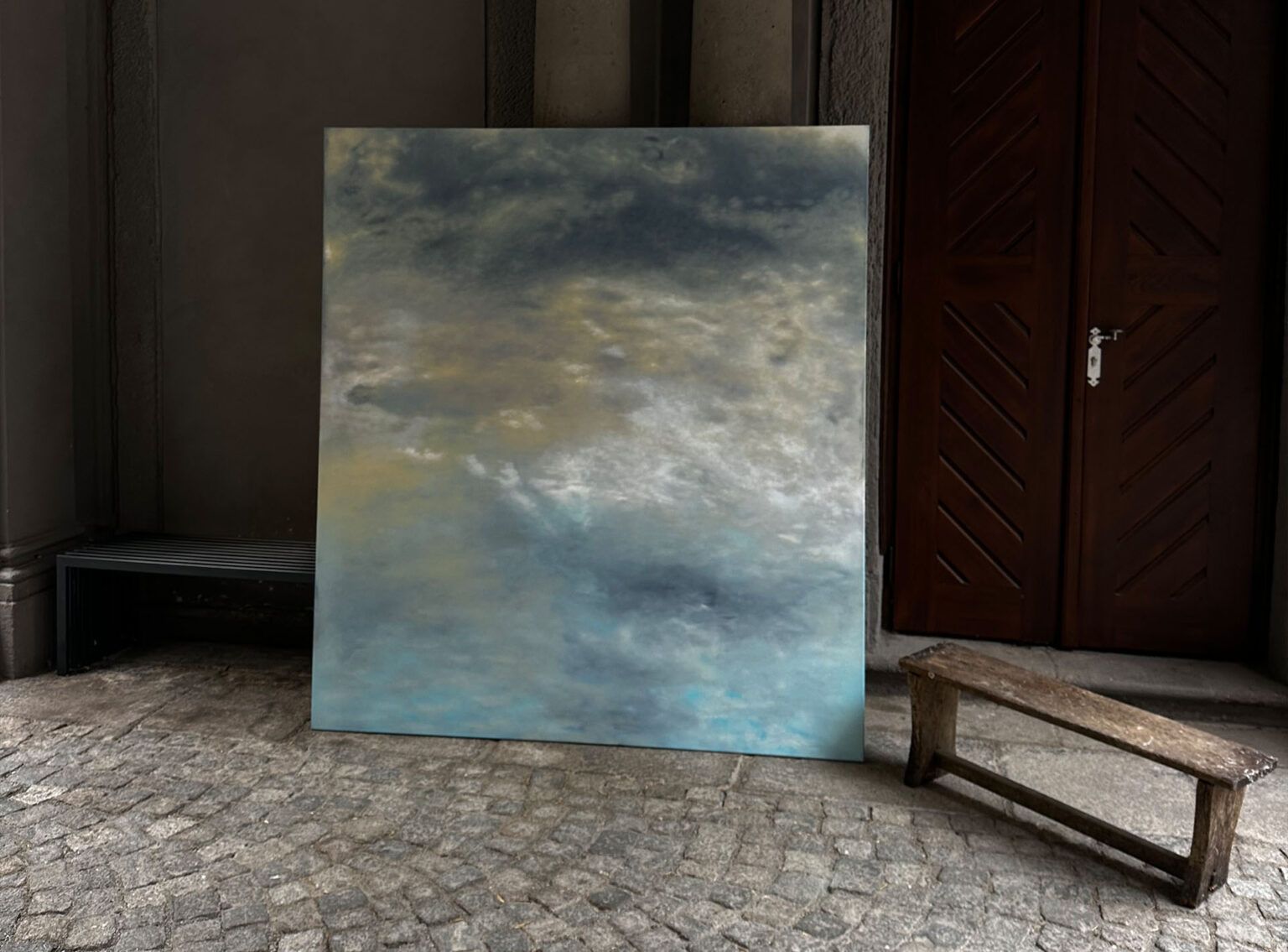
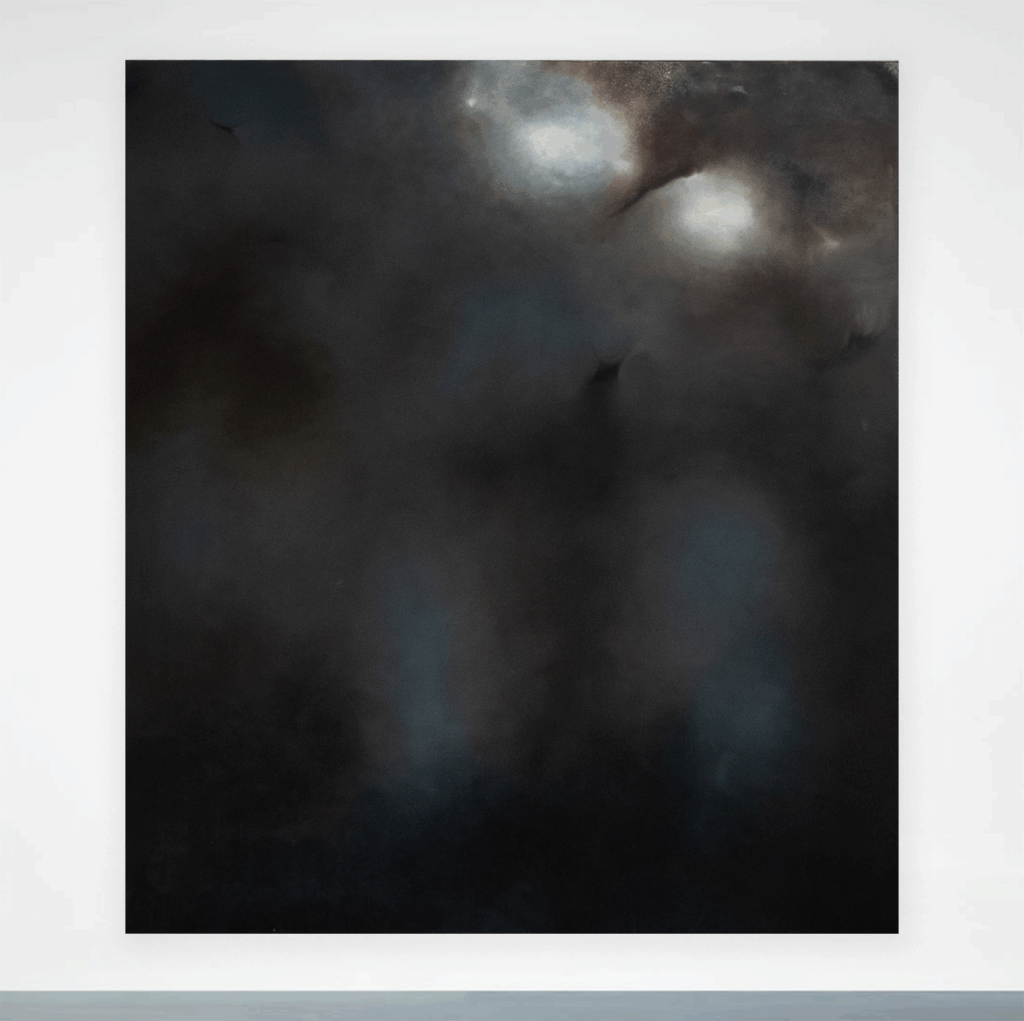
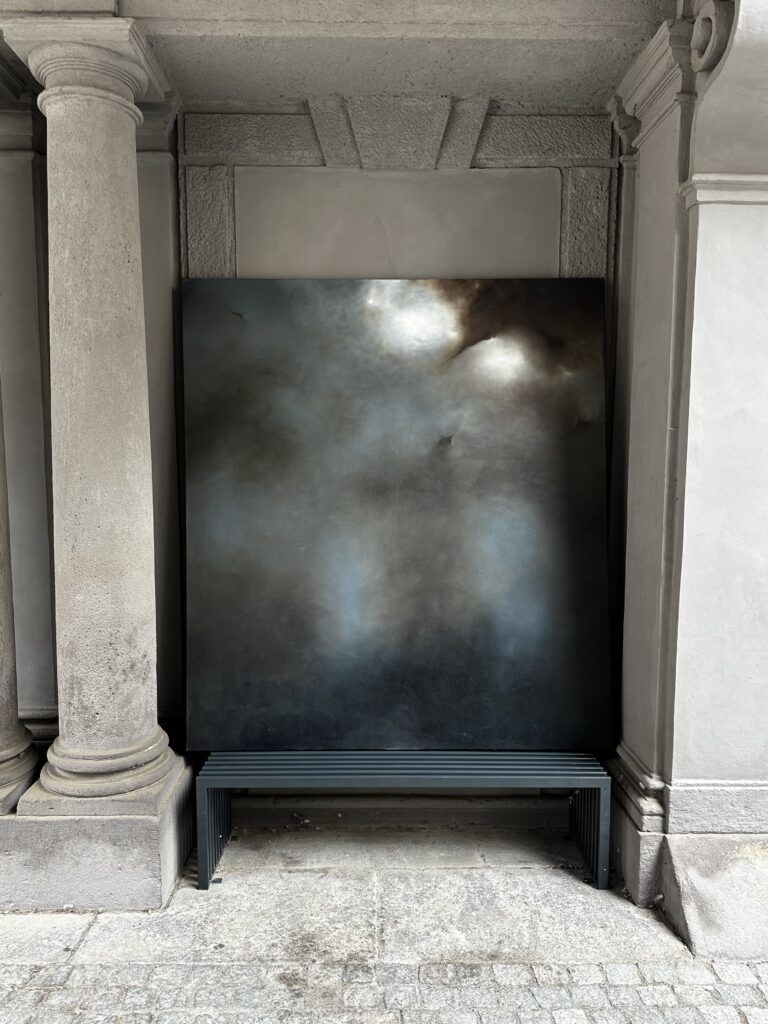
Your early works are deeply rooted in nature and rural life, while your recent paintings drift toward intangible motifs like clouds and sky. Do you see this as a form of departure or rather a return to something more internal, perhaps spiritual?
I guess you can say that my recent paintings are more focused on emotions and feelings – something that is more to be thought about than something to watch. My point of view on life and so many things has shifted so much during the past two years that I knew my paintings needed a shift, but I wasn’t pushing anything. I was just painting animals and flowers, and the shift in my work came naturally to me. Basically one day my paintings had become more blurry because I think I started focusing on more abstract topics.
I started thinking about situations and places and people that were around me when I was a kid or when I was a teenager. I think that’s also one of the reasons why my paintings now are not that specific – because my main topic now is human memory and everything around it. What are the things that are causing memories to fade out from our minds, and so on.
I’m focusing now on that more than on myself in the paintings. I’m not working with any trauma – I’m working with the fact that people and places and conversations and situations are slowly fading away out of my head, and I just can’t do anything about it. So I’m now in a stage of trying to recall those moments. Not to recall them exactly, but to cherish them and hold them close to me. Does that make sense?
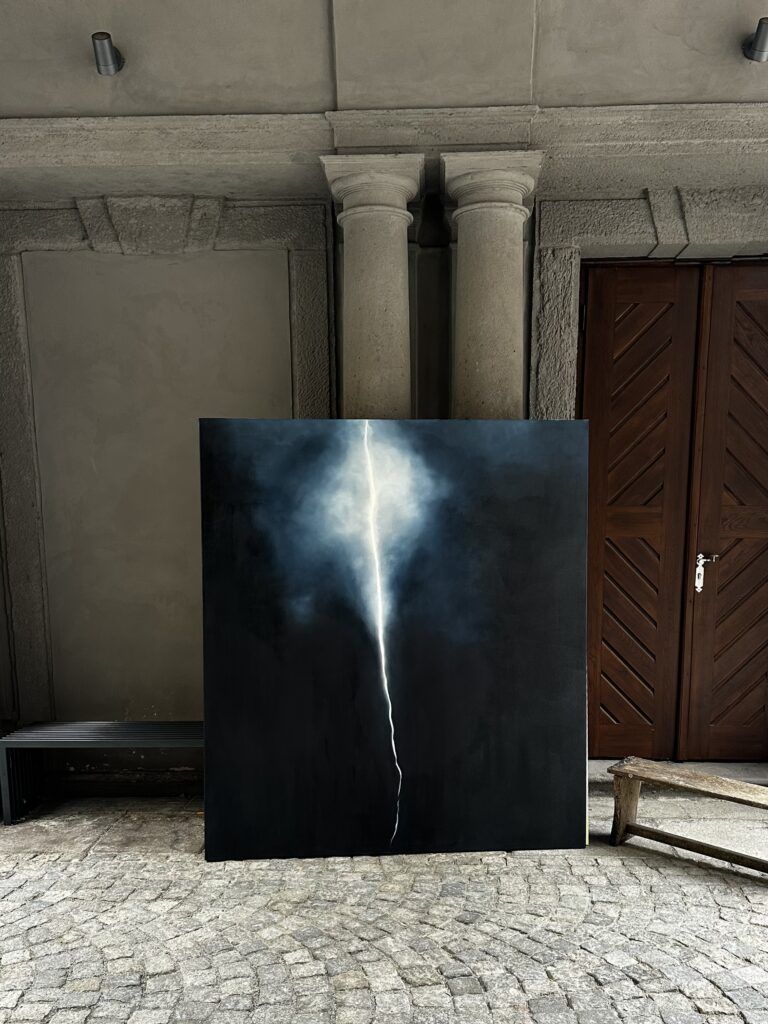
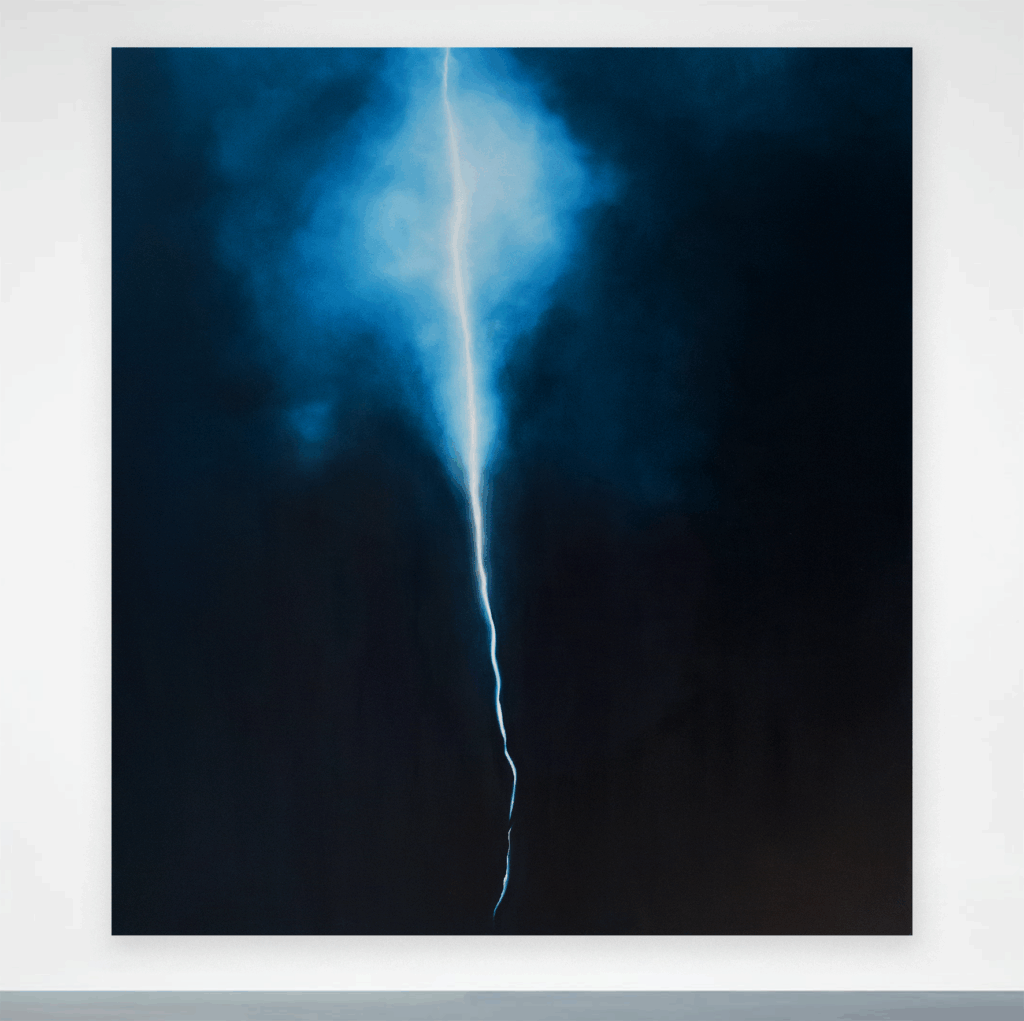
You describe clouds as metaphors for human memory. Does your painting capture certain types of emotions, or perhaps your memories, within the motif of clouds and weather?
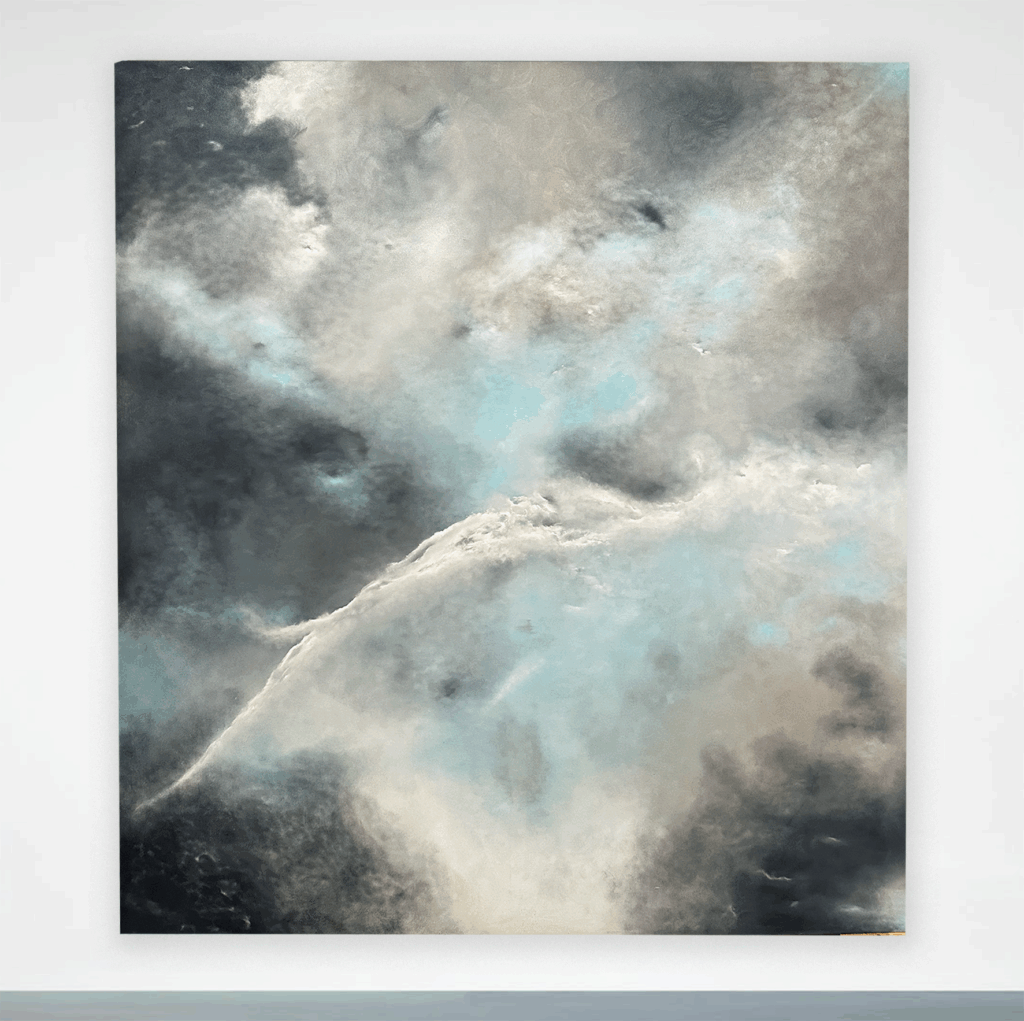
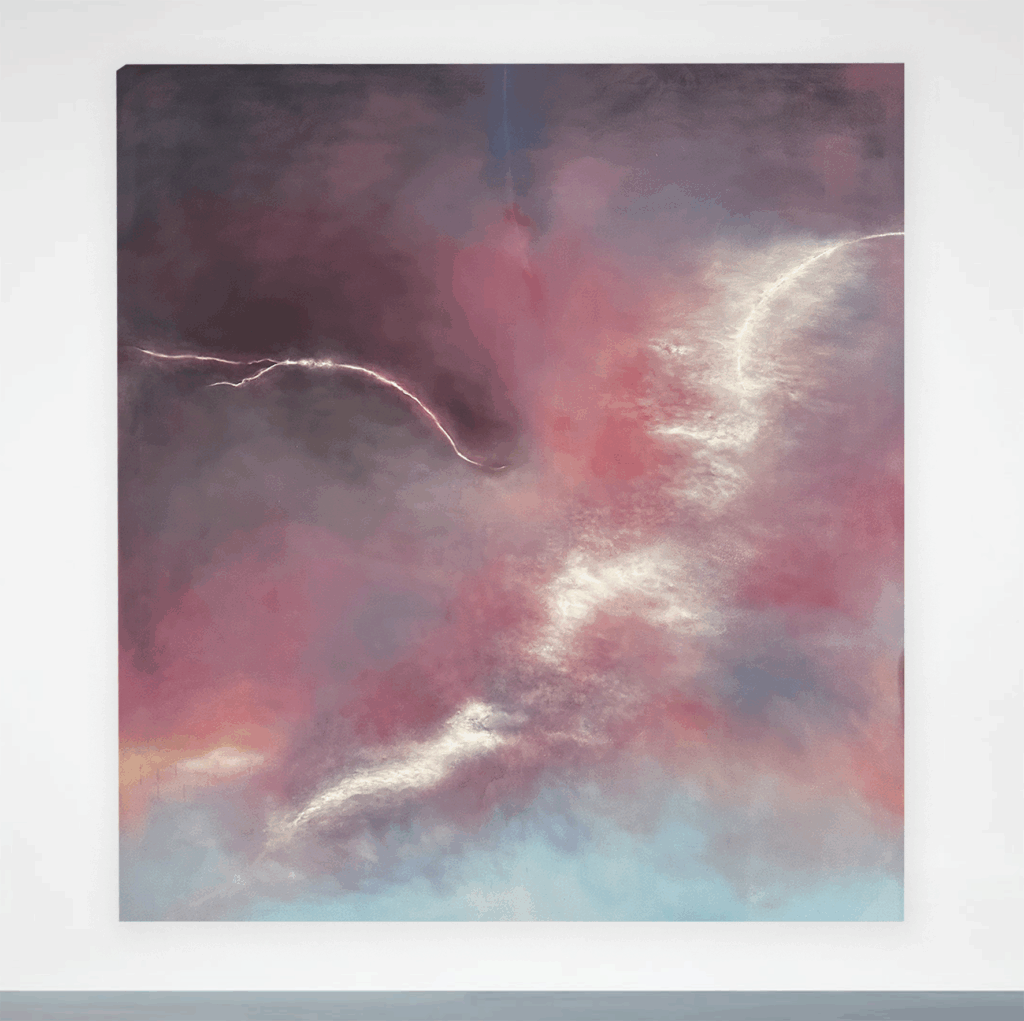
Yeah, I hope so. I hope that my paintings have some emotions in them, even though I’m not specifically painting emotions and feelings. I’m trying to express some feelings and emotions through the work with colours, and sometimes also through the type of clouds that I’m painting. But I’m not trying to picture emotions and feelings through a weather forecast, you know.
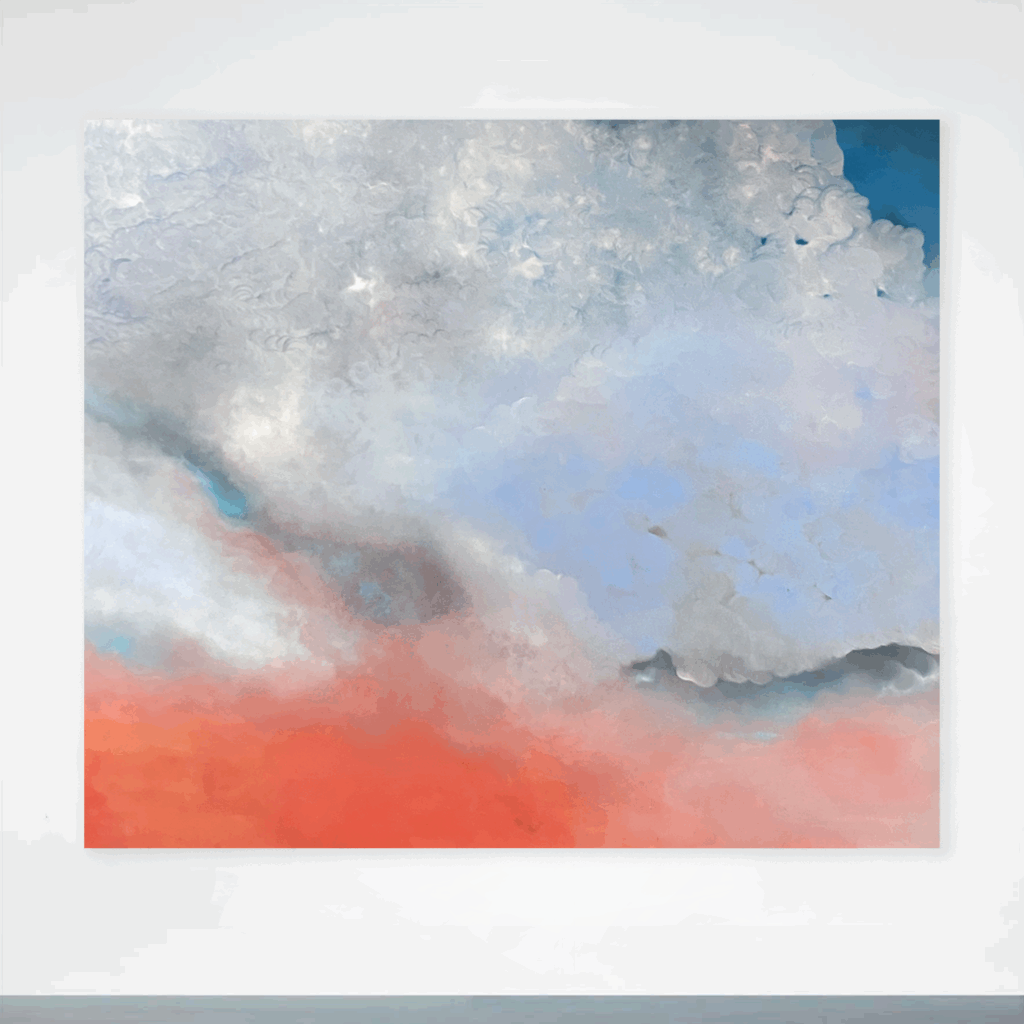
The transition from fauna and flora to atmosphere feels like a move from the physical to the emotional. How has this shift changed your relationship with painting as a daily practice?
It did actually change a lot in my daily practice. When I was painting flowers and animals, I was working most of the time with background painting made with acrylic colours that were really watery. I’d mix some colours and then use lots and lots of water, and this combination would work by itself on canvas. I was thinking about the canvas in two layers – the background layer, which was really watery and made with acrylics, and then the front, which was ninety percent of the time made with oil painting.
Now that I’ve shifted the topics, it’s changed. I’m working only with oil painting, and it’s helped me rethink this whole thing about the canvas itself. I learned to be patient. I learned to slow down. I also totally changed my way of thinking about mixing colours.
I’m not trying to paint something real – I’m not painting from photographs, I’m not painting with a projector or anything like that. Everything I paint is only from my head. I do take tons and tons of photos of the sky and clouds almost every day, but it’s usually only because I want to catch a colour glimpse of the sky at a specific time of day. It’s not because I want to repaint a photo. I’m not trying to paint clouds how they really are. That’s not my focus like it was before.
You mention missing the rhythm of rural life, the cyclical flow of nature. Do you find echoes of that rhythm in your studio process or the way you approach time while painting?
It depends. I find my time in the studio really soothing in so many ways, but also hard – because when I’m painting, I’m focusing really hard on what I’m doing and what I want to put into the paintings. But I guess you can compare those two things on the same level, because as much as I love being in nature and in the countryside, I love being in the studio even though it’s in Prague, really close to the centre.
I really love the time I spend here. I’m here every day, and to be honest, I don’t want to be anywhere else. I really want to be in the studio all the time because I feel like I have everything I need here. I love painting – it’s my safe space. And so is nature in my countryside. So yeah, you can say I found some cute similarities in those two totally different places.
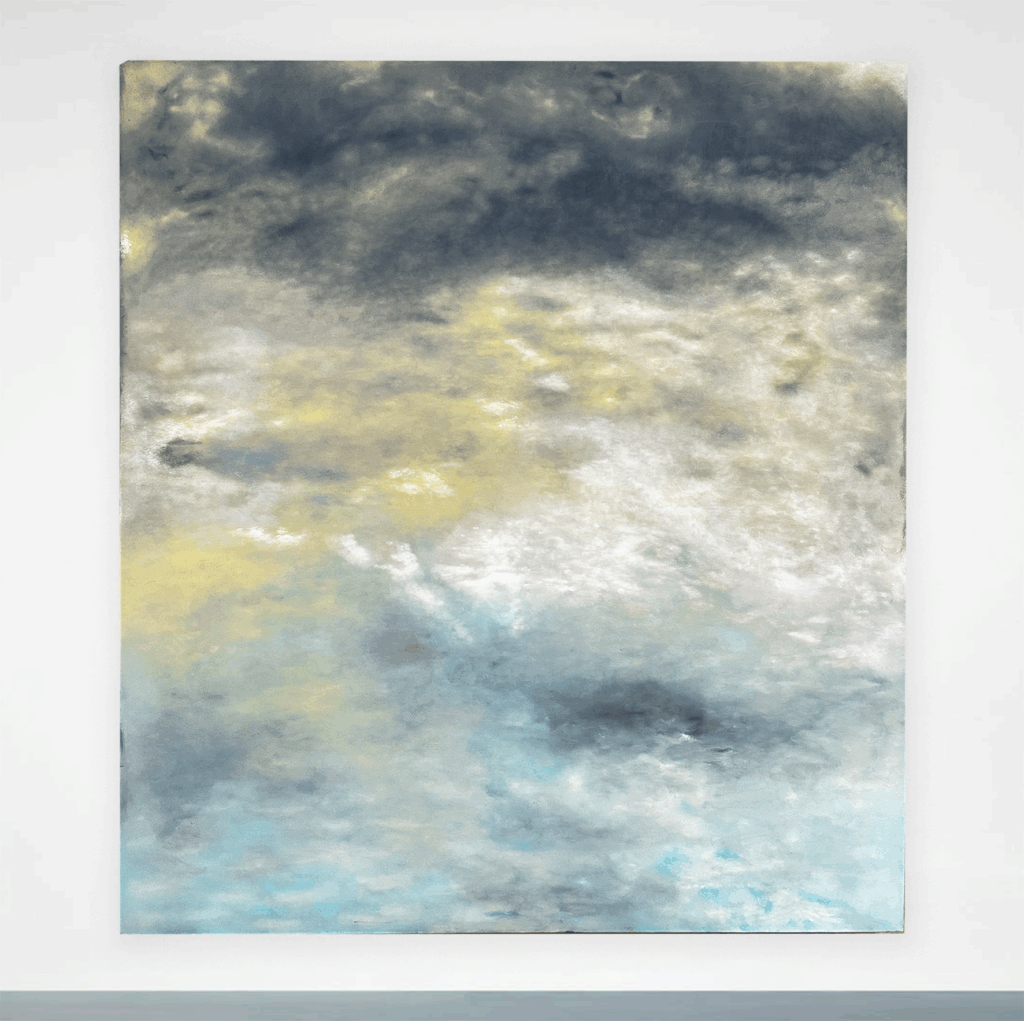
Your current work seems to hover in a space between melancholy and tranquility. How do you navigate that tension between stillness and motion in your compositions?
I feel like it’s kind of natural for me to have a balance of those things in my paintings now. As I said before, I’m not painting anything real – even though clouds are real, I’m not painting something I captured on camera. I’m really digging out pictures and moments from my head and trying to reconnect them with situations, with conversations, with people’s faces, with specific pieces of clothes or tones of their voices. I’m always trying to translate this into my paintings, if that makes sense.
I think I’m trying to have this balance in my paintings. I’m always trying to have something surprising in the painting, even for me, and I’m always trying to put a little bit of challenge into each and every painting – because I’m trying to stay focused and not fall into routine. Does that make sense? I’m always trying to keep the painting process alive because I don’t want to burn out with this topic. I want to stay focused on it as long as I possibly can because it really fascinates me like nothing else before. I’m always doing something a little bit different in every painting, even though it may look similar to the viewer. I know that I did something different. And that’s really important to me.
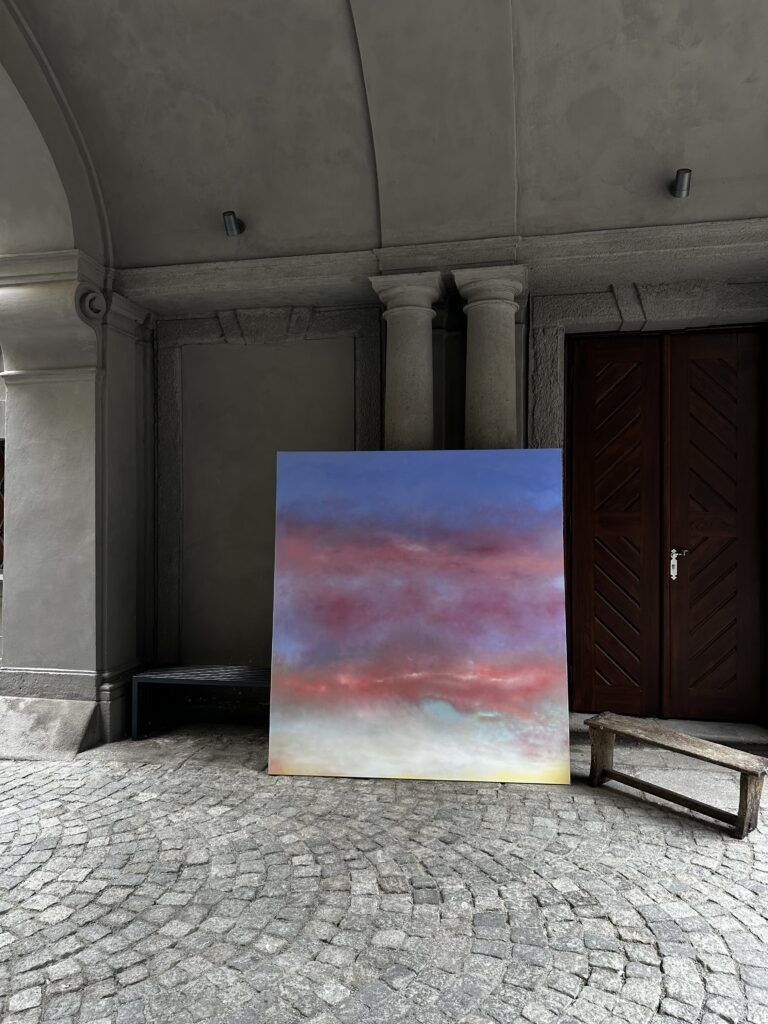
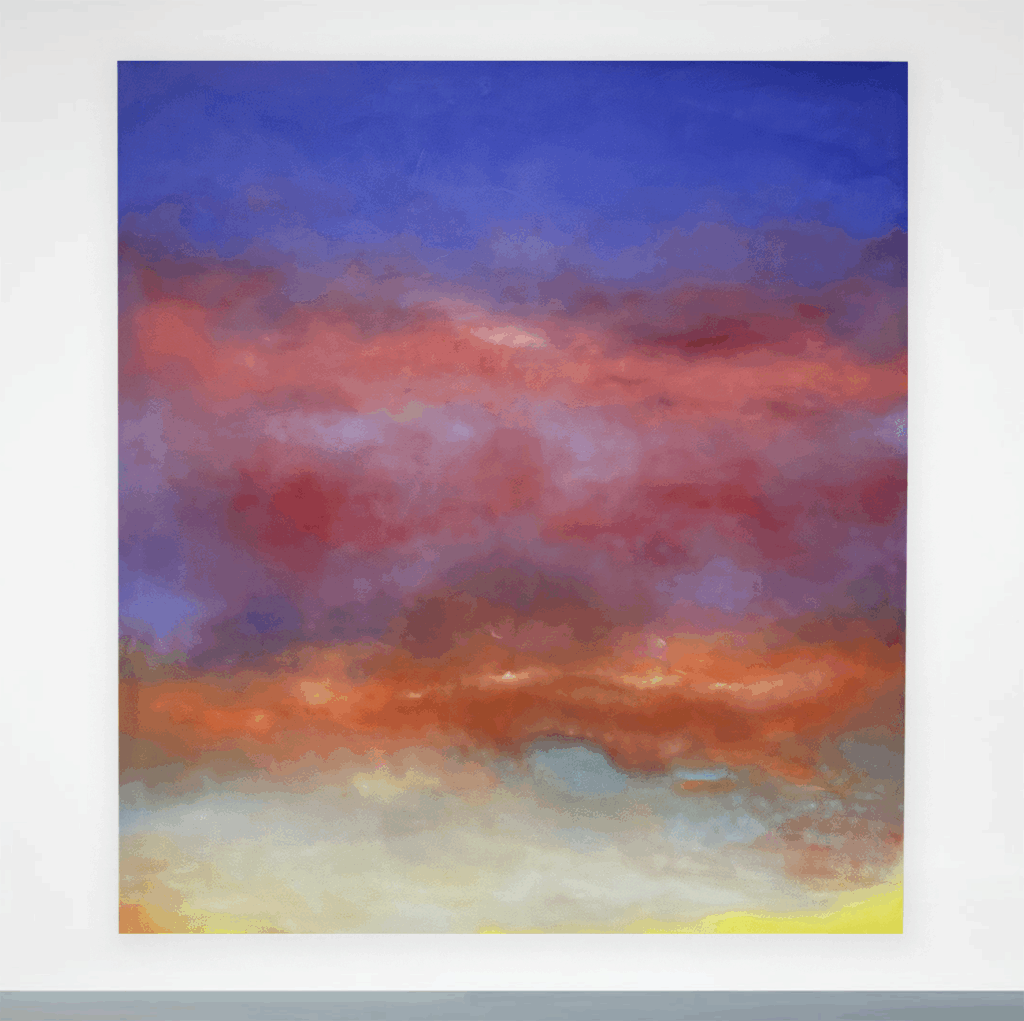
There’s an almost cinematic sense of light in your recent paintings – soft, diffused, and patient. How do you approach light as both a visual and emotional element?
I approach light in my paintings as something really fleeting and not stable – like it’s there for just a moment. I think in my paintings, the light sometimes represents these kinds of flashes of something. Not something particular, but just something that is there for a moment, just a few seconds. Something that we cannot catch, we cannot stop.
But it’s really different in every painting. It can represent something hopeful, but it can also represent something that we cannot actually recall. We cannot name it. We cannot specifically think of anything physical. It’s like a sort of blindspot for me – just a second before the picture or memory of someone or something is fully visible. And that is, I think, also how I view light on a daily basis. I approach light as something impermanent.
You once painted living beings – flowers, animals, the tangible world – and now you paint air, light, memory. Do you feel that this evolution mirrors your own personal transformation as an artist, or as a person?
Yes, I think it definitely mirrors a change in me as a person and as an artist. My life has changed so much in the past two years that this shift in my work was inevitable. The change came mainly with my change of focus in life topics.
I think I started to take painting really seriously when I started to paint specifically this topic. I’m not saying I didn’t take painting seriously before – I definitely did – but I personally think my previous work was somehow kind of an illustration of my life, always fixating on the past. Now I feel like it’s more mature. Somehow I’m learning how to walk along with my past and how it shaped me, how it’s still shaping me and affecting me, rather than always complaining about it. Does that make sense?
For the first time, it was so intimate and personal for me. But I also think this topic is really general, and that’s actually what fascinates me. When I first started painting this topic, it was really focused on my grandparents and how I’m starting to forget about them – situations with them, conversations with them. But as the time went by, I started to realise that this topic is much bigger than me, and it completely took over my focus.
Your work speaks quietly but powerfully about belonging and distance. How do you experience the relationship between the city and the countryside now?
I feel like the more time I spend in the city, the more I crave to be in the countryside – but not from the view of a person who was born in the city. I was born and raised in the countryside, and I really miss it. I’ve lived here now for thirteen years and I still wouldn’t call Prague my home, or any of the flats I’ve lived in.
As cringe as this can sound, I really miss the intimacy and the quiet and the stillness of my countryside village. I know that for me specifically there is no future there – that’s why I decided to go to Prague in the first place. But I also know that there’s no future for me in the big city either. So I need to find something in between.
Many contemporary painters chase speed, immediacy, or digital influence. Your paintings, by contrast, seem to slow time down. Is this intentional – a kind of resistance to the pace of modern life?
No, I don’t think it’s intentional resistance towards contemporary art or painters. I just paint what I feel like I need to. I know I sound really cringey, but I’m a really sensitive gay boy from a small village in Moravia and I don’t see painting as some kind of race. I’m not chasing anything. I want to be in very good art collections, but that doesn’t mean I’m going to do something against my will and against what I’m focused on now.
I found what I truly love doing and I just want to do it. Let me tell you, it wasn’t easy. It’s not easy to find something that really, truly, honestly fulfils you and you don’t have to push yourself over your limits to do it. I’m not pushing myself – I’m painting because it’s truly a part of me and my life now. I cannot imagine life without it.
If I had listened to people who were telling me what to do in painting, I wouldn’t be doing any of this. I wouldn’t be this far with my technical practice because of painting sky and clouds. I wouldn’t be happy now as I am with what I’m doing. There were plenty of people who were literally visiting me in my studio telling me that some people were painting clouds ten years ago in the Czech art scene – and I had no idea what that had to do with anything. What would be the point for me if I would be painting what somebody else wants? I’ll tell you: absolutely fucking no point.
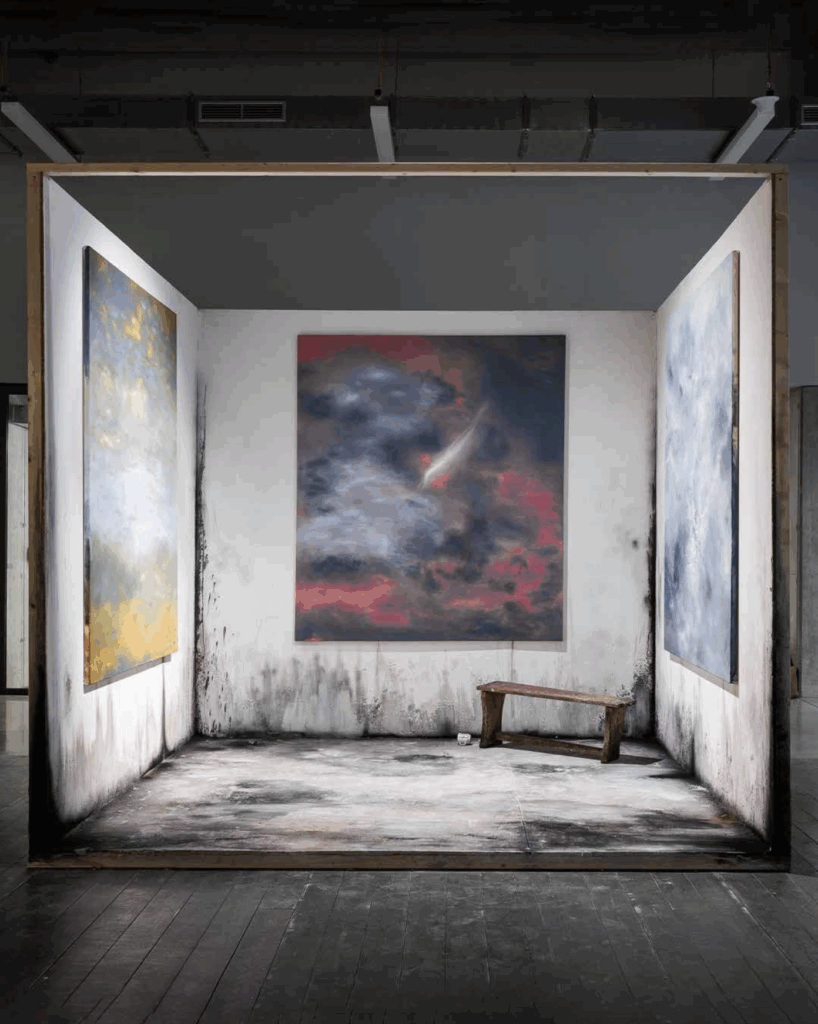
Our current theme is Collective Currents, which focuses on collaborations and collective works. What is your dream collaboration, or have there been any you’d like to mention?
My dream collaboration would be with Anna Ruth, Ester Parásková, and Czech sculptor Matouš Háša. These are some of my superheroes in the Czech scene. And there are plenty of other artists from abroad, of course, but I’m not going to brag.


