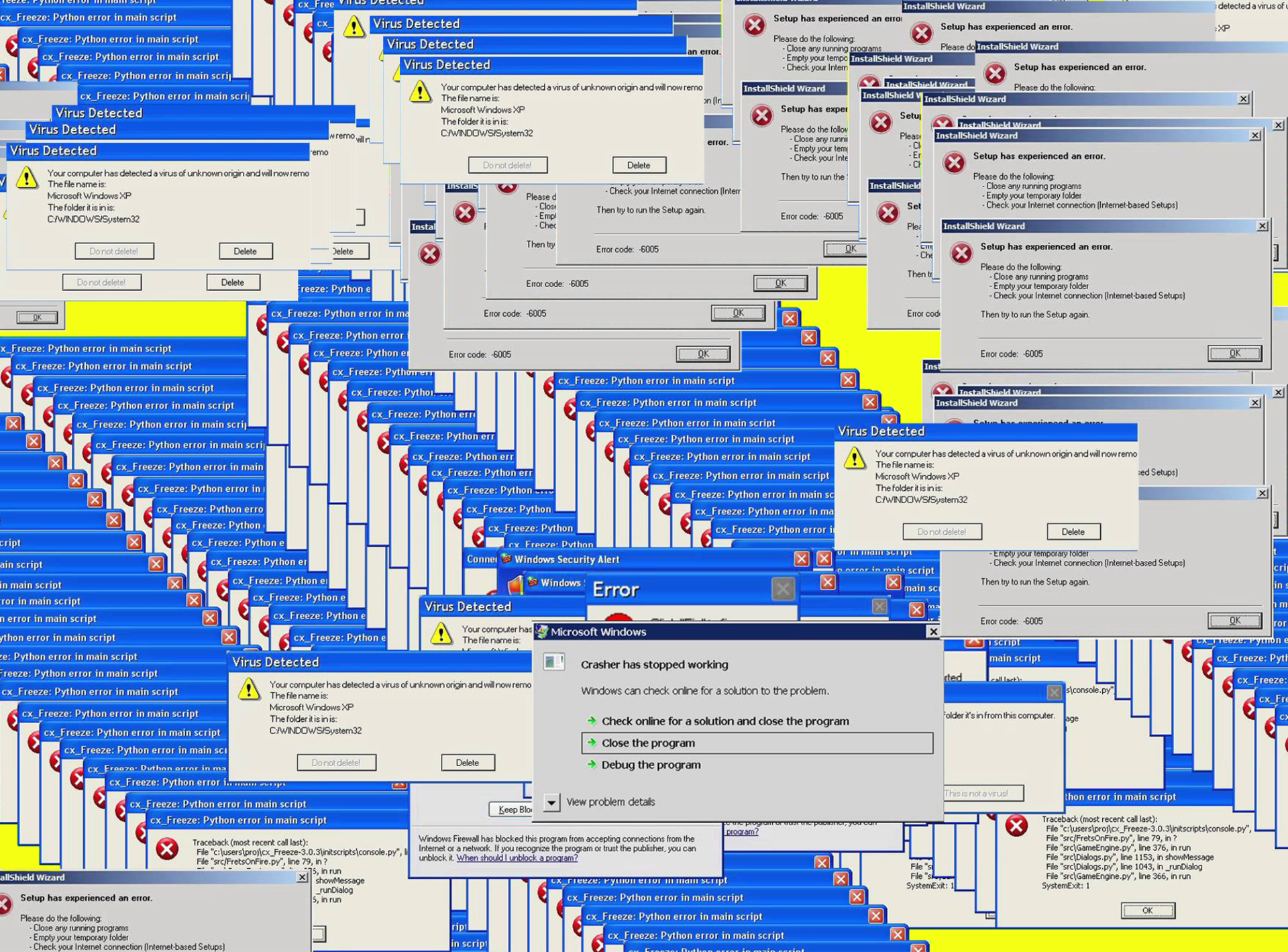
The digital code is exact; all information can be expressed via numbers, iconically described by the infamous metaphor of zeros and ones. But try writing a message that will include carons, acute accents, commas and capital letters. Try writing the full name of a street in Prague including the house number. It is not possible. Well, it is possible, but not exactly on the first try, most probably not even on the third one. This frustrating task may end up in us just giving up writing the message altogether. If you are walking and writing simultaneously, it might get increasingly troublesome. We make mistakes. We make a lot of them. We transfer them from one device to another and multiply them. Our interaction with all the screens is just a chain of trials and errors. We let our ideas go, just because all the mistakes that make us slower can change a simple task of writing a note to something so burdensome, that it leads to forgetting what we wanted to do in the first place. Unfortunately, it is not only about writing. Let me give you another example:
Game Boy Emulation on a mobile phone, that is the same size of this legendary mobile game console, is an unplayable “experience”. We yearn for the physical contact with the buttons. Our game progress does not provide any feedback on our actual mastering of the game principle, but it is more of an evaluation of how well we can press the nonexistent button, represented by data. Among native mobile games, there is only a fraction of games that are willing to embrace all the compromises of the device. Let’s pause: Think about all the activities on your mobile phone/computer that force you to make mistakes. Unreadability of a miniature text, payment application of a dominant mobile operator making it impossible to copy a security code from an SMS, app for yoga not letting you know, how much you actually pay for it every month, necessity to pay maximum rate for your iCloud, because it is just not working without it and there is basically no other option, … All of it forcing itself upon us yet not letting us act up, makes us feel like we are doing something wrong. We are dumb. We are uneducated. We were not paying attention at school. No, no, no, that is not the case: There is something wrong with your device.
We take with us all the faults in the interaction with the digital interface everywhere. We got used to them. It is a paradox: in the age of hardware and software, that is able to fulfil any of our user needs (it is basically not necessary to buy extra hardware, if we consider the software running on it), we got used to it, to such a simple task as writing being a pain in the neck. We consciously write with the premise, that we will make mistakes. While it is promised to us, that everything will go faster and smoother.
Nothing is working. Not a single thing works. If it works, we cannot rely on it. A fundamental contradiction: It is claimed, that we do not need to know anything about how our computer works, but, if anything, the opposite is true. We need to know a lot! We need to know more and more. But considering the unimaginable complexity of the data, we are forced to resign. Cloud is yet another metaphor to describe something that is completely beyond our comprehension. At this point, there is no one that understands “it”; we all don’t get “it” just the same. A question “Why is “it” not working?” is an understanding of a situation, where malfunction is the basic principle. In the early years of cyberculture, theorist Peter Lunenfeld, in his text Unfinished Business, wrote, in the same manner, about issues with an update. He concluded, that the issue with computers is, that nothing is ever finished.
We know that to err is human, but we need to get used to more and more mistakes we will be making. Trial and error is therefore the basis for our interactions. It is difficult to come to terms with this notion, especially, if we consider economic-political ties to our everyday experience. We feel hopeless, because there is no one to complain to, no one to make it right. To register a complaint about our mobile phone for the reason of not being able to write without mistakes is absurd. But is it really that absurd?
We can assign all the mistakes to our own doing and pretend that generating all those mistakes is just another sign of our lives getting faster (Oh again about the acceleration!) and that is related to general neurosis. Problems start to arise, when we realise our faith in the authority. We trust the authorities. If something is as big as God or Apple or Amazon, “IT” should not make mistakes. There is no alternative, as Margaret Thatcher once said; faith in the power of the market will persist. But where is the alternative to the transnational giants of today? Prayers are not heard, there is nowhere to file your complaint. How can I even file a complaint about a device that makes it hard for me to write on it well? But I should!
Another paradox of today: Older and cheaper is less faulty than newer and pricier. The pricy one knows that we know about the mistakes, but it still does not lower the price. We know, that “it” will not work and so we don’t mind to pay an arm and a leg.
We can lay more and more clichés about mistakes on the table and end up with the notion, that to err is human. But is human that which is corporate? We can, at least, confidently doubt, that there is any humanity based on automatization of machines run by intangible algorithms. Best is to finish on the note of the economical and psychological consequences as their aftermath can be a key to the future development. While writing this text, I was thinking about a concrete example and I was waiting for a mistake that would be worthwhile. I did not have to wait long before my iPhone was overflowing with photos, an error caused by iPhone not sending them to iCloud. That resulted in a fatal lack of space on the local mobile storage and therefore almost full blockage of any other functions. Apps stored in cloud were undownloadable, Spotify could not open, and HBO GO was unwatchable, not even mentioning my e-mail and variety of other functions. If we look at this error, caused by miscommunication between mobile phone and cloud, that is automatized (=it is not possible to send photos “manually”), from the economical standpoint, we look at a loss of 750 CZK/month (200 CZK iCloud, 155 CZK Spotify, 130 CZK HBO GO, Daily Yoga 250 CZK). Not even mentioning secondary losses and complications (e.g. inability to use other paid apps).
Psychological impact is, however, more fatal: thanks to errors and their quantity, we start to err, we come to terms with the fact, that we are not able to write a sentence right, we stop believing in a properly completed job, perfection is an unreachable ideal for us at that point. The error rate became a culture code. If “They” make mistakes, why can’t we.
Article / David Kořínek